
Advertisement

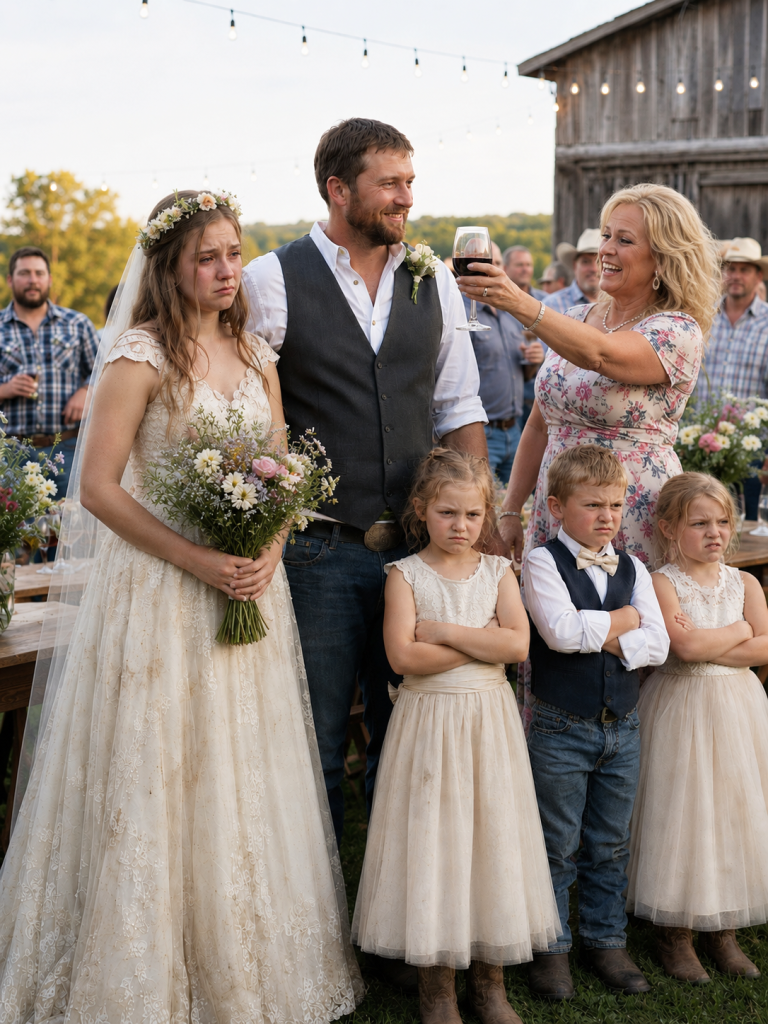
At 18 years old, I was put into a borrowed white dress and sent away to MARRY

Part 1 of 3=

Part 1 — The Bride They Chose for Me

“Starting today, you are no longer this family’s responsibility, Lena Carter. You’re going to a house that needs a woman and children who need taking care of.”

Advertisement

My aunt Martha Reed said it while I stood in front of a cracked mirror wearing a borrowed white dress that smelled faintly of old cedar and attic dust. I was eighteen years old, my hands shook so badly I couldn’t even tie the ribbon in my hair, and somewhere inside me I already knew this wasn’t a wedding.

Advertisement

It was an arrangement.

We lived in a small farming town outside Lexington, Kentucky, where tobacco fields stretched beyond the roads and people knew each other’s tragedies before they knew their names. My father died when I was young. My mother passed away years later after a long illness, and when she was gone, Aunt Martha inherited everything—our house, our land records, and apparently the right to decide what happened to me.

She always called it charity.

That morning I finally understood charity sometimes comes with a bill.

The man waiting in the yard was Nathan Cole. He was thirty-eight years old, broad-shouldered from farm work, with sun-darkened skin and the tired eyes of someone who had buried too much too early.

His wife, Emily, had died two years earlier.

She left behind three children.

Eli, ten.

Ben, seven.

And little Rosie, four.

“She works hard,” my aunt said while speaking about me as if I weren’t standing there. “She cooks, cleans, does laundry, and she’s good with children.”

Nathan barely looked at me.

He placed a thick envelope and a folder of papers on the kitchen table, then kept his eyes lowered.

Nobody asked whether I agreed.

That afternoon I climbed into his pickup truck carrying one old suitcase, two dresses, my mother’s earrings, and a grief so heavy it felt lodged in my throat.

Nathan’s farm sat across the river outside town, surrounded by cornfields, chickens wandering freely through the yard, and rows of peach trees already beginning to flower. The house was clean but painfully quiet, the sort of silence that felt less like peace and more like someone still mourning.

The children stood in the doorway watching me arrive.

Rosie hid behind a chair.

Ben stared openly.

Eli crossed his arms and said without blinking:

“My mom died. You don’t get to take her place.”

The words hit hard.

But I understood them.

“I didn’t come to replace her,” I answered quietly. “I came because someone sent me here.”

The first weeks were terrible.

I burned dinner twice. I ruined laundry because I used too much soap. Rosie cried whenever I tried brushing her hair. Ben refused to eat if I served the food. Eli deliberately moved things around the kitchen just to make me look incompetent.

Nathan barely spoke.

He left before sunrise every morning and came home after dark with dirt on his boots and exhaustion in every step.

But every morning I found notes beside the stove.

Rosie likes warm milk, not hot.

Ben is afraid of storms.

Eli doesn’t hate soup. He hates being told what to do.

I kept every one.

Then one morning I found another note beneath my coffee cup.

You don’t need to make them love you. Just don’t punish them for missing her.

That sentence stayed with me.

Weeks later Rosie got sick.

The fever came suddenly. Her small body burned with heat and she cried for Emily in her sleep. Nathan drove out looking for the doctor, but heavy rain had flooded the road into town.

I stayed beside her.

Changed cold cloths.

Sang songs my mother once sang to me.

Prayed quietly while thunder rolled beyond the windows.

I didn’t sleep for two nights.

At dawn on the third day, Rosie opened her eyes and touched my face.

“Don’t leave, Mama Lena.”

Nathan stood in the doorway.

He didn’t speak.

But something changed in his expression.

Not grief.

Not surprise.

Something softer.

For the first time since arriving at that farm, I thought maybe my life hadn’t ended after all.

Then everything broke.

One evening I carried water across the back porch and heard Nathan talking with his older brother near the barn.

“I married her because there wasn’t another choice,” he said quietly. “The kids needed a woman in the house. That was all.”

I stopped moving.

The bucket slipped slightly in my hands.

I wasn’t a wife.

I wasn’t family.

I was a solution.

A useful girl in a white dress.

That night I left a note on the kitchen table.

If I am only useful, don’t ask me to stay until I forget who I am.

Before sunrise I packed my suitcase and walked toward the old county road.

My shoes were wet.

My heart felt broken all over again.

And behind me, nobody knew that my leaving was about to uncover a lie capable of destroying everything my aunt had built.

Part 2 — The Debt Written in My Name

Nathan found me near the old bridge just outside town. I was sitting beneath a maple tree with my suitcase pulled against my chest while mist drifted off the river and soaked the hem of my dress.

He didn’t yell.

He didn’t grab my arm.

He didn’t tell me to come home.

He only stood there breathing hard from the search.

“Lena,” he said quietly. “I was a coward.”

I laughed without humor.

“When Emily died, I buried everything with her,” he continued. “I thought if I treated this marriage like an arrangement, nobody would get hurt.”

I looked at him.

“You were wrong.”

He lowered his eyes.

“I know.”

The river moved softly beside us.

“I wasn’t asking you to love me,” I said after a long silence. “I was asking not to feel purchased.”

Nathan sat beside me in the wet grass.

“If you want to leave, I’ll drive you anywhere. But if you come back, it won’t be because somebody handed you over. It’ll be because you choose it.”

Nobody had offered me choice before.

Not my aunt.

Advertisement
info@teaytech

info@teaytech

1055 articles published