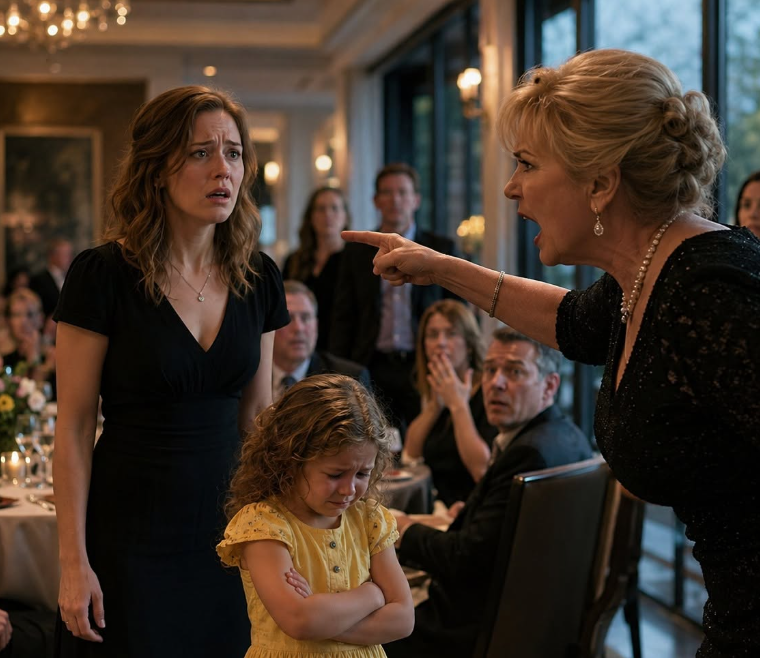
At My Mother’s Birthday, She Told My Six-Year-Old Adopted Daughter She Wasn’t Family.

I didn’t sleep that night.
My mother’s voicemail replayed in my mind.
“We only did what any real family would do.”
Real family.
The words sounded different now.
Not painful.
Just empty.
I walked into my office, set a thick three-ring binder on the desk, and began organizing fifteen years of financial records.
Every canceled check.
Every wire transfer.
Every cabin reservation.
Every emergency payment.
Every “temporary loan” that had quietly become permanent.
My parents never asked how family reunions magically happened every summer.
They simply arrived.
The cabins were always reserved.
The grills were stocked.
The refrigerators were full.
The fishing licenses appeared.
Birthday dinners were paid.
Anniversary cruises somehow happened.
When Dad’s roof leaked, the contractor was already scheduled.
When Mark’s business nearly collapsed, the mortgage was somehow caught up before foreclosure.
Nobody ever asked who carried the weight.
They simply assumed it would always be there.
Until now.
Two days later I received a certified letter.
My mother had hired an attorney.
She demanded reimbursement for the canceled reunion.
She claimed I had intentionally embarrassed her in front of the extended family.
Reading it actually made me laugh.
For the first time in weeks, I laughed.
Then I called my attorney.
His name was Daniel.
He listened quietly while I explained everything.
Finally he asked one question.
“Did your parents contribute financially to any of these reunions?”
“No.”
“Do you have proof?”
“I have everything.”
“Good,” he replied.
“Bring the boxes.”
The meeting lasted nearly four hours.
Daniel spread documents across the conference table.
ReceipTS.
Invoices.
Electronic transfers.
Emails.
Tax statemenTS.
Photographs.
There wasn’t just proof.
There was a history.
“You’ve essentially been financing your entire extended family,” he finally said.
“For over a decade.”
“I never kept score.”
“I know.”
“But someone else just started keeping score for you.”
Meanwhile, the CPS investigation officially closed.
The social worker personally called.
“I’m sorry your family put you through this.”
She paused.
“I don’t usually say this, but your daughter is thriving.”
“She is deeply attached to you.”
“You’ve created an exceptionally safe home.”
“You should be proud.”
After hanging up, I sat in the kitchen and cried.
Not because I was afraid anymore.
Because someone had finally seen us.
Lena walked in carrying a coloring book.
“Are you sad?”
I wiped my face.
“No.”
“Happy?”
“A little.”
She climbed into my lap.
“Did they say I can stay forever?”
I hugged her tightly.
“They said exactly what I’ve always known.”
“You are already home.”
She smiled.
The kind of smile only children can create.
One that fixes cracks adults cannot even see.
Three weeks later another surprise arrived.
Not from my parenTS.
From Aunt Evelyn.
She asked if we could meet for coffee.
I almost declined.
Instead, I went.
She looked embarrassed before saying anything.
“I didn’t know.”
“Didn’t know what?”
“Your mother told everyone the reunions came from Grandpa’s investment account.”
I blinked.
“What?”
“We all believed she was organizing everything.”
She stared down into her coffee.
“When she said you had become unstable after the adoption…people believed that too.”
I felt the room go quiet.
Not angry.
Just still.
She reached into her purse.
“I asked the accountant.”
She handed me copies of old payment confirmations.
Every one carried my name.
Not my mother’s.
Mine.
“I’ve spent two weeks calling everyone.”
“Most of us didn’t know the truth.”
Within days my phone wouldn’t stop ringing.
Uncles.
AunTS.
Cousins.
Apologies.
Real apologies.
Not excuses.
Not explanations.
Just people admitting they had accepted one story because it was easier than asking questions.
Some relationships couldn’t be repaired.
Others slowly began healing.
Mark came over the following Saturday.
He looked older.
Tired.
Ashamed.
He stood on my porch holding nothing except a small envelope.
“I owe you this.”
Inside was a cashier’s check.
The amount wasn’t huge.
It wasn’t about the money.
“I should’ve defended Lena.”
I stayed quiet.
“I kept telling myself staying neutral meant keeping peace.”
He looked toward the living room where Lena was building a blanket fort with my husband.
“I realize now neutrality protected the wrong people.”
For several long seconds nobody spoke.
Finally I stepped aside.
“You can come in.”
Not because everything was forgiven.
Because grace sometimes begins before trust returns.
Autumn arrived.
Leaves covered the backyard.
Lena started first grade.
Her teacher emailed me after the second week.
“She tells everyone she waited a long time to find her forever family.”
I printed the email.
It still hangs on our refrigerator.
Then came Thanksgiving.
For the first time in years, we hosted dinner ourselves.
Not because tradition demanded it.
Because peace did.
Our table wasn’t enormous.
It didn’t need to be.
Neighbors came.
Friends.
Lena’s teacher stopped by with homemade pie.
The social worker who had closed our case even accepted an invitation after retiring.
Nobody asked who belonged.
Everyone simply acted like they did.
Halfway through dinner Lena stood on her chair.
“I have something to say.”
The room became quiet.
She looked around carefully.
“When I lived before…”
She stopped, searching for words.
“I used to wish for a family.”
She pointed around the table.
“I found one.”
Nobody rushed to fill the silence.
Nobody corrected her.
Several people quietly wiped away tears.
That evening someone knocked on the front door.
I opened it.
My father stood alone.
No birthday speeches.
No anger.
No pride.
Just an aging man who suddenly looked much older than sixty-eight.
“I came by myself.”
I nodded.
He held out a small cardboard box.
Inside were hundreds of photographs.
Pictures of me growing up.
School plays.
Fishing trips.
Christmas mornings.
“I realized something.”
His voice shook.
“I spent years protecting peace instead of protecting people.”
He swallowed hard.
“And I lost both.”
I didn’t invite him inside immediately.
Some wounds deserve honesty before comfort.
“You watched her cry.”
“I know.”
“You watched your granddaughter believe she didn’t belong.”
Tears filled his eyes.
“I know.”
“I can’t erase that.”
“No.”
“I can’t.”
He looked down.
“But if someday she wants another grandfather…”
“I’ll spend whatever years I have earning the chance.”
Not demanding it.
Earning it.
For the first time, I believed he understood the difference.
Months passed.
My mother never apologized.
She continued insisting she had been misunderstood.
Eventually, people stopped believing her version.
Not because I argued.
Because truth is patient.
Documents don’t change.
Character eventually becomes visible.
And kindness leaves witnesses.
The following summer, everyone asked whether I would organize another reunion.
I smiled.
“I already have.”
They looked confused.
I pointed toward the lakeside.
Children were laughing.
Families were cooking together.
Neighbors played cards beside grandparents who weren’t related by blood.
Several foster families had joined us.
So had adoptive parents from our support group.
No invitations depended on last names.
Only on open hearTS.
Lena ran across the dock wearing the same bright yellow smile she’d carried since finding us.
She waved excitedly.
“Mom!”
I turned.
She was holding another handmade card.
This one read:
“Family is everyone who stays.”
She handed it to me.
“I made it for you.”
I knelt and wrapped my arms around her.
“No, sweetheart.”
“You made it for all of us.”
As the sun settled over the lake, I finally understood something that had taken most of my life to learn.
Love isn’t measured by shared blood.
It isn’t inherited through a last name.
It isn’t decided during birthday toasts or holiday photographs.
Real family is built through ordinary choices.
Who protects you.
Who believes you.
Who stands beside a frightened little girl when the world tells her she doesn’t belong.
Years earlier, I thought I had spent thousands of dollars creating family traditions.
I was wrong.
The cabins, the dinners, the vacations—they were only places.
Family had never lived in those reservations.
Family was the small hand that reached for mine in a restaurant hallway.
The quiet voice asking, “Are you sending me back?”
The courage to answer, every single day,
“Never.”
And from that day forward, she never asked again.