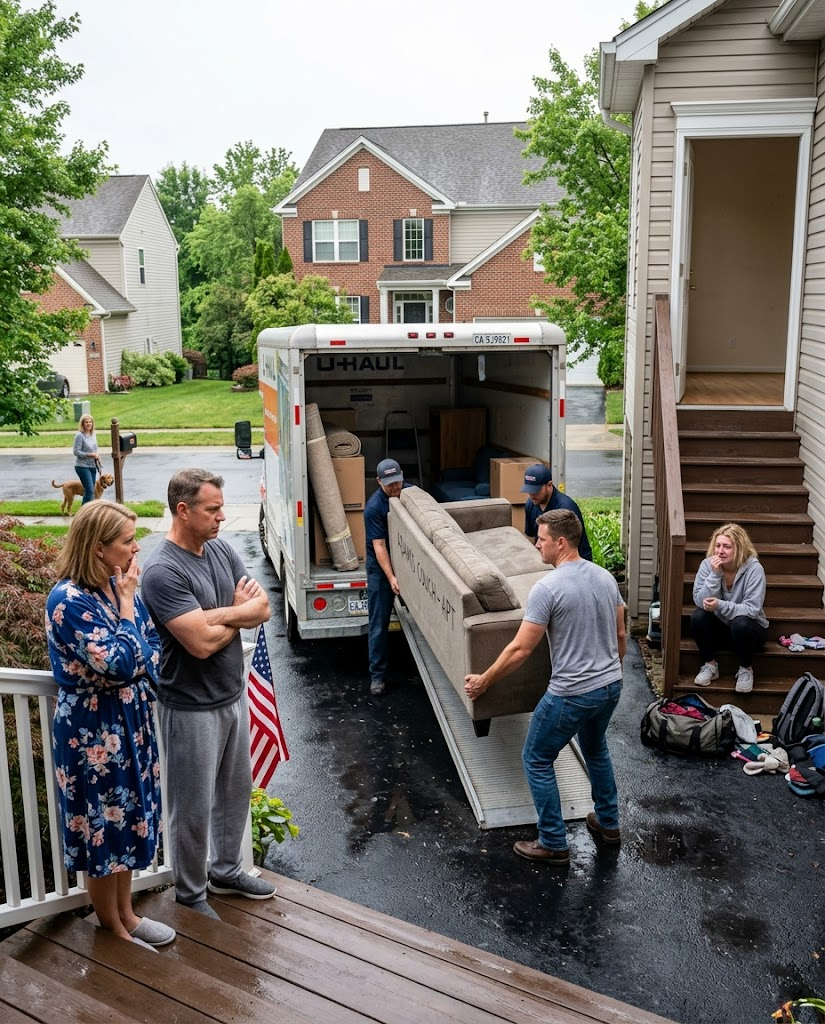
The fallout did not happen all at once.
At first there was rage.
Then there were phone calls.
Then there was bargaining.
His mother tried to reduce the rent again.
His father said Adam had made his point.
Chloe texted him three separate times with the kind of apology that still somehow made him feel like the villain for listening to it.
But the truth had already settled in.
The family had not offered him a home.
They had offered him a bill.
And they had tried to make compliance sound like gratitude.
Adam moved into a small rental on the other side of town.
Nothing fancy.
Just quiet.
He slept in a borrowed bed for a week, then bought another one.
He bought a cheap couch.
He bought a lamp.
He bought a table.
Every time he unpacked a box, he felt less like he was starting over and more like he was finally getting his life back in his own hands.
The apartment above the garage stayed empty for a while.
That was the part his mother hated most.
Not the argument.
Not the embarrassment.
The silence.
Because once Adam took the furniture, the place stopped looking like his contribution and started looking like what it had always really been: a space his family had used to keep him close enough to exploit.
And the lesson was bigger than the rent.
Some families do not fall apart because someone leaves.
They fall apart because the person who always stayed finally notices the cost.
Adam noticed it.
Then he took the couch, the bed, the lamps, the table, and the last piece of the lie with him.