
Her Sister Refused Her After Brain Surgery. Then the Mortgage Lie Broke Open-olive

My name is Gabriela Torres, and for most of my adult life, I confused loyalty with silence.
I thought being a good daughter meant not reminding my parents what they could not afford.
I thought being a good sister meant helping Mariela without keeping score.
I thought receipts were ugly things to bring into family.
Then I learned that the people most offended by receipts are usually the ones who have been spending your life like a blank check.
Mariela was four years older than me, and she had always known how to command a room.
At birthdays, she blew out candles like she was granting everyone permission to celebrate her.
At family dinners, she could make my mother laugh, my father soften, and me feel like I was late to a conversation I had been sitting inside for an hour.
She was not cruel in obvious ways when we were young.
That would have made her easier to name.
She borrowed dresses and returned them with foundation on the collar.
She cried before tests and still got the highest grade.
She called me dramatic whenever I noticed something she wanted everyone else to ignore.
My parents adored her because Mariela made difficulty look glamorous.
I became useful because usefulness was the only kind of attention left.
When she wanted the Manhattan apartment, the whole family rearranged itself around her dream.
She said it was the opportunity of her life.
She said a place like that would never come again.
She said rent was throwing money away, and ownership was how people built futures.
My parents gave her the down payment from their retirement savings.
I remember my father pretending not to blink too much when the wire confirmation came through.
I remember my mother saying, “This is what family does.”
I remember Mariela hugging them, then turning to me with tears already arranged perfectly in her eyes.
“Just three years, Gaby,” she said. “I swear I’ll pay you back with interest later.”
I worked as a financial coordinator in Houston, which sounds more elegant than it felt.
It meant spreadsheets at 7:10 a.m., calls during lunch, late nights reconciling other people’s mistakes, and a salary that looked healthy only to people who had never watched health insurance, rent, gas, groceries, student loans, and family obligations eat from the same plate.
Still, I said yes.
Every first of the month, at 8:00 a.m., $2,000.00 left my account.
Recipient: Mariela Torres.
Memo: Mortgage.
At first, I told myself it was temporary.
Then I told myself she was stabilizing.
Then I stopped telling myself anything because the transfer became part of the month, like rent or electricity or the ache in my shoulders after a twelve-hour day.
Mariela also asked for an authorized user card.
Apartment emergencies, she said.
A burst pipe.
Unexpected building fees.
Supplies.
I added her with a $3,000.00 limit because I trusted the version of her that existed in my head.
That version was careful.
That version was grateful.
That version did not buy designer shoes and call them “professional necessities.”
The real Mariela used the card at restaurants, boutiques, nail salons in SoHo, and home stores where one candle cost more than my weekly groceries.
When I questioned a charge once, she laughed.
“Gaby, you don’t understand New York,” she said.
Maybe I didn’t.
I understood numbers.
I understood that if I worked two extra nights a week, I could cover what she called emergencies.
I understood that my parents looked peaceful every time Mariela posted another picture from that apartment, so I said nothing.
My emotional anchor sentence was simple, though I did not know it yet: I understood that my $2,000 monthly transfers did not carry bacteria.
The tumor was found because of headaches.
Not normal headaches.
Not tired-from-work headaches.
The kind that made light feel like a physical object pressing into my skull.
The MRI room was cold enough that my fingers went numb.
The machine knocked and roared around my head while I stared at a tiny plastic surface above me and tried not to imagine the worst.
The doctor said benign first.
People think benign is a relief word.
It is, until someone follows it with “but.”
Benign, but badly placed.
Benign, but surgery.
Benign, but New York.
The recommended team was near Columbia University Irving Medical Center, and everything after that became a list.
Flights.
Pre-op testing.
Hospital intake forms.
Insurance authorization.
Medication instructions.
Where to recover.
The answer seemed obvious.
Mariela had a spacious apartment in Manhattan.
It was bright, clean, and close enough to make recovery easier.
I had paid $2,000.00 a month toward that place for three years.
I was not asking to move in.
I was asking for three nights.
I called her on a Thursday at 9:17 p.m.
I remember the time because the pre-op folder was spread open on my kitchen table, and my left thumb had been rubbing the same corner of the hospital intake form until the paper softened.
“Sis, I’m flying to New York next week for surgery,” I said. “Can I stay with you for a few days?”
There was silence.
No gasp.
No “What surgery?”
No “Are you scared?”
Just a pause long enough for me to hear the refrigerator click on behind me.
Then Mariela laughed.
“At my place? Gaby, be serious. I’m obsessive about cleanliness. You’re going to be coming out of a hospital full of God knows what bacteria. You’re better off booking a hotel.”
I sat very still.
“It would only be for three nights.”
“I can’t risk my space,” she said. “Plus, my building is very strict about visitors. You understand, right?”
Yes.
I understood perfectly.
I understood that my money could enter her apartment every month without contaminating the floors.
I understood that my credit card could sit in her wallet beside lipstick and dinner receipts without offending her standards.
I understood that the sick body attached to the money was the problem.
“Alright,” I said.
I hung up.
I did not call my mother.
I did not call Mariela back.
I did not beg.
There are moments when rage arrives hot, loud, and reckless.
This was not that.
This rage was cold enough to make me careful.
I opened my banking app.
Scheduled transfers.
Recipient: Mariela Torres.
Amount: $2,000.00.
Memo: Mortgage.
Cancel.
The app asked me to confirm.
I confirmed.
Then I opened the authorized user card settings.
Mariela Torres.
Limit: $3,000.00.
Block.
The app asked me to confirm again.
I confirmed again.
It was clean.
Cleaner than her apartment.
After that, I booked a suite near the hospital.
I arranged private transportation.
I paid for a private nurse to check on me after discharge.
I confirmed my pre-op tests and printed my medication list.
For the first time in three years, my money moved toward my survival instead of Mariela’s image.
It felt strange.
It felt almost indecent.
Then it felt like breathing.
I arrived in New York without telling my sister.
My college friend Valeria met me outside the hospital with a tote bag full of snacks, charging cables, a cardigan, and the expression of someone who had decided fear would not be useful until later.
Valeria had always been practical in emergencies.
In college, when my car battery died during finals, she found jumper cables before I finished panicking.
When my father had a minor heart scare years earlier, she sent a spreadsheet of questions to ask the cardiologist.
When I told her about the tumor, she booked her train before I asked her to come.
That was the difference between love and performance.
Love moved.
Performance posted.
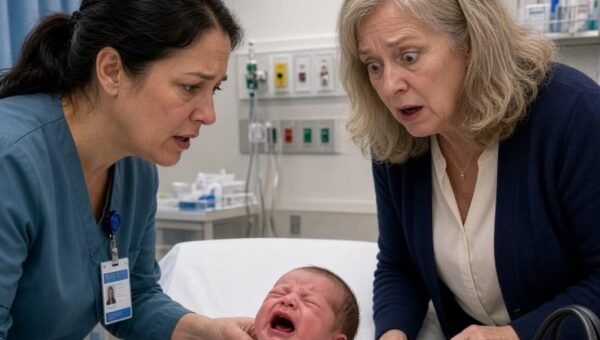
The hospital waiting room smelled like sanitizer, burnt coffee, and printer toner.
People sat in clusters, each holding their own private disaster.
Valeria filled out forms beside me because my hands were too restless to write neatly.
At 1:42 p.m., my phone buzzed.
Mariela.
I ignored it.
Then my mother called.
I ignored that too.
Then Mariela again.
Finally, the first text came through.
“Why was my card declined? I’m at a dinner party. How embarrassing.”
I stared at the message.
Not “How are you?”
Not “Are you in New York?”
Not “I’m sorry.”
Embarrassing.
That was the emergency.
A second text arrived.
“Gaby, the bank called me. Why didn’t the transfer go through?”
Valeria looked over when my breathing changed.
“What happened?” she asked.
I handed her the phone without speaking.
Before she could respond, a third message appeared.
“You can’t do this to me. The apartment is your responsibility too because you signed as a co-signer.”
The words seemed to detach from the screen and float there.
Co-signer.
I had never signed anything.
I had never attended a closing.
I had never met a loan officer.
I had never authorized anyone to attach my name to Mariela’s mortgage.
Valeria read the message twice.
Her face changed in a way I had seen only once before, when a professor accused a student of plagiarism and Valeria found the original timestamped draft in under ten minutes.
“Gabriela,” she said, “what did you sign?”
“Nothing.”
“Are you sure?”
“Nothing.”
She took a slow breath.
“Then before you go into surgery, we are going to look into this mortgage.”
Valeria had a friend from law school working at a small real estate law office in the city.
By 4:08 p.m., that friend had pulled a copy of the publicly associated loan file and sent over the documents she could access.
The PDF opened on Valeria’s tablet.
Loan application.
Borrower information.
Co-signer page.
Government ID copy.
Address verification.
Signature page.
My name appeared in black type.
Gabriela Torres.
My Houston address.
A copy of my ID.
Then the signature.
It was not mine.
The G was too round.
The T was too sharp.
The spacing was wrong.
My real signature leans slightly upward because I write too fast.
This one sat flat and stiff, like someone had practiced from a photograph and still missed the part that made it human.
For a second, I could not hear the waiting room.
The nurse at the desk kept typing.
A printer spat out a page.
Someone laughed softly near the vending machine.
The world kept moving with offensive confidence.
Valeria scrolled to the last page.
The clause was there.
“In the event of default, direct contact with the co-signer Gabriela Torres is authorized for full liquidation of the debt.”
Full liquidation of the debt.
Not a missed payment.
Not an awkward call.
The debt.
A debt I had not signed for.
A debt that could have followed me through surgery, recovery, credit checks, bank calls, and legal threats while Mariela kept her apartment clean.
Then another message came from Mariela.
“If you don’t pay this month, you’re about to find out exactly what you signed by trying to play the good sister.”
The cruelty was not even hidden anymore.
It had gotten bored of pretending.
Valeria rejected the next call when Mariela tried again.
“Don’t answer her yet,” she said.
The pre-op nurse appeared at the doorway.
“Gabriela Torres?”
I looked up.
My body wanted to stand because hospitals teach you to obey your name when it is called.
Valeria put one finger on the tablet.
“Wait.”
She had found another page.
OCCUPANCY AND FINANCIAL RESPONSIBILITY ADDENDUM.
The title was printed in plain black text, as if plainness made betrayal more official.
On the third page, beneath Mariela’s initials, there was another line.
Verifying family witness.
My mother’s name.
For one second, I refused to understand it.
Then my mother texted.
“Just pay it this month. Your sister can’t lose the apartment over one mistake.”
One mistake.
Three years of transfers.
A $3,000.00 card.
A forged signature.
A mortgage file with my name trapped inside it.
My mother had known enough to call it a mistake.
That meant she had known enough.
I sat there with a hospital wristband being printed for me and realized the people who had raised me were more worried about Mariela’s apartment than my brain surgery.
Valeria’s voice sharpened.
“Do not respond emotionally.”
“I’m not emotional.”
She looked at me.
My hands were steady.
That scared her more than if I had been crying.
I opened a blank reply to Mariela.
Then Valeria stopped me again.
“There’s one more page.”
It was a communication authorization form.
It allowed the lender to contact the co-signer directly in the event of nonpayment.
It listed an email address that looked like mine at first glance.
One letter was different.
A fake email.
Close enough to pass quickly.
Wrong enough to explain why I had never seen a single notice.
Valeria took screenshots.
She saved the PDF.
She emailed a copy to herself, to her law school friend, and to a new folder labeled TORRES MORTGAGE FILE.
Then she told me to go into surgery.
“I can’t just leave this,” I said.
“You are not leaving it,” she said. “You are surviving first. Then we handle it correctly.”
Correctly mattered.
That word became the thin railing I held onto.
The surgery happened the next morning.
I remember the cold sheet.
I remember the anesthesiologist asking me to count backward.
I remember thinking, absurdly, that Mariela would hate the smell of the pre-op room because antiseptic was not the kind of clean she could photograph.
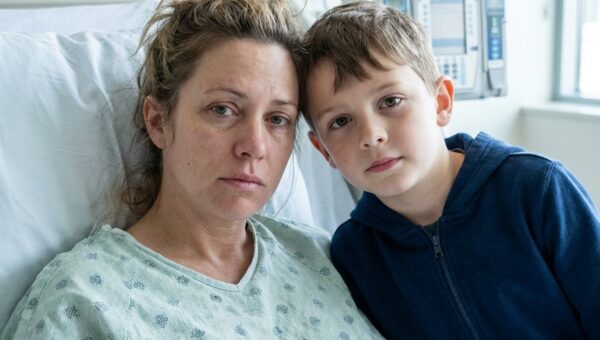
When I woke, my head felt full of thunder.
Valeria was there.
So was a nurse.
My throat hurt.
My vision blurred at the edges.
The tumor was removed.
Benign confirmed.
The doctor said the words slowly, kindly, and I cried because my body understood relief before my mind caught up.
Mariela did not come.
My mother did not come.
They texted.
Not about the surgery first.
About the payment.
Valeria did not show me those messages until the second day.
By then, she had already contacted an attorney specializing in mortgage fraud.
His name was Daniel Reyes.
He was calm in the way people are calm when they have seen enough panic to know it helps no one.
He reviewed the loan file, the forged signature, the fake email address, the transfer history, the card records, and Mariela’s texts.
He said three things.
First, I was not to resume payment.
Second, I was not to speak to Mariela or my mother by phone.
Third, every message mattered now.
So we documented everything.
The scheduled transfer history from my bank.
The authorized user statements.
The charges in SoHo.
The dinners.
The décor.
The loan file.
The signature page.
The addendum with my mother’s name.
The fake email.
The texts threatening me before brain surgery.
Daniel sent a formal dispute notice to the lender.
He also filed a fraud report and requested the original closing documentation, including identity verification logs, notarization records, and any communication history associated with the co-signer profile.
Those words sounded dry.
They were not.
They were matches.
Within days, the bank froze direct enforcement against me pending investigation.
Mariela called from blocked numbers.
My mother left voicemails saying I was tearing the family apart.
My father sent one text.
“Please call your mother. She’s very upset.”
I stared at that message for a long time.
Then I replied:
“I had brain surgery. I am also upset.”
He did not answer.
Two weeks later, Daniel received copies of the closing file.
The notary stamp was real.
The identification process was not.
Someone had submitted a copy of my ID, a utility statement, and electronic consent through the fake email address.
The IP logs did not come from Houston.
They traced to New York.
Specifically, to Mariela’s building network.
That was the first time I laughed.
It hurt my incision, so I stopped.
The lender’s fraud department moved quickly after that.
Mariela’s confidence did not survive paperwork.
People like my sister can talk through guilt, charm through discomfort, and cry through confrontation.
They cannot charm metadata.
They cannot sob a forged signature into authenticity.
They cannot make an IP log feel sorry for them.
When Daniel notified Mariela that we had evidence of suspected mortgage fraud, identity misuse, and forged authorization, she changed tactics.
Her first email said she had been confused.
Her second said a broker must have made a mistake.
Her third said I had verbally agreed and forgotten because of my medical stress.
Her fourth asked if we could keep this “inside the family.”
That was my favorite.
Inside the family was where the fraud had happened.
Daniel handled the legal process.
The lender removed me from enforcement exposure while the investigation continued.
My credit was monitored and protected.
The authorized user account stayed blocked.
The monthly transfer stayed canceled.
Without my $2,000.00, Mariela fell behind almost immediately.
That part hurt less than I expected.
Maybe because the apartment had never been stability.
It had been theater with a mortgage.
My parents finally asked to visit me during recovery.
I agreed to meet them in Valeria’s apartment, not mine, because I was still weak and did not want them in a space where I slept.
My mother cried before she sat down.
Mariela had taught her well.
She said she thought I knew.
She said Mariela told her I had agreed but was too busy to attend the paperwork session.
She said she only witnessed what she believed was already settled.
I asked her one question.
“Why did you tell me to pay it after you knew I said I signed nothing?”
She opened her mouth.
Closed it.
Looked at my father.
That silence answered more cleanly than any confession.
My father looked older that day.
He said he had not known about the co-signer document.
I believed him.
Then I told both of them that belief did not repair damage.
My mother asked if I was really willing to ruin Mariela’s life.
I touched the healing line near my scalp and said, “No. I’m no longer willing to let her ruin mine.”
That was the last time my mother tried that sentence on me.
The formal investigation took months.
Mariela eventually admitted, through her attorney, that she had submitted documents using information she had access to from old family paperwork.
She insisted she believed I would “come around.”
That phrase followed me for days.
Come around.
As if consent were a place someone could drag you to after they had already used your name.
The bank pursued remedies against her.
The apartment was not magically saved.
There were payment plans discussed, penalties assessed, and legal consequences that did not care how clean her countertops were.
I did not attend every meeting.
I did not need to watch her fall to know gravity worked.
My attorney made sure my name was cleared from the debt obligation.
My credit file was corrected.
The fraud alerts stayed in place.
The forged documents became evidence instead of traps.
Mariela sent one long message near the end.
She said I had become cold.
She said illness had changed me.
She said she missed the old Gaby.
I almost answered.
Then I realized the old Gaby was not a person she missed.
The old Gaby was a payment system.
So I did not reply.
Recovery was slow.
Some mornings I woke with headaches and fear braided together so tightly I could not separate them.
Valeria helped me walk around the block.
I learned to rest without apologizing.
I learned to buy the good soup when I wanted it.
I learned that peace feels strange at first when chaos has been calling itself family for years.
Months later, I looked through my banking app and saw the absence of that scheduled transfer.
No $2,000.00 leaving at 8:00 a.m.
No memo line pretending sacrifice was routine.
No authorized user charges.
Just my money, finally still.
The apartment became someone else’s problem.
My surgery scar faded under my hair.
My parents and I entered a careful, limited kind of contact.
Mariela and I did not.
People sometimes ask whether I regret cutting her off during such a serious crisis.
I tell them the crisis began when I asked for three nights after brain surgery and my sister treated me like contamination.
Everything after that was just documentation.
I understood that my $2,000 monthly transfers did not carry bacteria.
I understand now that neither did my boundaries.
Cleanliness was never Mariela’s real standard.
Control was.
And the day I canceled that transfer, blocked that card, and let the bank hear silence where my money used to be, I did not destroy my family.
I finally stopped letting my family forge my life in someone else’s handwriting.