I Was Stabbed Saving a Marine, Then His Father Walked In and Changed Everything Forever…-haohao

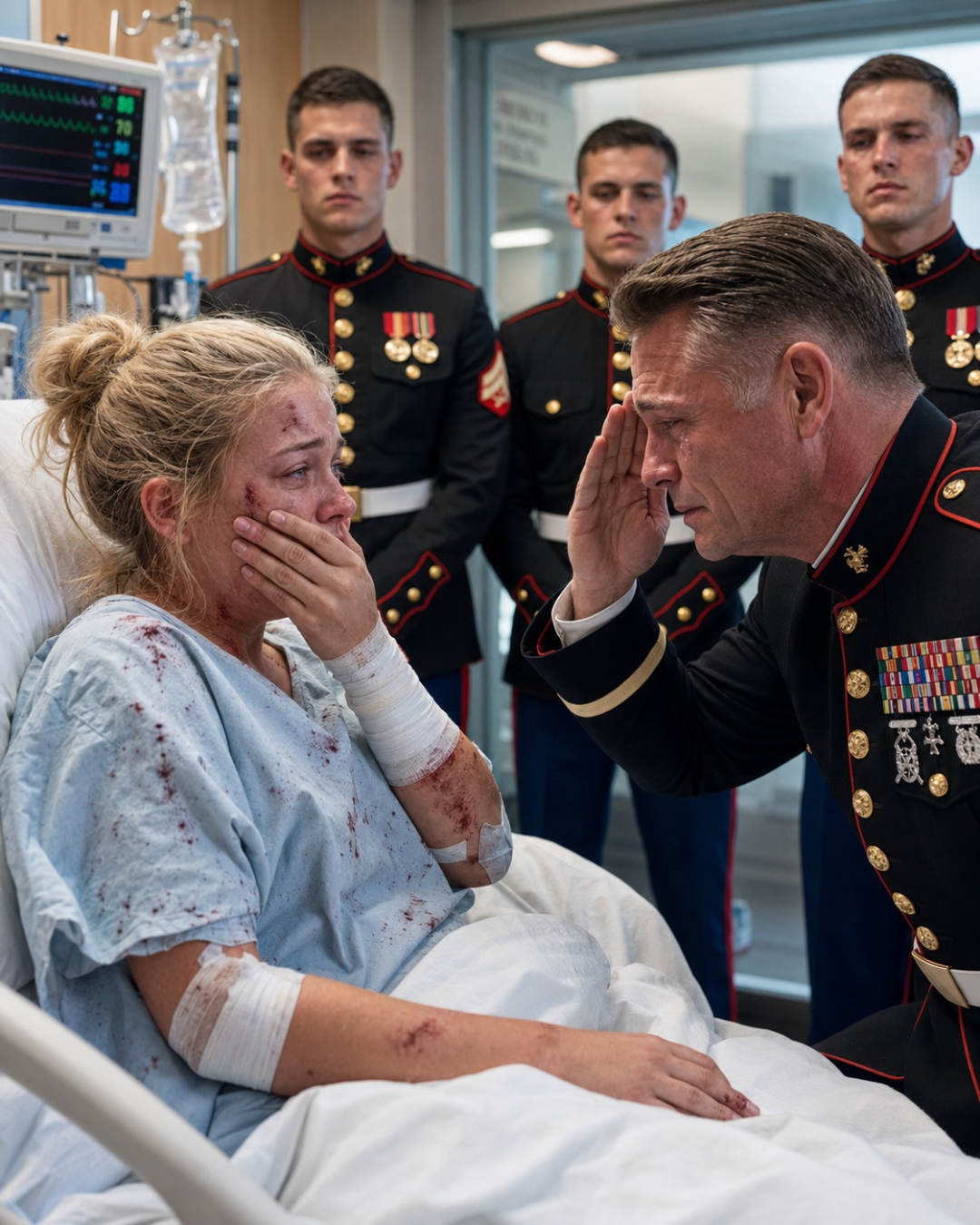
The older officer held his salute while tears gathered in his eyes, and I lay frozen beneath blankets, tubes, bandages, and disbelief.
Behind him, five Marines stood motionless in full dress blues, their faces grave with the kind of gratitude words usually fail to carry.
I tried lifting my right hand, but pain tore through my shoulder and ribs so fiercely that the nurse immediately stepped forward.
“Please do not move,” she whispered, carefully adjusting my intravenous line while the officer finally lowered his trembling salute.
He approached my bedside slowly, removing his white cover before introducing himself as Colonel James Mercer, commanding officer and Lucas Mercer’s father.
The wounded Marine outside the taco shop had a name now, and hearing it suddenly made the blood, sirens, and fear painfully real.
“Corporal Lucas Mercer is alive because you stood between him and men who returned specifically to finish killing him,” Colonel Mercer said.
My throat tightened beneath dryness and medication, yet the only question that mattered escaped before fear could stop it.
“Is he awake?” I whispered, because I needed to know the stranger behind me had survived the price my body paid.
Colonel Mercer closed his eyes briefly, then answered that Lucas completed emergency surgery and was stable inside intensive care downstairs.
Relief struck harder than pain, breaking something inside me until tears slid toward my ears against the stiff hospital pillow.
The colonel placed one hand gently against the bedrail, as though touching me directly required permission he felt unworthy requesting.
“My son remembers your voice,” he said. “He remembers bleeding on pavement while you kept promising he would not die alone.”
I turned toward the window because praise felt unbearable when I could still hear knives striking, people screaming, and my own lungs failing.
Outside, morning sunlight fell over San Diego buildings as though ordinary life had permission to continue beyond whatever happened beneath neon lights.
The doctor entered minutes later with a chart, explaining injuries I had not yet gathered enough courage to imagine clearly.
Seven wounds had damaged muscle in my shoulder, arm, and back, while two broken ribs made breathing sharply painful.
One blade had narrowly missed my lung, and another had stopped millimeters from an artery surgeons feared they could not repair.
I listened without speaking, because being told you nearly died feels strangely distant when another person almost died behind you.
Colonel Mercer remained beside the wall throughout the explanation, his decorated uniform rigid while his father’s grief moved silently underneath.
When the physician finished, he asked whether he could visit again after I rested, because Lucas would eventually want to thank me himself.
I nodded weakly, then watched six Marines leave my room with footsteps far quieter than their uniforms suggested they could be.
The nurse dimmed the lights and adjusted my medication, but sleep refused to arrive while the parking lot replayed behind my eyelids.
I remembered grocery bags falling, tortillas spilling from torn paper, blood darkening camouflage, and two men walking toward us without hesitation.
I remembered choosing to stand, although no training manual ever explains how a person decides another stranger deserves her body as shield.
Hours later, Detective Rosa Alvarez arrived carrying a recorder, two paper cups of coffee, and an expression practiced around injured witnesses.
She apologized for questioning me so soon, but explained the attackers remained unidentified and might have targeted Lucas for a reason.
I told her everything slowly, pausing whenever pain stole breath or memory blurred beneath medication, fear, and exhaustion.
Detective Alvarez listened without interruption until I mentioned Lucas whispering that the men had followed him before collapsing beside the curb.
Her eyes sharpened then, and she asked whether I saw a vehicle, tattoo markings, weapons, or anything else identifying.
I remembered the tattooed attacker’s neck, where black ink formed a snake twisting through the letters V and R.
The detective wrote it carefully, then told me officers recovered security footage from the taco shop and surrounding businesses overnight.
Before leaving, she hesitated beside my doorway, turned back, and said most people would have stepped away when the knife appeared.
“I am not sure I was thinking,” I answered, embarrassed by her admiration because terror had never felt remotely heroic.
“That is the strange thing about courage,” Detective Alvarez replied. “People usually recognize it afterward, because during it they are busy surviving.”
After she left, I slept for nearly six hours and woke to the sound of someone arguing quietly beyond my hospital door.
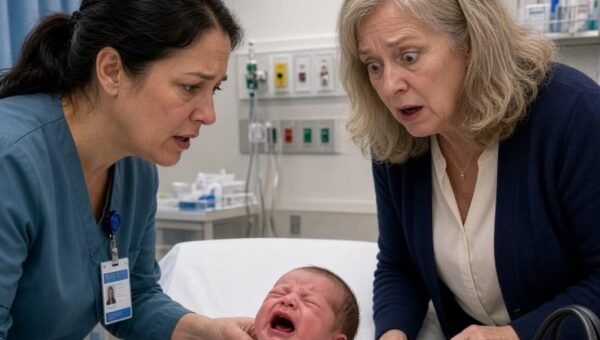
A familiar female voice demanded information from the nurse, insisting she was my emergency contact and entitled to immediate access.
My stomach tightened before my mother entered, wearing a camel coat, pearl earrings, and the alarmed irritation she reserved for inconvenient disasters.
She stopped beside my bed, stared at the bandages, then placed her handbag carefully onto the only clean chair.
“Emily,” she breathed, “what on earth possessed you to get involved in something dangerous after working an exhausting shift?”
It was not the question I hoped she would ask, although disappointment should have lost its ability to surprise me years earlier.
My mother loved me in cautious portions, provided I remained employed, sensible, unmarried only temporarily, and never needed anything frightening.
“I was helping somebody bleeding,” I said, my voice rough. “Two men came back to hurt him, and I stopped them.”
She pressed her lips together, looking toward monitors instead of my eyes, as if machinery might offer a less troubling daughter.
“You are an EMT, not a police officer,” she replied. “You cannot keep sacrificing yourself for every stranger who makes terrible choices.”
A laugh almost rose through my throat, but my ribs punished the attempt, forcing a sharp gasp that summoned the nurse instantly.
My mother stepped backward as the nurse checked pain levels, perhaps uncomfortable with witnessing consequences of the criticism she delivered casually.
When the room settled, she told me television stations were already requesting interviews because the wounded man belonged to an important Marine family.
There it was, the first detail she could understand completely: not survival, not compassion, but status bright enough to impress neighbors.
“I did not know who he was,” I said. “He was simply injured, and nobody else stopped before I did.”
My mother studied my face as though trying to determine whether such an answer reflected nobility or a lifelong lack of judgment.
Before she responded, the hospital door opened again, and Corporal Lucas Mercer appeared in a wheelchair pushed by a corpsman.
His face was pale, his torso heavily bandaged beneath a hospital gown, and his left hand shook against the wheelchair arm.
My mother moved aside instantly, adjusting her coat when she noticed Colonel Mercer and two Marines waiting respectfully behind him.
Lucas stared at me for several seconds before covering his mouth, struggling against tears that made his injuries seem suddenly younger.
“I kept trying to remember your face,” he said, voice broken. “All I remembered was blue scrubs and somebody refusing to move.”
I smiled despite the pain, telling him he looked considerably better upright than bleeding under a taco shop sign at midnight.
He laughed once, then winced fiercely, gripping his ribs while the corpsman warned both patients that humor required medical supervision.
The brief laughter released tension none of us knew how to name, and even Colonel Mercer looked away to compose himself.
Lucas explained he had left base that evening to meet a fellow Marine struggling financially after an injury ended deployment opportunities.
The meeting turned dangerous when the former friend introduced two men involved in selling stolen military equipment and prescription medication.
Lucas refused participation, threatened to report everything, and fled after one attacker struck him with a tire iron outside a warehouse.
He reached the crowded taco shop believing public witnesses would protect him, unaware fear often makes crowds become spectators rather than rescuers.
“I saw you drop your groceries,” Lucas whispered. “You looked completely exhausted, but you still ran toward me when everyone backed away.”
My mother lowered her gaze then, perhaps finally understanding the stranger she considered reckless had received the kindness she rarely gave.
Lucas reached carefully into the pocket of his hospital robe and removed a folded, bloodstained blue fabric scrap inside plastic.
“It came from your scrub sleeve,” he said. “The paramedics found it beneath my hand, because I held on.”
I stared at that scrap, suddenly remembering his fingers gripping my arm while sirens reached us across the parking lot.
Colonel Mercer told me investigators arrested one attacker before dawn after recognizing the neck tattoo inside restaurant surveillance footage.
The second man remained missing, but evidence recovered from the warehouse connected both suspects to stolen equipment and narcotics distribution.
My intervention had not only protected Lucas during those minutes; it preserved the witness whose testimony could dismantle an operation harming service members.
That explanation should have made me proud, yet all I felt was exhaustion and the ache of realizing danger remained somewhere outside.
Detective Alvarez arranged protection near my room that afternoon, because the missing attacker now understood exactly who kept Lucas alive.
For the first time since waking, fear entered without adrenaline, cold and deliberate, crawling beneath hospital blankets I could not push away.
Lucas saw the change in my face and apologized until I stopped him, because his survival was never something requiring forgiveness.
“You did not put the knife in anyone’s hand,” I told him. “You were hurt, and I made the choice to stay.”
Colonel Mercer listened silently, then told my mother he hoped she understood her daughter had shown extraordinary bravery under lethal threat.
Mother nodded too quickly, murmuring that Emily had always been stubborn, turning courage into a childhood flaw she recognized more easily.
The colonel’s expression cooled slightly, but he offered no correction, perhaps understanding battles between mothers and daughters are rarely won publicly.
Three days later, I underwent another surgery to repair nerve damage in my shoulder, threatening the arm I used every shift.
My surgeon warned recovery could last months, and returning to emergency medical work might depend upon strength my body never fully regained.
That possibility frightened me more than the stitches, because being useful had been the closest thing I possessed to identity.
After surgery, I woke screaming from a nightmare, striking at hands that were only trying to adjust my oxygen mask.
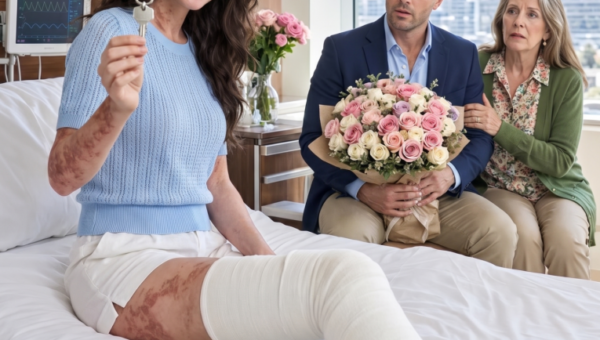
A nurse calmed me while Colonel Mercer waited outside, holding flowers he never delivered because security had restricted visitors overnight.
When he returned the following morning, he brought no flowers, only coffee for nurses and a letter signed by Lucas’s entire unit.
The Marines thanked me for guarding one of their own, but the final sentence made my vision blur unbearably.
“You were alone in that parking lot, but you are not alone in what comes after it,” the letter promised.
I folded it against my chest, careful of stitches, and cried harder than I had when doctors described my injuries.
Before the attack, I rented a one-bedroom apartment above a laundromat, worked overtime, and rarely asked anybody for help.
My father had died when I was fourteen, and my mother handled grief by teaching herself never to depend upon anyone.
She taught me bills, schedules, restraint, and survival, yet forgot that people also need somewhere safe to be frightened.
That hospital room became the first place where strangers arrived repeatedly without demanding I appear less broken for their comfort.
Marines rotated through visits after Lucas stabilized, bringing handwritten cards, terrible vending-machine snacks, and stories intended to make me laugh carefully.
One elderly veteran arrived with a walker and told me he never met Lucas but recognized the meaning of standing guard.
A Navy corpsman taught me breathing exercises for nightmares, explaining the body often continues fighting after the danger has disappeared.
The missing attacker was arrested eleven days later in Arizona, carrying stolen medication, forged identification, and photographs of military shipments.
Detective Alvarez delivered the news herself, smiling when I exhaled deeply enough to trigger a painful but welcome cough.
“You can stop watching every doorway now,” she said, although we both understood my body would require longer to believe her.
Lucas recovered faster than I did, walking with a cane through rehabilitation halls while I still struggled lifting my left hand.
He visited physical therapy twice each week, sitting nearby while therapists forced my shoulder through movements that left me sweating.
Whenever I wanted to quit, he produced the plastic bag containing my torn blue sleeve and placed it silently beside my water bottle.
“That is unfair emotional manipulation,” I told him once through tears, and he grinned because complaint meant I still had fight.
Colonel Mercer eventually asked permission to nominate me for a civilian lifesaving recognition presented through the Department of the Navy.
I refused at first, saying I had performed my job outside working hours and wanted no attention surrounding someone else’s trauma.
He listened politely, then reminded me that accepting honor could show bystanders what happens when ordinary people choose involvement over distance.
I thought of everyone standing with phones raised while Lucas bled and attackers cut into the woman shielding him.
So I agreed, not because medals could repair muscle or erase nightmares, but because silence sometimes teaches crowds the wrong lesson.
The criminal trial began seven months later, after my scars faded from angry red lines into silver marks beneath long sleeves.
Walking into court proved harder than walking toward danger, because this time I knew exactly how much fear could take.
Lucas testified before me, describing the warehouse, the pursuit, and the moment my body blocked the final attack intended for him.
The defense attorney suggested he exaggerated events to protect his career after becoming involved with questionable people outside his unit.
Lucas remained steady, admitting he trusted the wrong friend while refusing to accept responsibility for men choosing attempted murder.
When my turn arrived, I gripped the witness stand carefully, shoulder aching beneath a navy jacket selected to conceal nothing important.
I described finding Lucas injured, seeing attackers approach, hearing his warning, and positioning myself where medical training demanded access to him.
The attorney asked whether I considered stepping away, phrasing self-preservation like evidence that my choices were unbelievable or suspicious.
“Yes,” I answered truthfully. “I was terrified, but he was already bleeding, and terror did not make leaving him acceptable.”
The courtroom remained silent after that answer, and one juror wiped her cheek before returning her attention to official notes.
Surveillance video played later, stripped of sound but not meaning, showing blue scrubs repeatedly rising between knives and a wounded stranger.
I watched only once, because seeing courage from outside still felt mostly like watching a woman I wanted desperately to rescue.
The jury convicted both attackers on attempted murder, assault, conspiracy, trafficking, and theft charges connected to the warehouse operation.
Outside the courthouse, reporters gathered around Lucas and Colonel Mercer, but the younger Marine stepped away from microphones immediately.
He crossed through cameras toward me, stood carefully despite lingering pain, and saluted with tears shining beneath the bright afternoon sun.
I returned the gesture awkwardly in civilian clothes, my shoulder weak, my heart suddenly far stronger than months earlier.
My mother stood several yards behind the reporters, holding a small bouquet and an expression I had never seen before.
She approached only after the cameras shifted away, extending flowers with hands that trembled despite her carefully buttoned coat.
“I watched the video,” she whispered. “I kept thinking I should have been proud before strangers explained why.”
The apology did not repair everything, but it entered without excuses, and sometimes broken relationships begin healing through one honest sentence.
“I needed you to be scared for me,” I said softly, “before you started telling me what I should have done.”
Her eyes filled immediately, and she nodded without arguing, because love finally sounded more important than being right to her.
Three weeks later, the Navy held a ceremony at Marine Corps Recruit Depot San Diego beneath flags snapping in coastal wind.
I wore a simple blue dress because my scars still made uniforms uncomfortable, while Lucas stood proudly in dress blues beside his father.
Rows of Marines filled the courtyard, joined by nurses, paramedics, police officers, grocery-store clerks, and taco-shop employees who remembered everything.
The commanding general spoke about service beyond enlistment, courage beyond orders, and responsibility that begins when somebody else needs help.
Then Colonel Mercer stepped forward carrying a medal suspended from a ribbon and a citation written with impossible solemnity.
He described an off-duty EMT placing herself between armed assailants and a wounded Marine despite having no weapon or protection.
He described seven wounds, sustained pressure on Lucas’s injury, and the refusal to stop treatment while her own blood covered pavement.
When he pinned the award against my dress, hundreds of Marines rose together, their applause rolling across the courtyard like surf.
I looked toward Lucas, who stood at attention with his eyes shining, and understood the ceremony belonged to survival more than heroism.
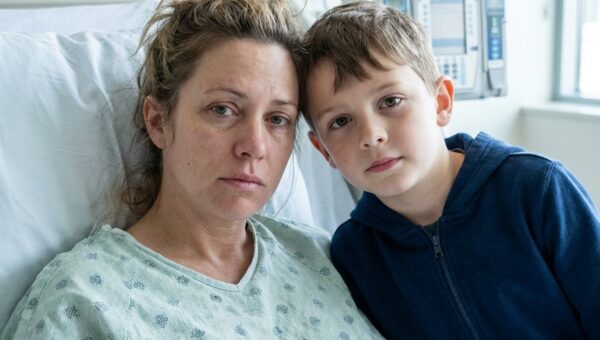
Afterward, he introduced me to his mother, a quiet woman named Caroline who hugged me gently and could not stop crying.
She said Lucas still called her after nightmares, sometimes unable to explain whether he remembered knives or my body falling.
I told her I still woke hearing sirens, and she held my hands like shared fear made us something resembling family.
Rehabilitation continued after public recognition faded, because praise disappears quickly while damaged nerves insist on demanding patience every morning.
Some days, I could lift medical equipment without shaking; other days, fastening buttons left me angry enough to cry.
Mercy General offered administrative work until my strength returned, but sitting behind a desk made me feel separated from the person I remembered.
Lucas began visiting during lunch breaks, arriving with coffee and rehab updates until nurses started calling him my stubborn shadow.
He eventually returned to limited duty, determined to rebuild a career attackers nearly stole from him beside a crowded sidewalk.
I returned to ambulances eleven months after the attack, assigned first to shorter shifts while supervisors watched my shoulder carefully.
On my first call back, an elderly woman squeezed my hand and thanked me simply for arriving before pain overwhelmed her.
I cried inside the supply room afterward, not from fear, but because usefulness had returned without requiring my wounds to vanish.
Two years later, Lucas completed specialized training and received new orders, standing taller than the boy bleeding beneath neon lights.
Before leaving San Diego, he met me outside the taco shop, rebuilt now with brighter windows and a security camera.
He handed me a small wooden frame containing the torn scrap of my blue scrub sleeve beneath engraved silver words.
She stood between death and a stranger, and the stranger became family because she refused to leave.
I hugged him carefully, feeling scars pull beneath my shoulder while remembering the night my life changed without asking permission.
“Next time,” I told him, attempting a smile, “please choose quieter places when deciding to meet important people.”
He laughed, promised to improve his timing, then saluted one final time before walking toward his father’s waiting truck.
My mother eventually began volunteering at Mercy General, serving coffee to patient families and listening more than she spoke.
She never became sentimental, but she learned to ask whether I hurt before explaining how she thought I should cope.
Colonel Mercer sent a Christmas card each year, always including Lucas’s newest photograph and a handwritten line thanking me again.
I kept those cards beside the framed fabric scrap, although gratitude never fully explained what that night gave me too.
Before the stabbing, I believed strength meant handling exhaustion alone, treating emergencies professionally, and returning home without needing witness or comfort.
Afterward, I learned strength also means accepting hands that carry you after you spend yourself carrying someone else away from danger.
People still call me brave when the story surfaces, usually lowering their voices as though bravery remains sacred and uncomplicated.
I always tell them the truth: I was afraid, bleeding, desperate, and unsure whether either of us would survive.
Courage was not the absence of terror beneath those parking-lot lights; courage was refusing to let terror choose who mattered.
That Marine had no name when I knelt beside him, no powerful father, no uniform impressive enough to change my decision.
He was simply a wounded human being asking silently whether somebody would stop long enough to keep him alive.
I stopped.
Years later, whenever my scars ache before rain, I still remember the knife entering before my mind understood danger completely.
Then I remember hospital doors opening, six Marines standing silently, and one father saluting a stranger through tears of gratitude.
That salute did not make my choice worthy, because Lucas’s heartbeat had already done that before anybody learned my name.
But it reminded me that a life saved never belongs to one person alone; it keeps moving outward, touching everyone waiting beyond fear.