
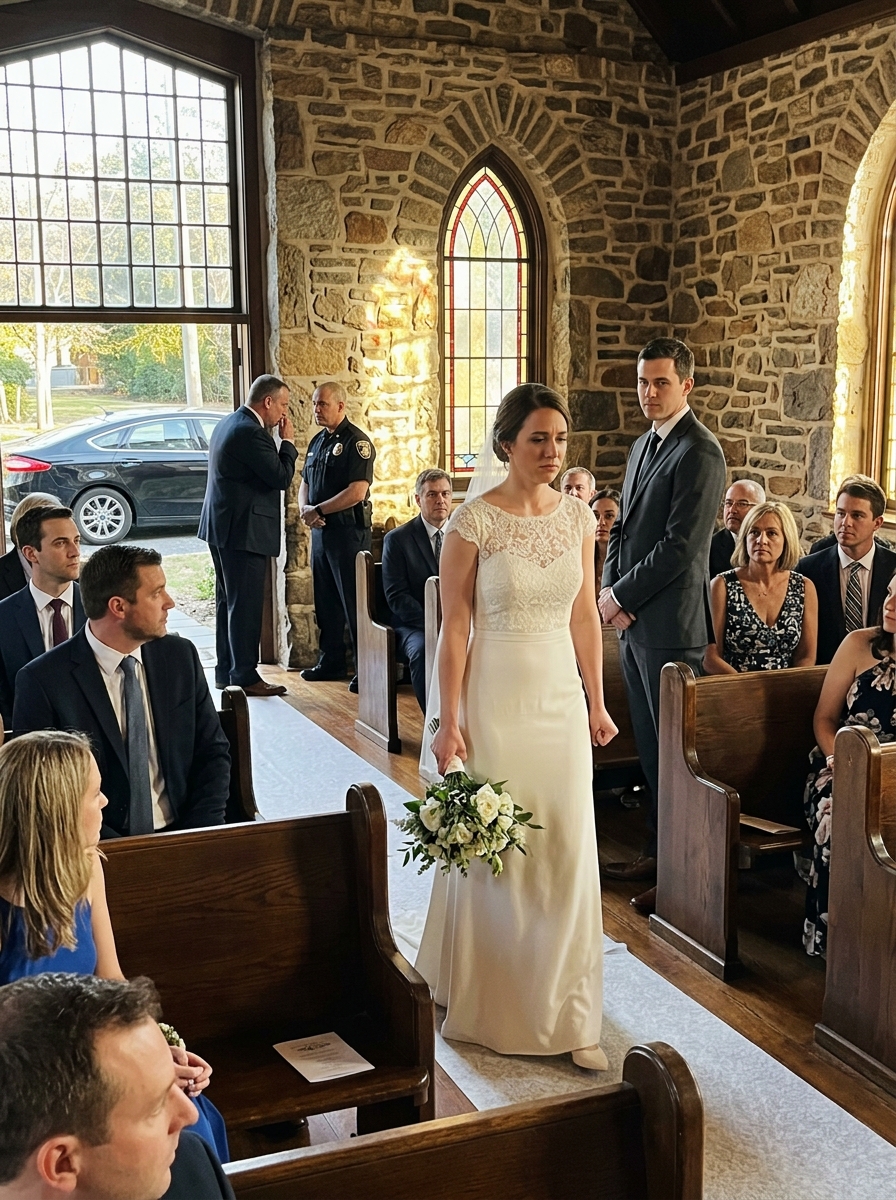
My Family Skipped My Wedding for London Then Learned Who My Groom Was
My family left for London on the morning of my wedding.
By the time I stepped into the small stone chapel in northern Virginia, they were somewhere over the Atlantic with matching passports, oversized coffees balanced on their tray tables, and absolutely no idea what they had chosen to miss.
What stung was not even the trip itself.
It was how ordinary the decision must have felt to them.
My mother texted the cancellation the way people reschedule hair appointments. My father called it unfortunate timing. Lydia sent a selfie in the airport lounge with a neck pillow around her shoulders and a wink in the caption, as if we were all still participating in the same harmless family joke.
Three empty seats waited in the front row while I stood in a white dress holding a bouquet so tightly my fingers shook around the stems.
My name is Elena Ward.
I was thirty-five that spring, old enough to understand that patterns do not become accidents simply because the people causing them smile while they happen.
My family had never specialized in dramatic cruelty. They never screamed. Never disowned me. Never said the sharp, obvious things that make outsiders immediately understand damage.
What they mastered instead was something quieter.
Delay.
Minimization.
Substitution.
They had an almost artistic ability to treat my life as something permanently movable. Every important moment could apparently be celebrated later, after the vacation, after the easier weekend, after Lydia’s newest emergency, after my father’s golf schedule settled down, after my mother’s social calendar stopped orbiting other people’s plans.
There was always another time.
When I was seventeen, they missed my scholarship ceremony because Lydia had a dance showcase across town.
My mother promised we would “make it special later.”
Later turned into takeout Chinese at the kitchen counter while Lydia talked about costumes for two straight hours.
When I made captain during my service years, they sent flowers with a card that said traffic downtown sounded terrible.
When I was recognized at work for leading a response team through a brutal winter crisis that had exhausted half the department, my mother asked me to text pictures because she and my father already had dinner reservations with friends.
No one ever looked me in the eye and said I did not matter.
That was what made it confusing for so long.
They simply behaved as though my importance required no participation from them.
I was the reliable daughter.
The practical daughter.
The one who understood.
The one who could absorb disappointment without making everybody uncomfortable afterward.
For years, I mistook that role for maturity.
I told myself I did not need applause.
I told myself independence was strength.