Advertisement

My Father Blamed My Combat Scars Until One Recording Exposed His Attack Before the Judge…-haohao

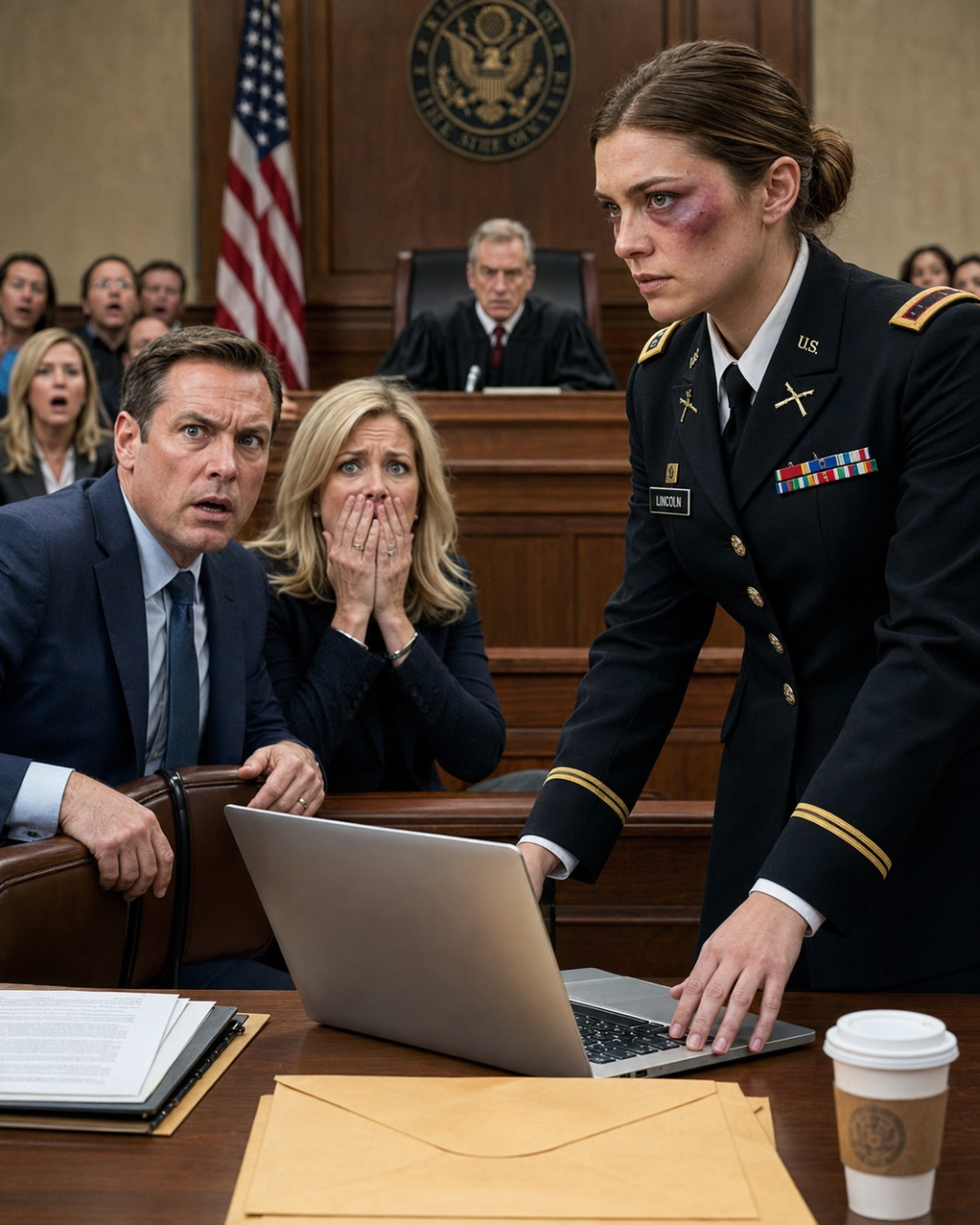
The bailiff accepted the USB drive carefully, as though its tiny metal body already weighed more than every accusation stacked against me.

Advertisement

My father rose halfway from his bench, then remembered witnesses were watching and lowered himself with a stiff, unnatural slowness.

Advertisement

His attorney objected immediately, claiming surprise evidence should not be admitted from a defendant whose judgment remained under serious question.

Judge Greene raised one weathered hand, ordered him silent, and asked my attorney whether the recording had been properly authenticated.

My lawyer, Captain-turned-civilian advocate Miriam Cole, stood firmly beside me and produced chain-of-custody affidavits, device metadata, and a certified duplicate.

She explained that my grandfather installed security cameras after livestock thefts, and the farmhouse system automatically stored audio from every porch confrontation.

The recording came from my telephone too, because I had activated emergency documentation when my father arrived uninvited and furious.

Judge Greene studied the filings, then instructed the clerk to connect the drive while my mother suddenly began whispering urgently.

Sylvia gripped Walter’s sleeve, and he jerked away from her touch as though the person endangering him had become his wife.

The courtroom monitor flickered blue, then displayed my grandfather’s porch beneath a dark April sky and a timestamp glowing above the railing.

I appeared in civilian clothes, wearing an old Army sweatshirt, carrying feed invoices and a folder containing repairs the farm desperately needed.

Then Walter entered the frame without knocking, his boots grinding gravel while my mother lingered beside their truck with folded arms.

The recording carried his voice clearly, low and venomous, demanding that I sign authority transferring the farm into his control immediately.

Onscreen, I refused calmly, explaining Grandfather legally left the property to me and no court had questioned my rightful ownership.

My father laughed and said Arthur had become senile, while I had become a damaged soldier desperate to feel important.

The gallery no longer coughed or shuffled; every breath seemed suspended while Walter’s courtroom performance dissolved into his own recorded voice.

He demanded I accept guardianship papers, promising he could manage the farm once my combat nightmares finally placed me in treatment.

I answered that my physician cleared me for duty, my command supported my leave, and my grandfather’s deed required no parental approval.

His voice rose then, revealing something he had hidden carefully behind church suits, sympathy statements, and a lawyer’s polished vocabulary.

He said a wind-energy company had offered nearly four million dollars for the hillside parcels, and I was blocking his retirement.

My mother’s head dropped in the courtroom, because this was not concern for my wellbeing but appetite finally speaking without disguise.

On the screen, Walter seized my folder, scattered invoices across the porch, and ordered me to stop pretending the land belonged to me.

I stepped backward, told him to leave, and reached for my telephone when he called me an ungrateful, shell-shocked disgrace.

Then the recording captured the slap, a sharp violent crack, followed by my shoulder striking the wooden porch rail behind me.

Several people in the gallery gasped, and the deputy near the wall slowly shifted closer to my father’s front-row seat.

Read More

He said bruises could prove anything when a disturbed daughter attacked her father, then ordered Sylvia to collect the scattered papers.

My mother appeared briefly in frame, saw blood beneath my eye, and quietly placed my grandfather’s transfer documents inside her purse.

The recording ended with my father promising that by court day, nobody would believe a broken woman over respected parents.

Judge Greene did not speak immediately, because righteous anger often becomes more terrifying when disciplined by a lifetime behind the bench.

His eyes moved from the blank screen to my bruise, then toward Walter, who now sat rigidly with colorless lips.

My father’s attorney requested an immediate recess, arguing the recording lacked context and might portray normal family distress unfairly before witnesses.

Judge Greene denied the request, stating that ordinary family distress seldom included assault, threats, stolen documents, and apparent financial motive.

He directed the deputy to secure both my parents within the courtroom until law enforcement reviewed potential criminal conduct described onscreen.

Walter finally exploded, shouting that the farm belonged to his bloodline and I had abandoned family for medals and foreign wars.

I stood perfectly still, because nothing I could say made him appear more cruel than the truth escaping his own mouth.

My mother began crying then, claiming she never understood his plans and had only accompanied him because wives obey frightened husbands.

I remembered her bending on the porch, collecting evidence beside my injured feet, and discovered pity had finally abandoned me.

Miriam asked the judge for permission to continue, because the assault recording represented only one section of our documented response.

She introduced the original deed, signed by Arthur Vale while independent physicians confirmed competence and two unrelated witnesses observed voluntarily.

My grandfather had transferred the farm six months before his death, preserving grazing rights, conservation boundaries, and one deeply important prohibition.

No mineral extraction, residential subdivision, or industrial development could occur while I owned the land or any trust controlled it.

That clause explained my father’s urgency, because the energy company required unrestricted title before discussing payments, easements, or construction access.

Miriam displayed emails obtained during discovery, showing Walter secretly promised corporate representatives that my incapacity hearing was merely procedural cleanup.

In one message, he described me as emotionally manageable once doctors and judges heard the right stories about deployment trauma.

In another, Sylvia recommended photographing my medicine cabinet and arranging empty liquor bottles inside the farmhouse before an evaluator visited.

My mother covered her mouth when her own words filled the projector screen, formatted professionally and impossible to dismiss as confusion.

Judge Greene asked whether those communications had been disclosed during filing, and my father’s attorney suddenly looked furious rather than confident.

He admitted receiving no emails, no wind-company proposal, and certainly no warning that his client had physically assaulted the property owner.

Walter told him to stop grandstanding and remember who paid him, a statement so reckless the clerk briefly stopped typing.

Then Miriam opened the folder I had protected through deployments, funerals, rehabilitation appointments, and the worst six days of my life.

Inside was my grandfather’s final video statement, recorded in his kitchen three weeks before pneumonia carried him into the hospital.

Arthur appeared beneath the same brass clock he repaired every winter, wearing flannel and the veteran cap he saved for Sundays.

He identified himself, the date, his lawyer, and his physician, then placed the deed before the camera with steady hands.

My grandfather said he was leaving the farm to Leah because she respected land, labor, promises, and people without demanding applause.

He described my father’s visits, each beginning with false concern and ending with demands to sell acreage for easy money.

Arthur said Walter mocked my service privately, calling an Army career a useful disguise for a daughter too stubborn to marry.

My jaw tightened, because I had heard insults before, yet hearing Grandpa had defended me alone made grief return violently.

Onscreen, Arthur leaned toward the camera and warned that any claim questioning my mind should be treated as retaliation and greed.

He had met my military physician, reviewed my evaluations, and proudly watched me command soldiers through responsibilities Walter never understood.

Then Grandpa smiled faintly and said his granddaughter’s scars proved not instability, but devotion far greater than his son possessed.

I lowered my gaze before tears could fall onto my uniform, unwilling to let my father’s cruelty steal this moment too.

Arthur’s statement ended with one request: that I restore the barn roof, protect the creek, and finally call the farm home.

When the screen darkened, nobody laughed, and even the rattling heater seemed quieter beneath what my grandfather had left behind.

Judge Greene asked me to approach the witness stand, not as a defendant needing rescue, but as the lawful property owner.

I raised my right hand carefully, the bruise throbbing beneath courtroom light, and swore to tell everything my family feared.

Miriam asked why I had returned to Cumberland County after years of service, rehabilitation, and assignments across several states overseas.

I explained that Grandpa’s hip failed during winter, making feeding cattle, clearing fences, and maintaining pumps increasingly dangerous for him.

My command approved compassionate reassignment nearby, allowing me to serve while spending evenings repairing what age had quietly taken from Arthur.

He never asked me for money or heroics, only coffee, companionship, and help saving newborn calves during violent February storms.

During those months, he told me the farm should remain a refuge, not become turbines and roads benefiting distant investors.

When he signed the deed, I asked whether Caleb should receive part, despite my brother avoiding Grandpa for nearly ten years.

Arthur answered that inheritance should honor care rather than reward surnames, then insisted Caleb already received financial assistance repeatedly before.

My brother rose suddenly from the gallery, pale and furious, saying he never knew Walter requested loans using Caleb’s name.

A deeper silence followed, because my father’s control apparently stretched farther than the bruised daughter he selected for public destruction.

Miriam asked whether I suffered post-traumatic stress symptoms, and I answered honestly that combat changed sleep, hearing, and certain memories forever.

I attended therapy, completed medical assessments, reported symptoms accurately, and remained trusted by the Army because seeking treatment demonstrated responsibility.

Then I looked directly at my parents and said illness had never struck my face, stolen deeds, or forged courtroom narratives.

The courtroom absorbed that distinction slowly, as though people were reconsidering every veteran they had quietly judged from frightened distance.

My father’s attorney declined cross-examination, explaining to the judge that newly revealed evidence required him to reconsider his ethical participation.

Walter called him a coward, but Judge Greene ordered my father silent and warned his next eruption would mean contempt.

The judge recessed briefly while deputies contacted investigators, then returned carrying written orders assembled with swift, deliberate precision for everyone present.

He dismissed the petition for guardianship with prejudice, affirming my complete title and authority over Arthur Vale’s protected family farm.

He issued restraining orders preventing Walter and Sylvia from approaching me, entering the farm, or contacting prospective purchasers regarding land.

He referred suspected assault, evidence tampering, attempted fraud, and perjury to county prosecutors for immediate independent investigation and charging decisions.

Then Judge Greene removed his glasses and spoke directly to me, his tired eyes carrying something gentler than sympathy or ceremony.

“Major Hart,” he said, “the court recognizes your service, but more importantly it recognizes your right to safety and truth.”

I thanked him, though my voice shook, because being believed should never feel miraculous when an injury is plainly visible.

Deputies approached Walter before he reached the courtroom doors, and for once his size, reputation, and polished buckle offered nothing.

My mother begged me to say the slap never happened, insisting prison would permanently destroy the family Grandpa wanted preserved.

I answered that my father’s hand damaged our family, while her willing silence carefully helped him lift it against me.

Sylvia collapsed onto a bench, but I did not move toward her, because daughters are not bandages for complicit mothers.

Outside the courthouse, wind drove rain across the square, making my uniform darken at the shoulders while reporters waited cautiously.

I gave no dramatic statement, only confirmed the farm remained protected and that veterans deserve treatment without having violence dismissed.

My commanding officer called before I reached my truck, asking whether I wanted leave extended and whether military support had arrived.

I realized my hands were shaking only after hearing concern without accusation, and I finally allowed myself to breathe unevenly.

That evening, I drove to Arthur’s farm through wet fields shining beneath storm clouds, following the gravel road he loved.

The farmhouse stood dark except for the porch camera light, the same tiny witness my father had never considered worth noticing.

I unlocked the door, placed my service cap beside Grandpa’s photograph, and found his work gloves still folded near the sink.

Grief took me then, not gently, but with the full weight of a childhood spent begging dangerous people for approval.

I cried for the grandfather who protected me, the mother who failed me, and the father I finally stopped fearing.

Over the following months, Walter pleaded guilty after investigators uncovered forged filings, secret negotiations, and messages planning my supposed breakdown.

Sylvia cooperated for reduced charges, returning documents and admitting she helped construct stories portraying combat service as madness and weakness.

Caleb visited the farm one cold morning, bringing lumber for the barn roof and an apology burdened by years away.

I accepted his help without promising closeness, because shared blood cannot repair shattered trust faster than daily choices permit it.

Together we replaced broken boards while creek water moved below the pasture, carrying rain and old anger beyond the fence.

My bruise faded from purple to yellow, then disappeared, although photographs and memory preserved exactly who had placed it there.

I remained in therapy, not because Walter’s lawyer was right, but because surviving violence deserved care instead of hidden endurance.

When my unit later promoted me to lieutenant colonel, I held the ceremony in Grandpa’s restored barn beneath weathered beams.

Soldiers, neighbors, farm workers, and my attorney gathered beside bales of hay, while no chair was reserved for my parents.

Before accepting the insignia, I played a short recording of Arthur laughing while teaching me to reverse his ancient tractor.

His voice filled the barn warmly, untouched by courts, bruises, accusations, or the family greed he anticipated with painful clarity.

I told everyone the farm would support a retreat program for veterans rebuilding lives after deployments, injuries, and domestic violence.

The hillside my father planned selling would remain open, green, and quiet, protected by the promise Grandpa trusted me to keep.

The retreat’s first visitors arrived in autumn, carrying duffel bags, service dogs, medication bottles, and expressions I understood immediately without questions.

One young corporal asked whether sleeping in the barn apartment meant weakness, because crowded hotels triggered memories he could not control.

I told him safety was not surrender, and seeking a quiet place after war required courage his critics rarely possessed themselves.

We walked the pasture afterward, repairing loose wire while he spoke carefully about injuries nobody in his hometown wanted acknowledged openly.

That evening, watching him laugh beside other veterans, I understood Arthur’s land was doing what he always intended for wounded people.

It was shelter without shame, work without judgment, and proof that inheritance means responsibility long after legal ownership becomes settled.

My father’s greed nearly sold that purpose away, but one recording, one bruise, and one truthful hearing finally protected it.

Some mornings, I still touch the place beneath my eye where Walter’s hand revealed exactly who he had always been.

Then I fasten my uniform, step onto Arthur’s porch, and remember that truth sometimes begins with the sound nobody can deny.

Advertisement
info@teaytech

info@teaytech

80 articles published