My mom cut me off for marrying a single mother — three years later,

My father walked out when I was five, so for most of my childhood, it was just my mother and me.
We never struggled for money.
My mother, Vivienne, came from a wealthy family and made sure I had everything she believed a boy needed to succeed. I attended private schools, took piano lessons three evenings a week, spent summers at academic programs, and wore a blazer to restaurants before I was old enough to tie my own shoes properly.
From the outside, my childhood looked privileged.
Inside our house, though, there was always a feeling that I was being measured.
A B on a report card meant we needed to discuss “what went wrong.”
Second place meant I had allowed somebody else to work harder.
If I played a piece beautifully but missed one note, my mother remembered the note.
She loved me. I know that now.
But as a child, love didn’t feel like something I already had.
It felt like something I was constantly trying not to lose.
After my father left, she became even stricter.
One evening, when I was about eight, I asked why he never visited.
She stopped sorting mail and looked at me.
“Because some people leave when life disappoints them, Calder. That’s why you make sure you never become a disappointment.”
I carried that sentence for years.
By twenty-seven, I had a good job at an investment firm, a clean apartment downtown, expensive suits, and the kind of future my mother could describe proudly to her friends.
Then I met Elise.
Nothing about her fit the life my mother had planned.
Elise worked nights as a respiratory therapist at a small clinic. She drove a twelve-year-old Honda with a dent in the passenger door and kept emergency crackers, crayons, and wet wipes in every compartment.
She was also raising her seven-year-old son, Micah, alone.
We met because I spilled coffee on her in a hospital cafeteria while visiting a coworker.
I expected her to be angry.
Instead, she looked down at the stain spreading across her scrubs and said, “Well, at least now people will stop asking whether I’ve had a long night.”
I laughed so hard I nearly dropped the second coffee too.
We had dinner a week later.
By our third date, Elise told me the truth without dressing it up.
“My life isn’t flexible,” she said. “Micah comes first. If his sitter cancels, I cancel. If he gets sick, I leave. And I don’t need anyone who’s going to resent that six months from now.”
I should have been intimidated.
Instead, I liked her more.
Micah was cautious around me at first.
He shook my hand the first time we met because apparently someone had told him that was what “grown men” did.
Over time, he stopped being formal.
He asked me to help build a cardboard solar system for school. He complained about vegetables at my apartment. He once called me at work because he had lost a tooth and apparently believed this was urgent information I needed immediately.
I didn’t feel trapped by their life.
I felt included in it.
My mother saw things differently.
When I first told her about Elise, we were having lunch at one of her favorite restaurants.
“She’s a respiratory therapist,” I said.
My mother nodded approvingly.
“She must be disciplined.”
“She is.”
“Family?”
“Her parents live out west.”
Mother took another sip of water.
“And?”
I knew exactly what she was asking.
“She has a son. He’s seven.”
Her expression changed so slightly most people wouldn’t have noticed.
I did.
“A son.”
“Yes.”
“Where’s the father?”
“Not involved.”
My mother placed her glass down.
“So you’re dating a woman with a child and an absent ex.”
“Elise isn’t a problem I’m trying to solve, Mom.”
“I didn’t say she was.”
But the rest of lunch told me exactly what she thought.
When she finally met Elise and Micah a month later, she was polite enough that nobody could accuse her of being rude.
That was my mother’s specialty.
She could make someone feel unwelcome without saying a single openly cruel thing.
She asked Elise how difficult it was to work nights “with so many responsibilities.”
She asked Micah whether he was “keeping up” at school.
When he proudly showed her a picture he had drawn, she glanced at it and said, “How colorful.”
In the car afterward, Elise looked out the window for a while before speaking.
“She doesn’t like me.”
“She barely knows you.”
“That’s not why.”
I knew she was right.
Still, I hoped time would fix it.
It didn’t.
Two years later, I told my mother I had proposed.
She was standing in her kitchen arranging flowers when I said it.
Her hands stopped.
“To Elise?”
I almost laughed.
“Yes, Mom. To Elise.”
She set the scissors down carefully.
“Calder, you have had two years to think about this.”
“I have.”
“And you still believe marrying into that situation is a wise decision?”
“That situation has names. Elise and Micah.”
She sighed.
“You’re twenty-nine. You could marry anyone. Start your own family. Have your own children.”
My stomach tightened.
“Micah isn’t some obstacle between me and a real family.”
“I didn’t say that.”
“You didn’t have to.”
For once, I didn’t let her redirect the conversation.
I told her I loved Elise. I told her I intended to marry her, and I hoped my mother would be there.
Vivienne stared at me for a long time.
Then she said something I didn’t think she would ever actually say.
“If you marry her, you are choosing a life I want no part of.”
I felt the words before I understood them.
“Are you saying you won’t come to the wedding?”
“I’m saying more than that.”
She folded her arms.
“You have every advantage in the world, Calder, and you are deliberately throwing them away. If you go through with this, do not come back to me when you realize what you’ve done.”
I waited for her to soften.
She didn’t.
So I nodded.
“All right.”
Her face changed.
I don’t think she expected me to accept the choice so easily.
“You’re serious?”
“Yes.”
“You would choose her over your own mother?”
“No. You’re making me choose between the woman I love and your approval.”
I picked up my coat.
“And I’ve spent my whole life choosing your approval.”
Then I left.
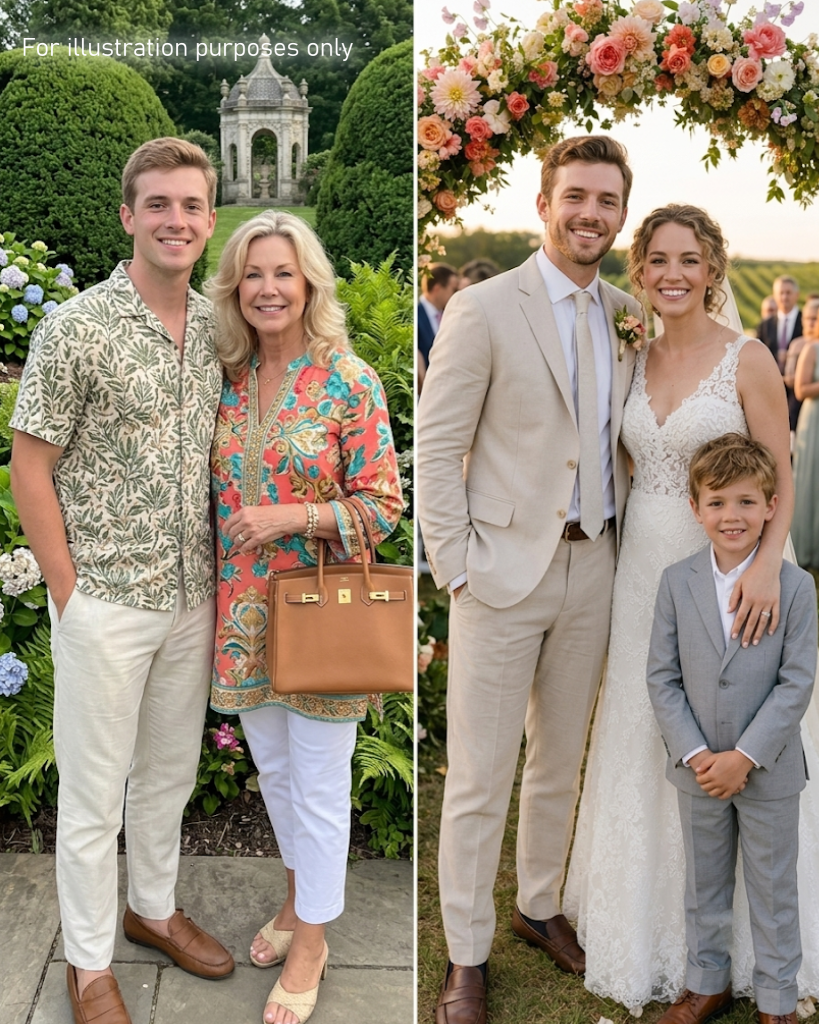
Elise and I married four months later in the backyard of one of her coworkers.
There were forty-two guests, folding chairs, string lights, supermarket flowers, and a cake that leaned slightly to the left.
My mother wasn’t there.
I looked toward the empty seat we had kept for her more times than I want to admit.
She never came.
After the wedding, Elise and I moved into a small two-bedroom rental on a quiet street.
It wasn’t impressive.
The kitchen cabinets didn’t close properly. The living room floor squeaked. Our couch came from a neighbor who was moving, and the dining table had a burn mark from its previous owner.
But something strange happened there.
I stopped feeling watched.
Nobody cared if dinner came from a box.
Nobody cared if the towels matched.
Nobody cared whether I made more money than someone else my age.
Some nights, Elise came home exhausted, kicked off her shoes, and ate cereal at the kitchen counter while telling me about her shift.
Micah left socks everywhere.
I learned how to pack school lunches and remove grass stains.
We argued about money sometimes.
We worried about bills.
We were not living some perfect little life.
But I had never felt more at peace.
Six months after the wedding, I was standing at the stove making pancakes when Micah walked into the kitchen.
“Dad, do we have syrup?”
I froze.
He froze too.
His eyes grew wide.
“I mean Calder.”
I turned around.
He looked embarrassed.
I had no idea what to say without making the moment bigger than he wanted it to be.
So I opened the cabinet.
“We have syrup.”
He smiled.
And from then on, I was Dad.
My mother knew none of this.
For three years, we barely spoke.
She sent a birthday text the first year.
Happy birthday. I hope you are well.
I replied, Thank you.
That was it.
Then, on a Tuesday evening three years after our wedding, my phone rang.
Mom.
I stared at her name until Elise noticed.
“You should answer,” she said.
I did.
Vivienne didn’t bother with small talk.
“I heard you’re still living with her.”
I almost smiled.
“She’s my wife, Mom.”
“Yes. I’m aware.”
There was a pause.
“I’m back in town. I’d like to visit tomorrow.”
That surprised me.
“Why?”
“I want to see the life you chose.”
Something in her voice sounded familiar.
Not curiosity.
Judgment.
Then she added, “I suppose I should see for myself how badly you’ve ruined things.”
I almost hung up.
Instead, I gave her the address.
The next afternoon, my mother arrived at exactly two.
Of course she did.
She stepped out of a polished black car wearing a cream coat and heels that looked completely wrong on our cracked walkway.
I opened the door.
“Hi, Mom.”
She looked at me, then past me.
For the first time in three years, Vivienne walked into my home.
She took three steps.
Then stopped.
Her hand reached for the doorframe.
“Oh my God,” she whispered. “What is this?”
I followed her eyes.
At first, I thought she meant the mess.
There were sneakers beside the couch, a half-finished puzzle on the coffee table, and Micah’s backpack lying open on the floor.
Then I realized she was staring at the wall.
It was covered in photographs.
Not professional portraits.
Just our life.
Micah missing both front teeth.
Elise asleep in a hospital chair while holding my hand after I had my appendix removed.
The three of us wearing terrible matching Christmas sweaters.
A picture from Micah’s school play.
Our wedding.
And in the center was a large piece of paper inside a cheap wooden frame.
Micah had made it for Father’s Day.
At the top, in crooked letters, he had written:
MY FAMILY.
Below it were three stick figures.
Elise.
Me.
Micah.
Beside mine he had written, DAD — THE ONE WHO STAYED.
My mother stared at those words for a long time.
She knew why they mattered.
My father hadn’t stayed.
Neither had hers.
Before she could say anything, Micah came running down the hallway.
He was ten now.
Older. Taller. Less shy.
He stopped when he saw her.
“You’re Calder’s mom.”
My mother blinked.
“Yes.”
“I’ve seen pictures.”
That made her glance at me.
There were pictures of her too.
Old ones.
She hadn’t been erased.
Micah pointed toward the kitchen.
“Mom made lasagna. Dad says you like it.”
Vivienne looked at me.
“You remembered?”
“Of course I remembered.”
Something in her face shifted.
Very slightly.
Dinner was uncomfortable at first.
My mother noticed the cheap dishes.
She noticed the repaired kitchen chair.
She noticed that Elise still worked nights twice a week.
At one point, she asked whether I ever regretted leaving my old firm for a smaller company closer to home.
“No.”
“You make less money.”
“Yes.”
“You used to talk about becoming partner.”
“I used to talk about a lot of things.”
She looked around.
“And this is enough?”
It was the question she had come to ask.
Maybe the question she had been waiting three years to ask.
I leaned back in my chair.
“No.”
Her eyebrows lifted.
I smiled.
“It’s more than enough.”
Micah was in the next room doing homework.
Elise was washing dishes and humming badly.
I lowered my voice.
“I know what you think when you look around. You see a smaller house. Less money. A kid who isn’t biologically mine. A wife who comes home exhausted.”
My mother said nothing.
“I see people who are happy when I walk through the door.”
That landed harder than I intended.
Her face tightened.
I immediately knew what she had heard beneath it.
My father had stopped being happy to come home.
She had spent my childhood trying to make sure that never happened to me.
“I did everything for you,” she said quietly.
“I know.”
“I made sure you would never have to depend on anyone.”
“I know.”
“I wanted you to have choices.”
“I had one.”
She looked at me.
“And I made it.”
Vivienne stared down at the table.
After a while, she asked, “Do you really consider him your son?”
I looked toward the living room.
Micah was lying on his stomach, chewing the end of a pencil while struggling with math.
“Yes.”
“That easily?”
I almost laughed.
“It wasn’t easy at all.”
She looked surprised.
“He had nightmares for the first year I knew him. He tested me constantly. Sometimes he was angry because he thought liking me meant betraying his biological father. Sometimes I had no idea what I was doing.”
I paused.
“But being difficult doesn’t make someone less yours.”
My mother looked away.
I knew we were no longer talking only about Micah.
She left an hour later.
There was no apology.
No hug.
At the door, she simply said, “Thank you for dinner.”
Then she looked toward the wall again.
Especially at Micah’s Father’s Day picture.
The one that said THE ONE WHO STAYED.
Her lips pressed together.
Then she walked outside.
I thought that was it.
The next morning, there was a package on our porch.
Inside was an old leather photo album.
My childhood photo album.
I hadn’t seen it in years.
Between the pages was a note written in my mother’s neat handwriting.
Calder,
I spent years believing a successful life was one no one could walk away from.
I may have taught you the wrong lesson.
Underneath that, she had written something for Micah.
There is an empty page at the back.
Maybe your family can fill it.
I stood on the porch reading those lines twice.
Then a third time.
My mother still had a long way to go.
So did I.
Three years of silence didn’t disappear because of one dinner and a handwritten note.
But that evening, Micah sat beside me at the dining table, carefully choosing photographs for the empty pages.
He picked one of our wedding.
One from his tenth birthday.
Then he picked a picture Elise had secretly taken the previous afternoon.
In it, my mother was standing in our living room staring at the family wall while I stood a few feet behind her.
“What about this one?” Micah asked.
I looked at it for a long time.
Then I smiled.
“Yeah. Put that one in.”
He slid it beneath the plastic.
Underneath, he wrote the date.
Then, after thinking for a moment, he added four words.
Grandma came home today.
I didn’t correct him.
Because maybe, in her own difficult way, she had.