My Mother’s Graduation Toast Hid a Shocking Family Secret
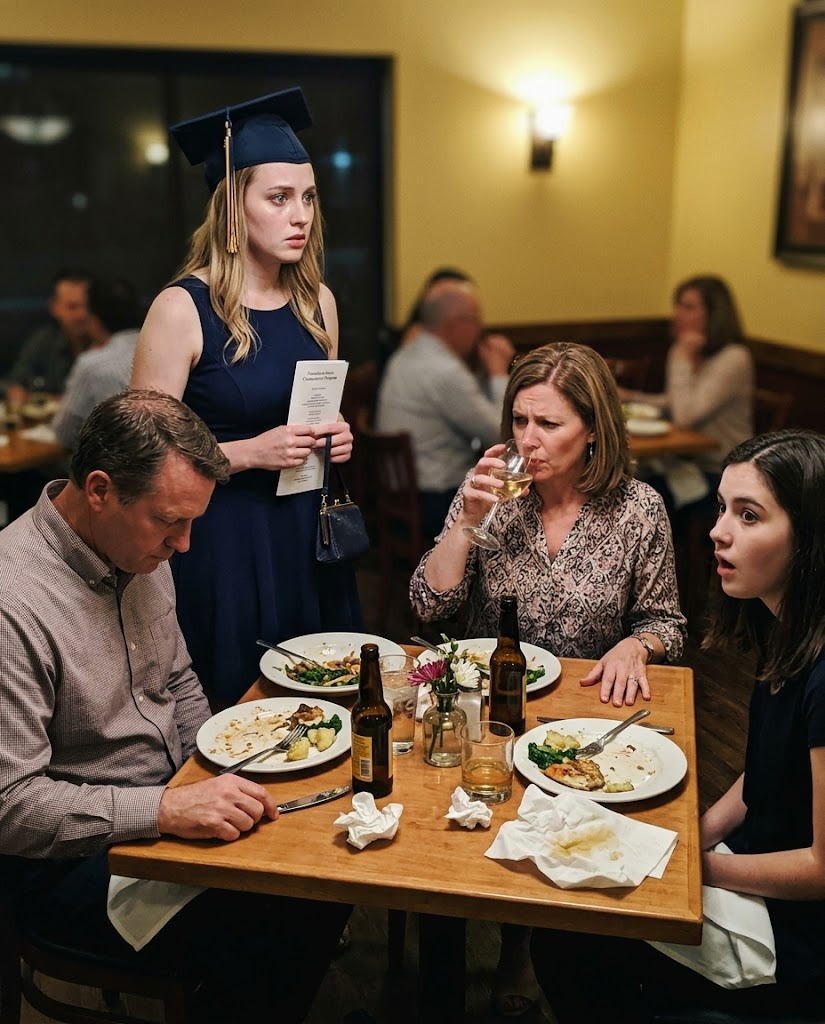
My mother looked me in the eye on the night I graduated from university and said, “I wish you had never been born.”
For most people, a sentence like that would be the moment everything broke.
For me, it was the moment everything finally made sense.
The restaurant was small and warm, tucked between a bookstore and a dry cleaner near campus.
The windows glowed amber against the evening.
Inside, people laughed over pasta and clinked glasses under soft hanging lights.
It was the kind of place that tried to look nicer than it was, with paper napkins folded into triangles and menu descriptions that used words like “artisan” for ordinary bread.
My mother had chosen it because it was, as she said, “good enough.”
Not special.
Not memorable.
Just good enough that nobody could accuse her of ignoring my graduation.
I had spent the morning trying not to hope too much.
That was the rule I had learned early: hope quietly, so disappointment would not humiliate you.
I ironed my navy dress until the fabric looked almost new.
I pinned my hair back twice, then took it down, then pinned it back again.
In the mirror, I practiced the kind of smile people make when their family is proud of them.
I wanted one normal night.
One dinner where my mother did not measure my worth by how inconvenient I had been to her.
One evening where my father did not disappear behind silence.
One photograph where my sister Lily smiled like standing next to me was not an obligation.
I was the first person in my family to graduate from university.
That sentence had carried me through more nights than I could count.
It had been the little fire in my chest while I wiped tables at the campus café after closing.
It had followed me through scholarship applications, secondhand textbooks, instant noodles, unpaid internships, and long walks home because bus fare mattered.
It had comforted me when other students casually complained about their parents calling too often, visiting too much, caring too loudly.
No one in my family had ever cared too loudly about me.
My older brother, Daniel, was the miracle son.
My mother spoke his name with a softness I used to study like a foreign language.
If Daniel forgot something, he was stressed.
If Daniel snapped, he was under pressure.
If Daniel failed, he needed support.
His trophies stayed on the mantel long after the brass turned dull.
My younger sister, Lily, was the baby.
She could cry and get held.
She could quit things and be told she was finding herself.
She had my father’s gentleness and my mother’s protection.
I was Lisa, the middle child, the mistake in the margins.
My mother never said she hated me when I was little.
She was smarter than that.
She told stories instead.
She told relatives that her pregnancy with me had been terrible.
She said I had ruined her body.
She said she had been about to go back to school before I came along.
She said I was the baby who cried too much, needed too much, cost too much.
She said these things while stirring soup, folding laundry, driving me to the dentist, always in the same factual tone people use for