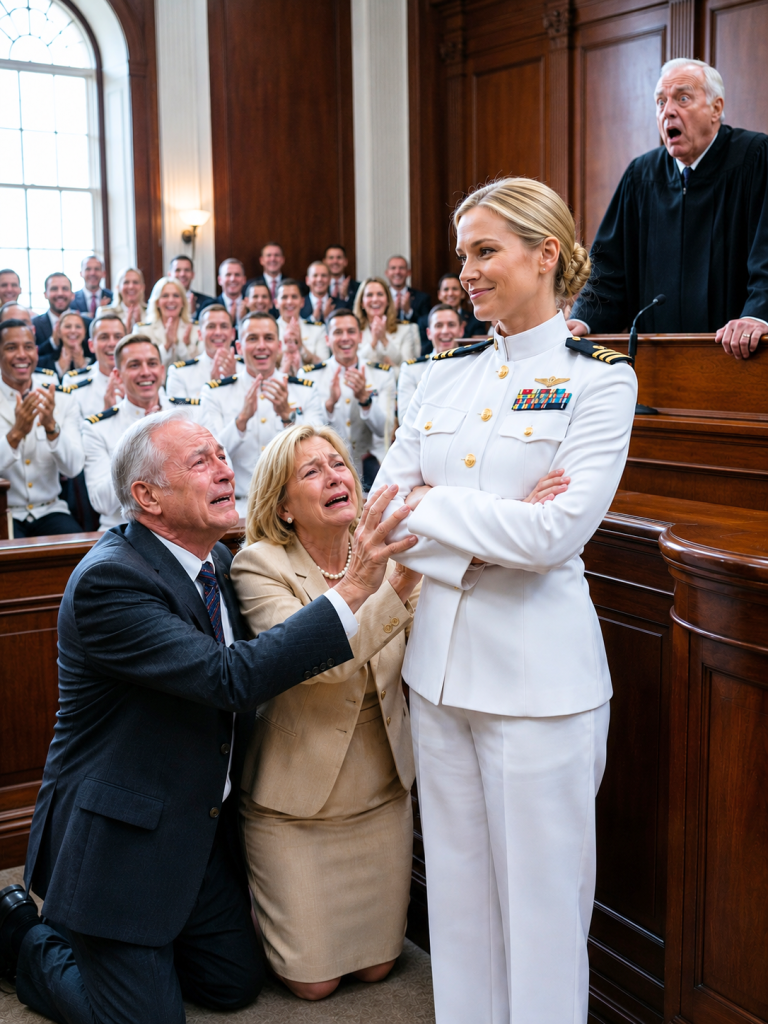
Advertisement

My parents spent years telling everyone I was the family disappointment.

Part 1 of 3

Part 1: The Inheritance Nobody Expected

I never told my parents who I really was.

Advertisement

That wasn’t because I was hiding anything shameful. It was because, after a certain point, I stopped trying to earn their approval. No matter what I accomplished, they always found a reason to dismiss it. If I worked hard, they said I was lucky. If I succeeded, they said someone else must have helped me. Eventually, I learned it was easier to let them believe whatever version of me made them comfortable.

Advertisement

The funeral of my grandmother, Rose Whitmore, proved that nothing had changed.

A cold drizzle fell over the cemetery outside Boston, turning the pathways into ribbons of mud. I stood near the back beneath a simple black umbrella, wearing an old wool coat and listening to the minister speak about a woman who had quietly held our family together for decades.

At the front, my mother Linda looked every bit the grieving daughter she wanted everyone else to see. Wrapped in an expensive black fur coat, she dabbed at perfectly dry eyes with a lace handkerchief while occasionally glancing around to make sure people were watching.

Beside her stood my father, Robert. He checked his watch every few minutes, looking more interested in leaving than mourning. To them, Grandma Rose had become an inconvenience long before she passed away.

For me, she was the only person who ever truly saw me.

I missed our weekend chess games. I missed her stories about growing up during difficult times and the way she always squeezed my hand whenever my parents criticized my choices. Most of all, I missed knowing there was one person in the family who loved me without conditions.

“She’s finally at peace,” my mother announced loudly as the casket was lowered.

Several people nodded sympathetically.

I remained silent.

If anyone deserved peace, it was Grandma Rose after spending years being ignored by the people now pretending to grieve her.

Two days later, we gathered in the downtown office of attorney William Henderson for the reading of the will. The room smelled of polished wood and old paper, and the atmosphere felt strangely tense before the meeting had even begun.

My parents sat together on a leather sofa, radiating confidence. I sat alone in a wooden chair near the window. As usual, I was treated like an afterthought.

To my parents, I was the daughter who moved away. The daughter who never pursued the glamorous life they wanted. The daughter whose career was always described as “some boring government job” whenever anyone asked.

Mr. Henderson adjusted his glasses and opened the document.

“I will now read the Last Will and Testament of Rose Whitmore.”

The formal language lasted several minutes before he finally reached the section everyone cared about.

“To my son, Robert Whitmore, and his wife Linda, I leave the contents of my storage unit in Queens, including family photographs and my collection of porcelain figurines.”

My father blinked.

“That’s it?”

“That is your entire inheritance,” Mr. Henderson replied calmly.

My mother’s expression collapsed instantly.

“What about the investment accounts?” she demanded. “The Brooklyn property? The trust?”

Mr. Henderson turned another page.

“To my granddaughter, Elena Whitmore, I leave the remainder of my estate, including all real estate holdings, investment portfolios, and liquid assets, totaling approximately four point seven million dollars.”

The silence that followed felt unreal.

For several seconds, nobody moved.

Then my father exploded.

“There has to be a mistake!”

His face turned bright red as he jumped to his feet.

“Four point seven million dollars? To her?”

“I visited Grandma every weekend,” I said quietly.

My father ignored me.

My mother spun toward me with a look I knew all too well.

“You manipulated her.”

The accusation came instantly.

“You filled her head with lies. You convinced her to do this.”

Mr. Henderson’s expression hardened.

“Mrs. Whitmore, your mother was fully competent when she signed these documents. I personally supervised the process.”

My mother wasn’t listening.

She had already decided on her explanation.

My father slammed a hand against the desk.

“We’re her children! We should inherit everything. Elena has done nothing with her life. No impressive career. No accomplishments. Nothing.”

I sat perfectly still.

I didn’t argue.

I didn’t defend myself.

I didn’t mention my profession, my rank, or anything else.

Experience had taught me those details never mattered to them.

If I wasn’t driving a luxury car or appearing in magazine articles, they assumed I was a failure.

“We’re challenging this,” my mother snapped. “We’ll take this to court if we have to.”

“You can do whatever you think is necessary,” I replied.

That answer only made them angrier.

Three days later, someone knocked on my apartment door.

When I opened it, a process server handed me a thick envelope.

I signed the receipt and waited until he left.

Then I opened it.

Plaintiffs: Robert and Linda Whitmore.

Defendant: Elena Whitmore.

The lawsuit accused me of fraud, manipulation, and exerting improper influence over my grandmother.

I stared at the paperwork for a long moment.

Then I looked across the room.

Hanging on the wall was my law degree.

Beside it was a framed presidential commission.

Neither document had ever impressed my parents because they had never bothered to ask about them.

Instead of calling an attorney, I poured myself a cup of coffee and opened my laptop.

I created a new folder.

Then I typed a name across the top.

Operation Inheritance.

If my parents wanted a courtroom battle, they were about to get one.

What they didn’t realize was that they were preparing to fight a case against someone they knew absolutely nothing about.

And that misunderstanding was going to cost them far more than money.

Part 2: The Courtroom Surprise

The courthouse hallway buzzed with the usual weekday chaos. Attorneys hurried between courtrooms carrying overflowing briefcases, clients whispered anxiously on wooden benches, and bailiffs called names over the constant noise. I arrived fifteen minutes early wearing a charcoal-gray suit that looked intentionally ordinary and carrying only a thin manila folder.

Five minutes later, my parents arrived.

They looked as though they were attending a charity gala instead of a probate hearing. My mother wore a designer suit that probably cost more than most people’s monthly rent, while my father adjusted an expensive silk tie and smiled with the confidence of a man already spending money he didn’t have.

Walking beside them was Richard Sterling, a local attorney famous for flashy advertisements and aggressive courtroom tactics. He spotted me immediately and smiled the way predators smile when they think the outcome is already decided.

“You can still settle,” my father said as they approached. “Give us eighty percent, keep the rest, and we’ll make this unpleasant situation disappear.”

I didn’t respond immediately.

Instead, I watched him carefully. The confidence looked forced. The arrogance looked rehearsed. For the first time, I noticed how tired he actually seemed.

“I’m comfortable with my chances,” I replied.

Sterling stepped forward and looked me up and down.

“Ms. Whitmore, I understand you’re representing yourself. That’s an extremely risky decision in a case like this.”

“I’ll manage.”

His smile widened.

“The court isn’t going to be patient with amateurs.”

I glanced at the papers sticking out of his briefcase and the coffee stain on his cuff. Small details often reveal more than people realize.

“I’ll take my chances.”

My mother shook her head dramatically.

“She’s always been stubborn.”

“And always convinced she’s smarter than everyone else,” my father added loudly.

They walked into the courtroom laughing.

I followed a few moments later.

The courtroom itself was old and dignified, filled with polished wood and decades of history. Judge Margaret Halloway presided from the bench, her expression unreadable as she reviewed paperwork before the hearing began.

“Case 4029, Whitmore versus Whitmore.”

Everyone stood.

Sterling rose confidently.

“Ready for the plaintiffs, Your Honor.”

“Ready for the defense,” I replied.

Judge Halloway adjusted her glasses.

“Ms. Whitmore, you are proceeding without counsel?”

“Yes, Your Honor.”

She studied me for a moment.

“You understand Mr. Sterling has extensive litigation experience.”

“I do.”

“And you still wish to represent yourself?”

“Yes, Your Honor.”

My father smirked.

He interpreted every question as proof I was already losing.

“Opening statements,” the judge said.

Sterling immediately took center stage.

For nearly twenty minutes, he painted a carefully crafted story. According to him, I was an unemployed drifter who had manipulated a vulnerable elderly woman into changing her will. He described me as unstable, estranged, financially desperate, and motivated entirely by greed.

My parents nodded along enthusiastically.

Several times, my mother even pretended to wipe away tears.

By the time Sterling finished, anyone unfamiliar with the facts would have assumed I was a professional con artist.

The judge turned toward me.

“Ms. Whitmore?”

I stood.

“The defense maintains that the will is valid, Your Honor. The burden of proof remains with the plaintiffs.”

Then I sat down.

That was it.

No speech.

No dramatic rebuttal.

Advertisement
info@teaytech

info@teaytech

1090 articles published