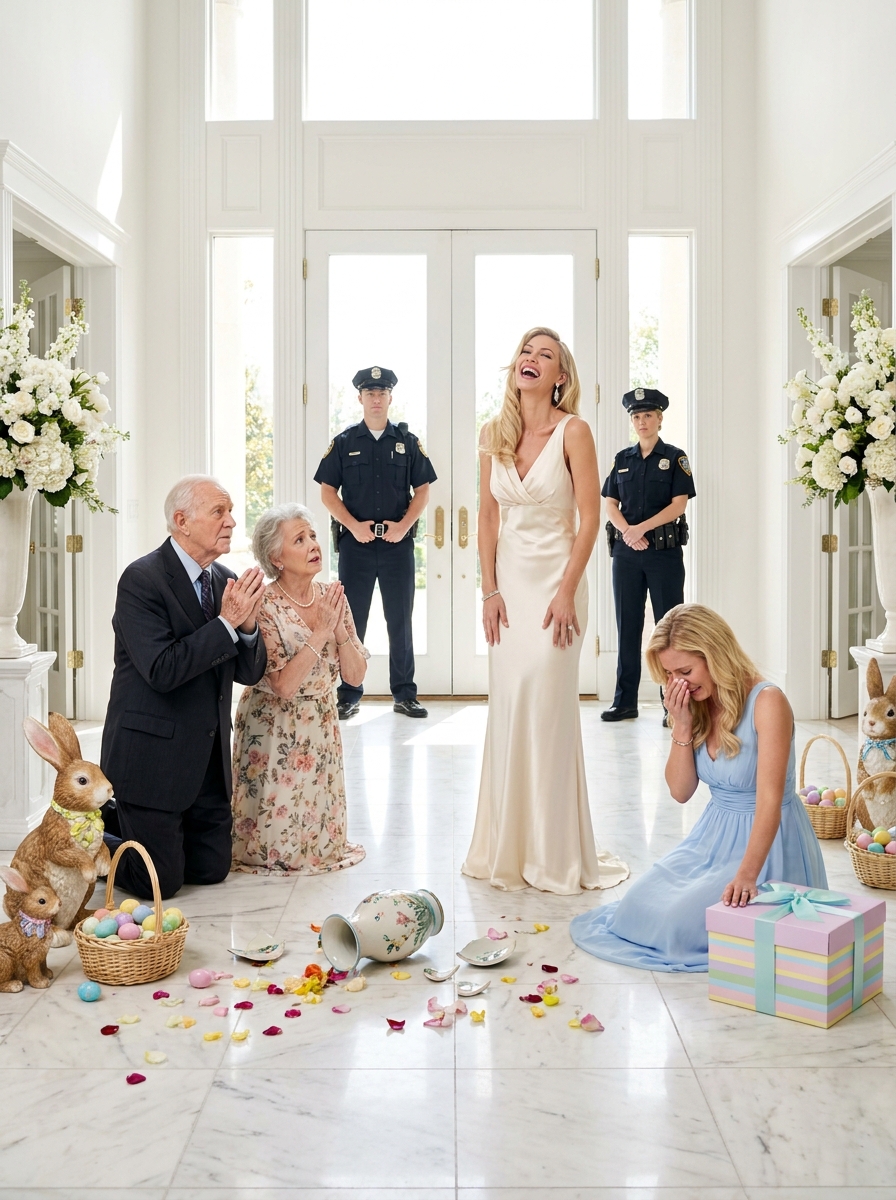
On Easter, my father gave gifts to everyone — except me.
- Chapter 1: The Easter Massacre
- Chapter 2: The Silent Architect
- Chapter 3: The Fragility of Glass Houses
- Chapter 4: The Sensitive Daughter
Silence possesses a suffocating weight when it is wielded by those who share your bloodline. It is not merely the absence of noise, but a tangible pressure, a freezing vacuum that drains every ounce of oxygen from the room. On a crisp Easter morning in the heart of Charleston, that silence became my only inheritance.
My name is Josephine. I am thirty-one years old, a woman who has carved a career in the bloodless, high stakes world of Corporate Asset Restructuring. I spend my grueling days dissecting failing enterprises, identifying their deepest rot, and deciding whether to rehabilitate them or excise them entirely. I possess a fluency in the cold language of legal contracts, the brutal reality of debt exposure, and the precise, clinical moment when a family legacy morphs into an absolute liability.
As I sat in my father’s sprawling living room, watching the fire crackle against the hearth, I realized I had committed a novice mistake by letting sentimentality cloud my judgment. I had conveniently forgotten that in the Keller household, love was never a foundational bond, but rather a transactional arrangement. According to my parents, my emotional account was firmly overdrawn.
Chapter 1: The Easter Massacre
The room was a masterclass in curated, inherited opulence. My father, Owen, stood before a fifteen foot spruce, acting the part of the benevolent patriarch with practiced ease. He was the owner of Keller Estates, a luxury design firm that served as the epicenter of the local old money aesthetic. He handed out gifts with the grace of a king distributing land grants to his most loyal subjects.
My mother, Sylvia, received a platinum bracelet that glittered like a captured star. My younger sister, Isabelle, the public face of the family brand, unwrapped a velvet box with a squeal of rehearsed delight. Even her fiancé, Jackson, was gifted a bespoke leather watch case, his initials stamped into the fine grain as if to formally welcome him into the inner sanctum.
I sat there, my coffee cooling in a porcelain cup that cost more than a month of groceries for most people, waiting for my name to be called. I was not looking for jewelry or material wealth. I was simply looking for a shred of acknowledgment.
It never arrived.
When the last ribbon had been shredded and the floor was a graveyard of discarded, expensive paper, I cleared my throat to break the tension. “Was there perhaps a mistake in the hallway, or did something get misplaced in the rush?”
My mother did not look at me with the slightest hint of regret. She looked at me with the weary, undisguised disdain one might reserve for a persistent stain on a white silk rug. “Why would we waste precious capital on you, Josephine?” she asked, her voice as smooth and cold as polished marble before offering a thin, mirthless smile. “We only keep you around out of a sense of habit, darling.”
Isabelle tilted her head, her sharp eyes scanning my tailored but sensible wool blazer. “You just aren’t on our level, Sis, and it is better this way for everyone. No need to pretend that you belong in the circle.”
I looked toward my father, waiting for the man who had raised me to say something to mitigate the cruelty. Instead, Owen merely adjusted the cuff of his sweater, his gaze fixed firmly on the polished mahogany floor. “Let us move to the dining room for breakfast before the hollandaise breaks,” he commanded.
In that singular moment, the final thread of my delusion snapped completely. They had not forgotten me in the shuffle of gift giving. They had actively erased me from their narrative. I stood up, walked to the coat closet, and let the heavy front door click shut behind me without uttering a single word. I did not cry, and I did not scream, but I began to mentally audit the past six years of my life.
If I am truly just a habit, I thought as I drove through the moss draped streets, then today is the day they finally go into withdrawal.
As I pulled into my driveway, I reached for my phone and dialed a contact I had not touched in years. “It is Josephine,” I said when the voice answered on the other end. “The grace period is officially over, so please send me the master files for the Charleston Flagship immediately.”
Chapter 2: The Silent Architect
To understand why that Easter morning was such a spectacular miscalculation on their part, one must understand what I actually did for a living. My family viewed my career as nothing more than dull paperwork and assumed I was the gray bird in a nest of vibrant peacocks. While Isabelle was posting curated lifestyle photos of imported silk sofas to her massive social media following, I was navigating the jagged landscape of distressed properties and vendor settlements.
Six years ago, Keller Estates was a rotting corpse waiting to be buried. My father had mismanaged a financing crunch so severely that the bailiffs were literally at the door. He had lost the long term lease on the building, his credit was incinerated, and the vendors were refusing to ship any further inventory.
I had stepped in quietly to save them. It was not because I loved the business, but because I still harbored the pathetic, childish hope that saving their kingdom would earn me a seat at the table. I used the massive commission from a restructuring deal I had closed in Nashville to form a private holding company. I bought the building they operated in, negotiated their debt down to pennies on the dollar, and personally guaranteed the seasonal inventory lines that kept the lights on every December.
For six years, they operated out of my building. They paid a family rate that did not even cover the basic property taxes. They never bothered to read the fine print because they assumed I was just helping with the files. They did not realize that the very floor they walked on belonged to the daughter they treated like an embarrassing extra.
By Monday morning, my attorney, Margaret, was sitting in my office.
“Are you absolutely sure about this, Josephine?” Margaret asked while looking over the thick stack of documents. “This will effectively decapitate the business they have built.”
“They told me I was not on their level,” I replied, staring out at the grey Charleston skyline. “I am just helping them find where their level actually is.”
We did not send a standard, boring legal letter. I wanted something more festive for the occasion. We placed the termination notices, the formal withdrawal of the personal guarantees, and the trademark injunctions inside a pristine white gift box. I added a brass key tag for the master lock of the showroom to finish the presentation.
On April 6th, at 8:30 AM, a courier dropped that box at the front door of the showroom. I sat in my office with a stopwatch, waiting. At 9:05 AM, my phone began to vibrate with such violence it nearly danced off the desk.
Chapter 3: The Fragility of Glass Houses
The first call was from Isabelle, but I let it go straight to voicemail. The second was my mother, and the third was my father, before the floodgates fully opened. Twelve missed calls arrived in fifteen minutes.
Finally, a voicemail from Owen came through, his voice usually so controlled now pitched an octave higher and vibrating with a panic he could not hide. “Josephine, pick up the phone right now! There has to be a misunderstanding here. This letter from an attorney saying we have thirty days to vacate is a joke, right?”
Three minutes later, another notification pinged. “This is outrageous! You cannot withdraw the inventory guarantee! We have three massive shipments from Milan hitting the port tomorrow! Call me immediately!”
Then came my mother, her voice trembling not with sadness, but with a cold, sharp fury. “You are not doing this over an Easter gift, Josephine. You will not humiliate this family like this. Fix this right now.”
I did not call back because I did not need to. I had provided all the necessary attachments in the box. If they had bothered to read them, they would see the deed in my name. They would see the trademark registration for Keller Estates, which my grandmother had secretly transferred to me years ago because she knew my father was a spendthrift who would eventually pawn the family name for a faster car.
By noon, the social media war began. Isabelle posted a cryptic quote about the sting of betrayal from those you trust most. My mother began a frantic campaign of calling every aunt, uncle, and cousin in the region, painting me as a daughter who had suffered a nervous breakdown and was trying to extort her own father.
I received a text from a family friend at our church. “Josephine, dear, is it true? Are you really trying to destroy your father’s livelihood over some hurt feelings?”
Hurt feelings, I thought. It is fascinating how people will rebrand years of systemic exploitation as a temporary mood once you finally stop being their doormat.
What do you call it when people accept your money, your legal protection, and your silence for six years, and still make it a point to tell you that you are beneath them? I do not call that hurt feelings. I call that a closing statement.
That evening, my doorbell rang. I did not have to look at the security camera to know who it was. The whole royal court had arrived to demand an audience. I opened the door to find all four of them, including a very confused looking Jackson.
Chapter 4: The Sensitive Daughter
“Enough of these pathetic theatrics, Josephine,” my father said, pushing past me into the foyer of my condo. He had not even buttoned his overcoat correctly, and he looked like a man who had been running through a storm.
“We need to resolve this like adults,” he continued, taking a stand in the center of my living room as if he still owned the space.
“Which adults are we talking about, Dad?” I asked, leaning against the kitchen island. “The ones who gave luxury watches to strangers but could not find a pair of socks for their own daughter? Or the ones who told me I was only kept around out of habit?”
My mother stepped forward, her social mask slipping for a fraction of a second. “You are making a family misunderstanding into a business attack, and it is incredibly vindictive.”
“It is not an attack, Mom, it is a restructure,” I said calmly. “I am simply reclaiming my assets.”
Isabelle rolled her eyes, crossing her arms over her cream colored cashmere sweater. “Oh, here we go again. You are being so literal and sensitive. We were just joking, Josephine! Easter was tense, and you always take things so personally. You are being dramatic just to get attention.”
Sensitive is the favorite weapon of the narcissist. If they can convince the world you are just too emotional, they do not have to answer for their own cruelty.