
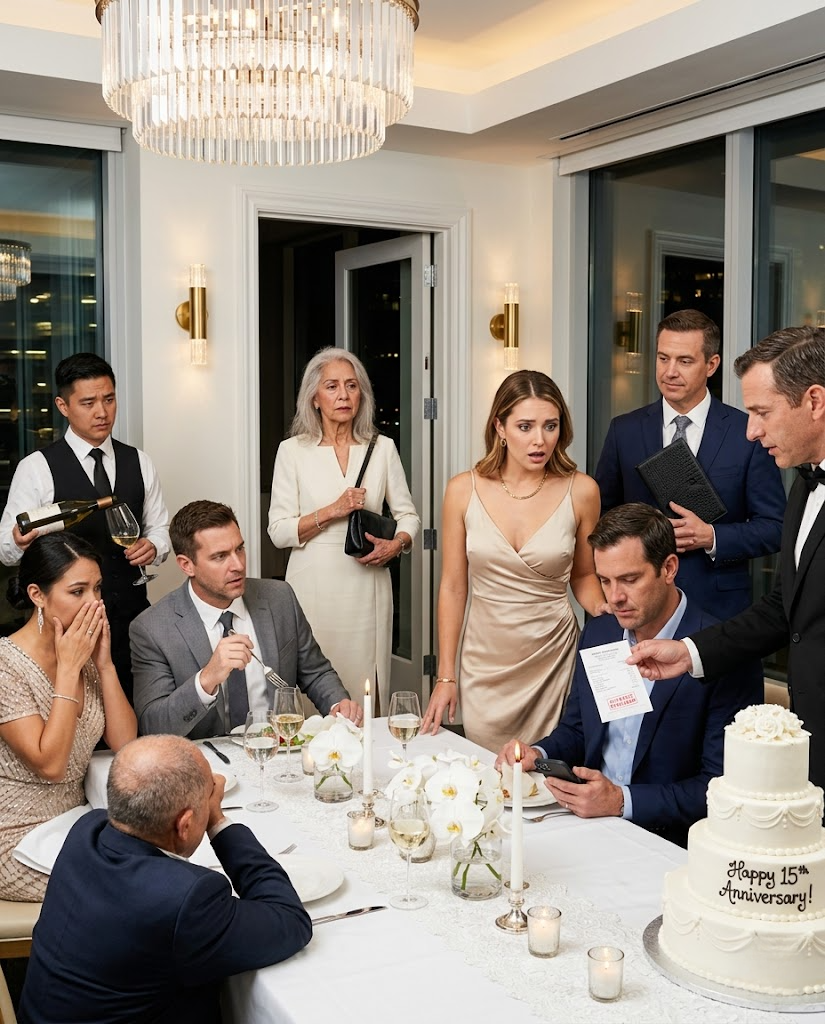
The Dinner Check That Exposed a Son’s Cruelest Lie About His Mother-eirian

Margaret Herrera had learned early that the people who enjoy your generosity rarely ask what it costs.
They prefer the softened version.
They like the dinner already paid for, the condo already furnished, the emergency already solved, the shame already absorbed by someone else.
For forty-five years, Margaret built a company most people in her family described as a small textile business because she allowed them to describe it that way.
Herrera Latin Textiles began in a rented warehouse with a leaky roof, three bolts of hotel-grade cotton, and a delivery van that stalled whenever the weather turned humid.
By the time Margaret turned seventy-two, it had become the largest Latin textile distribution network in the country.
Her warehouses supplied hotel groups, hospital systems, school districts, and restaurant chains across nine states.
She knew the schedules of freight carriers, the weaknesses of procurement departments, the smell of cotton after a summer storm, and the exact silence that came before a customer tried to negotiate from desperation.
She had outlasted recessions, lawsuits, tariffs, warehouse fires, and men who called her sweetheart while trying to steal contracts from her desk.
Steven had grown up inside that world without ever truly seeing it.
As a boy, he had fallen asleep in the back office while Margaret balanced invoices under fluorescent light.
As a teenager, he had complained that she missed games because a hospital order had to ship before morning.
As a man, he had accepted the life her work created while convincing himself it came from luck, timing, or some old-fashioned maternal instinct that made her unable to say no.
Margaret had said no many times in business.
She had simply forgotten how to say it to her son.
The first rescue came when Steven was twenty-eight.
He had invested in a restaurant concept with two friends who knew more about cocktails than cash flow, and Margaret covered the shortfall before the landlord could sue.
The second came three years later, after a tax notice arrived at his apartment and he brought it to her kitchen table like a frightened child bringing home a broken toy.
Then came the condo deposit, the car payments he called temporary, the anniversary trips, the medical bills he had failed to insure properly, and finally the monthly $25,000 transfers that were supposed to last six months and lasted years.
Amber entered their lives already polished.
She had a soft voice in front of strangers, perfect posture in photographs, and a talent for making greed sound like taste.
She called Margaret generous at brunch and outdated in private.
She praised family values when she needed a wire transfer and laughed at Margaret’s gray sedan whenever she thought Margaret could not hear.
Margaret heard more than Amber knew.
She heard the jokes about the car.
She heard Steven excuse it because he disliked conflict more than he disliked cruelty.
That was the trust signal that mattered most.
Margaret had given Steven access not only to money, but to the comforting fiction that she would always protect him from consequences.
He had learned to live inside that fiction.
Amber had learned to decorate it.
The fifteenth anniversary dinner at the Crest Room began as another act of protection.
Steven called three months before the date with embarrassment in his voice and said Amber wanted something elegant, not flashy, just a gathering with friends.
Margaret knew what elegant meant in Amber’s vocabulary.
It meant expensive enough to be photographed, but not so expensive that Amber had to admit someone else was paying.
Still, Margaret approved the booking.
She paid for the private room, the white orchids, the string musicians, the printed menus with gold script, the imported wine, the five-tier cake, and the buffet arrangement Amber insisted would look more abundant in pictures.
The event agreement went through the corporate hospitality account on a Monday morning at 10:12 a.m.
Margaret’s controller flagged it with a question.
She approved it anyway.
There are mistakes you make because you are fooled, and mistakes you make because you are tired of proving you are not cruel.
Margaret made the second kind.
The morning of the dinner, she stood in front of her closet longer than usual.
She chose an ivory dress with a soft jacket because she wanted to look like the mother of the groom in old wedding photos, not like a woman tolerated at the edge of her son’s life.
Her knees ached while she fastened her shoes.
Her hands trembled slightly when she put on pearl earrings Steven had given her years earlier, back when he still remembered gifts did not have to be expensive to matter.
She drove herself to the Crest Room in the gray sedan Amber hated.
The valet hesitated for half a second, then recovered his training and opened her door.
Inside, the restaurant smelled of butter, polished wood, flowers, and candle wax.
The private room glowed.
Gold sconces warmed the walls, orchids stood tall in glass vases, and white linens lay over the tables with the clean severity of fresh snow.
More than fifty guests had already arrived.
Margaret saw Amber across the room laughing with one hand on Steven’s shoulder.
She saw Steven glance up, smile briefly, and then look back at someone else before she reached him.
That small turning away should have warned her.
Instead, she told herself not to be sensitive.
Old women are taught to audit their own pain before they accuse anyone else of causing it.
Margaret moved toward the table where Steven and Amber sat with their closest friends.
There was no place setting left.
At first she thought it was an error.
A server looked at the seating chart and then looked away.
Amber noticed the pause and smiled.
It was not the smile she used for photographs.
It was smaller, cleaner, and much more honest.
“Look, Margaret, you can see there’s no room,” Amber said. “Go eat in the bathroom. You’re already used to it.”
For one second, Margaret thought the room had misheard.
Then the silence proved it had not.
Forks paused above plates.
A server froze with a bottle of wine tilted over a glass.
A man from Steven’s office stared down at his napkin as if the embroidery required study.
A woman in diamonds pressed her lips together, and Margaret knew from the little shake in her shoulders that she was trying not to laugh.
The violinist did not stop right away.
One high note kept trembling in the air like a thread pulled too tight.
Margaret looked at Steven.
“Steven?” she said.
He lifted his eyes.
There was no rage in his face and no surprise.
Only exhaustion, embarrassment, and the terrible calculation of a man deciding which woman in front of him would cost him more if he defended her.
Then he looked down at his phone.
That was worse than the insult.
The insult belonged to Amber.
The silence belonged to Steven.
Amber rested one hand on the back of her chair and added, louder this time, “It’s where you’re most comfortable anyway. Cleaning, fixing things, doing what you do best.”
The laughter came in pieces at first.
A cough.
A breath.
A small snicker from someone who had enjoyed Margaret’s wine five minutes earlier.
Then it spread because nobody stopped it.
Margaret felt heat rise along her throat, but it was not shame.
Shame needs your permission.
This was something colder, clearer, and more useful.
She tightened her grip on her purse until the tendons in her hand stood out.
For one ugly second, she pictured the wineglasses shattering across the table.
She pictured Amber’s perfect satin dress soaked red.
She pictured Steven finally looking up because noise, apparently, was the only language he still respected.
Margaret did none of it.
She stood very still.
Then she turned and walked out.
No one followed.
Amber called after her, “Finally learning your place?”
Outside, the night air cooled Margaret’s face.
The valet stand smelled faintly of rain and cigarette smoke from the alley.
Through the windows, she could see the candles still glowing and the guests returning to their plates.
Her humiliation had already been folded into the evening.
In the glass, she saw her reflection.
Seventy-two years old.
Good posture.
Silver hair carefully set.
Fine lines around her eyes, deeper lines around her mouth, and the face of a woman who had mistaken endurance for love too many times.
A woman who had built enough to feed half that room and still been told to eat in a bathroom.
At 8:41 p.m., Margaret called her lawyer.
He answered on the second ring.
“Mrs. Herrera?”
“Activate Plan B,” she said.
The pause was short.
He had known this call might come someday because he had written the plan himself.
“Tonight?” he asked.
“Tonight.”
“Once I begin, there is no reversing it.”
“I know.”
He moved from concern into procedure.
That was why Margaret trusted him.
Pity makes noise.
Competence gets quiet.
“And the company?” he asked.
“Sell it.”
“All of it?”
“All of it.”
The buyers had been waiting for two weeks.
Their acquisition counsel had already prepared escrow instructions, closing documents, and a wire schedule.
The sale price was $200 million.
Steven knew none of this.
Amber knew even less.
To them, Herrera Latin Textiles was a family business that had done surprisingly well, a phrase Steven used at parties whenever someone asked where the money came from.
He liked the modest version because it let him feel less dependent.
Amber liked it because it let her feel superior.
Margaret sat in her old gray sedan and listened while her lawyer confirmed each step.
The company sale would move immediately.
Discretionary corporate charges tied to the Crest Room event would be placed on hold.
The monthly $25,000 transfers to Steven would be canceled before midnight.
The condo would remain in Margaret’s name until the sale closed, and then the lease terms would be followed exactly.
At 9:03 p.m., Margaret emailed her controller.
Suspend all discretionary hospitality charges connected to the Crest Room event.
At 9:06 p.m., the confirmation arrived.
Payment hold placed.
At 9:11 p.m., her lawyer texted two words.
Sale moving.
Margaret did not smile.
This was not revenge in the way Amber would have understood revenge.
Revenge is messy.
What Margaret wanted was structure.
She wanted every person in that private room to meet the architecture they had ignored.
Inside, dessert wine had just been poured when the first card failed.
The waiter tried again with the professional calm of someone hoping technology would absorb the embarrassment.
It did not.
The maître d’ came next.
Then the manager.
By 9:17 p.m., they stood beside Steven with the printed authorization slip in hand.
Steven’s face changed slowly.
First annoyance.
Then confusion.
Then fear.
Amber leaned toward him and whispered sharply, “Use the other card.”
There was no other card for a banquet that size.
The corporate account had been the floor under their feet.
Margaret had simply stopped holding it there.
The manager kept his voice low, but a low voice carries beautifully in a silent room.
“Sir, the remaining banquet balance is not authorized.”
The violinist stopped playing.
Someone’s fork touched china with a tiny, guilty sound.
Amber reached for her necklace.
It was always her first instinct to touch something expensive when she felt poor.
The manager opened the event file and showed them the agreement Amber had signed that morning.
Personally responsible for unpaid charges not covered by the corporate account.
Amber stared at the clause.
She had signed it beside a little silver coffee service while telling the event coordinator that Margaret preferred not to be bothered with details.
Now the details had bothered her back.
Steven lifted his phone.
He called Margaret once.
She let it ring.
He called again.
She answered the second call and said nothing.
For the first time in years, Steven had to begin without knowing what she would give him.
“Mom,” he said, and the word came out smaller than he intended.
Margaret waited.
In the background, she could hear Amber whispering, “Tell her it was a joke. Tell her I didn’t mean it.”
Steven swallowed.
“The card isn’t working.”
“No,” Margaret said.
A pause.
“What do you mean, no?”
“I mean it is not working.”
“Mom, this is humiliating.”
Margaret looked through the windshield at the restaurant’s golden windows.
“Yes,” she said. “I know.”
That was when Steven finally understood that they were not discussing a payment error.
They were discussing a lifetime.
He lowered his voice.
“Please don’t do this here.”
“You chose here,” Margaret said.
Amber grabbed the phone from him.
“Margaret, I am so sorry,” she said quickly. “It came out wrong. Everyone was laughing, and I was just trying to make light of the seating problem.”
Margaret listened to the lie.
It was clumsy because Amber had never needed to lie carefully to people she considered beneath her.
“You told me to eat in the bathroom,” Margaret said.
Amber began crying at once.
The tears arrived too fast to be grief.
They were strategy.
“I didn’t mean it,” Amber said. “Please. We can talk. We’re family.”
Family.
The word had done so much work in Margaret’s life.
It had covered invoices, excused silence, softened insults, and turned every boundary into a betrayal.
Margaret held the phone away from her ear for a moment and looked at her own hand.
The veins stood raised beneath the skin.
The same hand had signed payroll checks for warehouse workers whose children had grown into managers.
The same hand had wired money to Steven when he panicked.
The same hand had approved the dinner where his wife tried to make her small.
She brought the phone back.
“No,” she said.
Amber made a sound halfway between a sob and a gasp.
Steven took the phone back.
“Mom, we can fix this.”
Margaret closed her eyes.
For a moment, she saw him at seven, asleep against a bolt of cotton in the warehouse office.
She saw him at nineteen, angry because she missed a college weekend.
She saw him at thirty-five, promising the condo help was temporary.
She saw him that night, looking down at his phone while his wife sent his mother to the bathroom.
The truth was not that Steven had changed.
The truth was that Margaret had finally stopped editing what she saw.
“There is nothing to fix tonight,” she said.
“What does that mean?”
“It means you will pay for your dinner.”
He breathed hard into the phone.
“And tomorrow?”
“Tomorrow you will speak with my attorney.”
The words took the last air from him.
Amber was crying louder now.
Guests had begun looking at their own spouses, their own plates, their own empty glasses.
Nobody wanted to be caught witnessing the exact moment a borrowed life was repossessed.
Steven whispered, “You’re selling the company, aren’t you?”
Margaret did not answer right away.
He had guessed only because fear had made him intelligent.
“Yes,” she said finally.
“All of it?”
“All of it.”
“But what about me?”
There it was.
Not what about you.
Not are you okay.
Not I should have stopped her.
What about me.
Margaret looked once more through the window at the table she had paid for, the flowers she had approved, the cake she would not taste, and the empty chair where they had meant to leave her dignity.
“Steven,” she said, “that is the first honest question you have asked me all night.”
Then she ended the call.
The rest unfolded with the terrible efficiency of paperwork.
The Crest Room required a personal card before the guests could leave without further action.
Amber’s personal card covered only a portion.
Steven’s covered less.
Two friends quietly disappeared after pretending to take calls.
One guest offered to split the balance, then withdrew the offer when the manager mentioned the remaining figure.
By midnight, the anniversary party had become exactly what it always was under the flowers and candles.
A bill.
The next morning, the acquisition wire was scheduled.
By the following week, the sale of Herrera Latin Textiles was final.
Margaret’s lawyer sent Steven notice regarding the termination of monthly transfers.
A separate property attorney sent formal lease documents for the condo, including market rent, payment deadlines, and conditions for continued occupancy.
Amber called seventeen times the first day.
She left six messages.
The first was tearful.
The second was apologetic.
The third blamed stress.
The fourth blamed wine.
The fifth said Margaret was destroying the family.
The sixth said she hoped Margaret could live with herself.
Margaret deleted none of them.
She saved them in a folder named Crest Room.
Not because she needed them for court.
Because evidence matters when your heart tries to bargain with memory.
Steven came to her apartment three days later.
He had not been there in nearly a year.
He looked around the modest living room, the older sofa, the framed warehouse photograph on the wall, the small dining table where she ate most nights alone.
“You live like this by choice?” he asked.
Margaret did not answer.
He heard himself then.
She saw it happen.
The shame crossed his face, but shame after exposure is not the same as remorse.
“I didn’t know she was going to say that,” he said.
“You knew what she thought of me.”
He looked down.
That was answer enough.
Margaret made tea because hospitality was a habit deeper than anger, but she did not offer him money, explanations, or rescue.
Steven sat across from her and cried quietly into his hands.
For years, that would have undone her.
That morning, it only saddened her.
A son can break your heart and still be responsible for where he placed his feet.
“I am not disowning you,” Margaret said.
He looked up quickly.
“I am refusing to finance your disrespect.”
He flinched as if the sentence had touched something bruised.
Amber did not come with him.
Margaret was grateful for that.
Months later, people still talked about the Crest Room dinner in careful voices.
They talked about the declined card, the manager, the clause, the way Amber cried, the way Steven kept looking toward the window.
Very few talked about the bathroom.
That was how people protect themselves from guilt.
They remember the punishment more clearly than the offense.
Margaret remembered both.
She remembered the candle wax, the violin note, the smell of wine, and the long polished table full of people who waited to see whether cruelty would become entertaining.
She also remembered the air outside.
Cool.
Clean.
Medicinal.
She remembered the moment she saw herself in the glass and stopped asking for a chair at a table she had built.
In time, she bought a smaller company with no family attached to its payroll.
She funded scholarships for warehouse employees’ children.
She drove the gray sedan until it finally refused to start on a rainy Tuesday and then bought another practical car Amber would have hated.
Steven paid rent on the condo for seven months before moving somewhere smaller.
Amber stopped posting anniversary portraits.
Margaret did forgive some things eventually, but not because anyone demanded it.
Forgiveness, she learned, is not a refund.
It does not return access.
It does not reopen accounts.
It does not put a woman back in a room where people laughed while she was told to disappear.
A woman who had built enough to feed half that room and still been told to eat in a bathroom did not need revenge to become powerful.
She only needed to stop paying for the table.