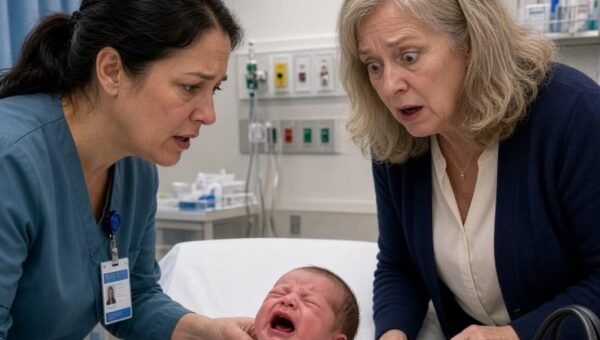
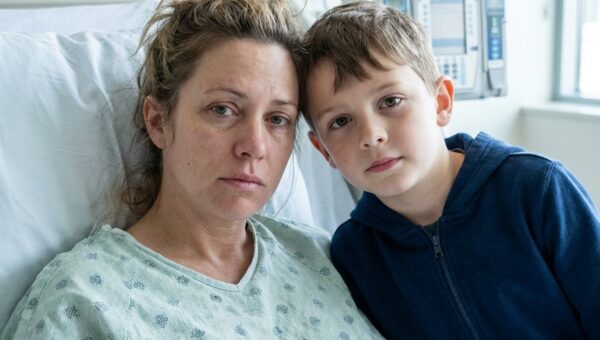
When a drunk driver killed my husband and both of my children, I called my parents from the hospital parking lot, shaking so hard I could barely hold the phone. My father listened, then said, “Today is Jessica’s birthday. We can’t come.” They stayed at my sister’s country club party while I planned three funerals alone. Six months later, they saw my name on the front page of the local paper and suddenly wanted to be family again.
Part 3 – Ending:
The article was on every porch in town by sunrise.
A photo of me stood beneath the headline, surrounded by families the foundation had helped. I looked tired in the picture, but steady. Not healed. Not whole.
Steady.
The reporter wrote about Michael, Emma, and Noah. About the drunk driver. About the three coffins. About the woman who stood alone at the funeral and used a $5 million insurance policy to help other families survive the worst day of their lives.
She did not mention my parents.
She did not mention Jessica.
She did not need to.
By 8:14 a.m., my phone began to shake itself across the kitchen counter.
Dad.
Mom.
Jessica.
Dad again.
Jessica again.
Then texts.
OMG, Sarah, why didn’t you tell us?
We’re so proud of you.
Call me immediately.
We should talk about board positions.
Mom’s voicemail came next.
“Sweetie, the neighbors are all talking about the article. Why didn’t you tell us? We could have helped. We’re your parents.”
My father’s message was colder.
“Sarah, this is your father. As your family, we need to discuss the foundation immediately. We should be involved.”
Involved.
They had not been involved when the priest said my children’s names.
They had not been involved when I stood beside three coffins.
They had not been involved when Michael’s elderly parents flew across the country while my own parents stayed at a birthday party.
But now there was a foundation.
Now there was press.
Now there was money and reputation.
Suddenly, they remembered the word family.
By noon, they were at my door.
I watched them through the security camera.
My father rang the bell again and again.
“Sarah, open this door.”
My mother stood behind him, crying the kind of tears she used when someone might be watching.
“We’re so proud of you, sweetie. Please. We always knew you’d do something wonderful.”
Jessica arrived twenty minutes later with James and a grocery store bouquet, the price tag still on the plastic.
“This is ridiculous,” she shouted toward the door. “We’re family. The foundation needs us.”
Mrs. Patterson from next door came outside before I could decide whether to call the police.
“She’s not home,” she said.
Jessica spun toward her.
“And after what you people did, I’d stay away if I were you,” Mrs. Patterson added.
“What we did?” Jessica snapped. “We’re her family.”
“Family doesn’t skip funerals for birthday parties.”
The police arrived after my father called them, claiming I was having a mental health crisis.
Officer Davidson stepped onto my porch.
The same officer who had called me on the worst morning of my life.
He looked at my parents and said, “Mrs. Bennett is under no obligation to open her door. Please leave the property.”
“We’re worried about her mental state,” my mother said.
Officer Davidson did not blink.
“I spoke with Mrs. Bennett yesterday about foundation security. She seemed perfectly sound. Leave, or I’ll charge you with trespassing.”
They left.
But the next morning, a formal letter arrived from their lawyer requesting a family meeting to discuss their “rightful involvement” in the Bennett Family Foundation.
David Chen read it once and smiled without warmth.
“Michael anticipated this.”
The meeting happened in Chen’s conference room.
My parents sat on one side.
Jessica and James beside them.
Their lawyer across from David Chen.
I sat at the end of the table with my hands folded in my lap.
Chen placed a sealed envelope in front of him.
“Mr. Bennett left instructions to be opened if certain conditions were met,” he said. “The publication of the article and your presence here meet those conditions.”
My father frowned.
“What does that mean?”
Chen opened the envelope and began reading.
“To the Walker family. If you are hearing this, it means you have discovered Sarah’s inheritance and are attempting to claim a portion. Let me be clear. You have no legal or moral right to any of it.”
My mother gasped.
Jessica’s face flushed.
Chen continued.
“I documented every instance of your treatment of my wife. The birthday parties you prioritized over her achievements. The money you borrowed and never repaid. The emotional manipulation disguised as family obligation.”
He pulled out a folder.
“Mr. Bennett retained a private investigator to document several matters related to the protection of his wife’s estate and charitable foundation.”
Jessica stood.
“This is insane.”
Chen pressed a button on the laptop.
Michael appeared on the screen.
My breath caught.
He was wearing the blue tie.
The one Emma had given him.
“Hello, Robert, Linda, and Jessica,” Michael said. “If you’re watching this, you have proven exactly who I always knew you were.”
My mother covered her mouth.
Michael continued.
“I watched you diminish Sarah for fifteen years. She loved you too much to see it clearly. I did not.”
He held up receipts.
“The ten thousand dollars for Jessica’s wedding that was never repaid. The five thousand for Robert’s failed business venture. The anniversary cruise we funded. Thirty-seven thousand dollars over eight years.”
My father looked down.
Then the screen changed.
Funeral footage.
The priest’s voice filled the room.
“We gather to remember Michael, Emma, and Noah Bennett.”
The camera moved across the church.
Michael’s parents in the front row.
His coworkers.
Me.
Then the empty reserved seats.
Robert Walker.
Linda Walker.
Jessica Walker Morrison.
Empty.
Timestamped.
Undeniable.
Michael’s voice returned.
“If you were not there, and I suspect you were not, then you forfeited any claim to Sarah’s sympathy, money, or work. The foundation bylaws exclude any person who failed to attend the funeral of Emma, Noah, and myself from holding any board or advisory role.”
Jessica was crying now.
Real tears, maybe.
Too late.
Chen closed the laptop.
“The Bennett Family Foundation has no position available for any of you. Any public claim that you helped establish, support, or guide the foundation will result in release of the full documentation package.”
Their lawyer said nothing.
There was nothing to say.
Then the Whole Foods video surfaced.
Someone had recorded Jessica announcing to half the store that I was “hoarding millions” while my sister could not afford IVF.
Someone else edited it with her birthday photos and the funeral timestamp.
The caption spread through town.
This woman partied while her sister buried two children. Now she wants the inheritance money.
Michael’s best friend Tom posted the funeral guest book.
Michael’s mother Dorothy posted one sentence that ended any defense they had left.
“I flew from Seattle with two hip replacements to bury my son and grandchildren. Sarah’s family did not come.”
After that, consequences arrived quickly.
Jessica’s marketing firm fired her, citing “values misalignment.”
James lost business partners.
My father left the church board after the pastor told him the congregation had lost confidence in his moral leadership.
My mother’s charity circle removed her from the annual gala.
The country club let their membership lapse and did not invite renewal.
Neighbors stopped waving.
No one shouted at them.
No one had to.
People simply stepped back.
It turned out the social world they had spent decades cultivating cared very much about what kind of people skipped a funeral and then came for the money.
I refused every interview about my family.
“The foundation’s work speaks for itself,” I told reporters.
And it did.
We expanded to three more states.
Then twelve.
We funded funeral costs, grief counseling, therapy for surviving siblings, scholarships, music programs, and Noah’s Dinosaur Library.
Children began calling themselves Bennett Bears.
Emma would have loved that.
One year after the accident, I stood at their graves with the foundation’s first annual report.
One thousand families helped.
I placed fresh flowers by Michael.
Then Emma.
Then Noah.
“We did it,” I whispered. “Your daddy’s plan worked.”
I told Emma about the music therapy program.
I told Noah about the library, and how a little girl named Lucy smiled for the first time after losing her brother because of a dinosaur book.
The cemetery was quiet.
Not empty.
Quiet.
There is a difference.
I bought a smaller house two streets away. Every morning, I walk to the cemetery with coffee. I tell them about the work. About the families. About the children who still get help because Michael loved me enough to protect me from people who never had.
Three months after the article, I learned Jessica was pregnant.
A girl.
Sophia.
Despite everything, I felt a flicker of happiness.
Children are innocent of their parents’ choices.
I set up an anonymous education fund for Sophia through Chen’s office.
Fifty thousand dollars.
Accessible only after age eighteen.
Chen asked, “After everything they did, why?”
“Because Emma and Noah would want their cousin to have a chance,” I said. “And because I refuse to let cruelty decide who I become.”
A letter from Jessica arrived later.
Six pages.
Tears in the ink.
She wrote that Sophia sometimes looked like Emma and that it broke her heart that her daughter would never know her cousins.
She said she was not asking for money.
Not asking for forgiveness.
Only wanted me to know that she finally understood what they had taken.
Not the inheritance.
The moments.
The support.
The love I deserved when my world ended.
I read it twice.
Then I wrote back on foundation letterhead.
Jessica,
I received your letter. Thank you for your honesty.
I forgive you, not for your sake, but for mine. Carrying anger is too heavy when I am already carrying grief.
But forgiveness does not mean reconciliation.
You chose a birthday party over my children’s funeral. That choice permanently changed what we are.
I wish you well with Sophia. Love her better than you loved Emma and Noah. Be present for her in ways you were not present for them.
This is the last communication between us. Please respect this boundary.
Sarah.
I included a photo of Emma and Noah from their last Christmas.
On the back, I wrote:
For Sophia, so she knows they existed.
Then I closed the envelope.
Two years have passed now.
The Bennett Family Foundation has helped more than two thousand families. My chosen family is made of people who showed up: Tom and his wife, Mrs. Patterson, Michael’s parents, the mothers who work beside me, the grieving fathers who volunteer at events, the children who send drawings of bears and violins and dinosaurs.
My parents live in a small apartment now.
Jessica and James divorced.
Sophia’s education fund keeps growing quietly.
I still visit the cemetery every morning.
I still miss the sound of Emma’s violin.
I still sometimes set four plates on the table before remembering.
But I live.
Not because grief ended.
Because love continued.
My family thought Michael’s death left me alone and weak.
They were wrong.
It left me protected by the man who knew me best.
It left me with a mission.
It left me with proof that blood means nothing without presence.
Real family does not ask whether a funeral can wait.
Real family shows up.
And if they do not, sometimes the empty seats tell the whole story.
Disclaimer : This content may be created by AI for entertainment purposes. Any resemblance to real persons, events, or places is coincidental.