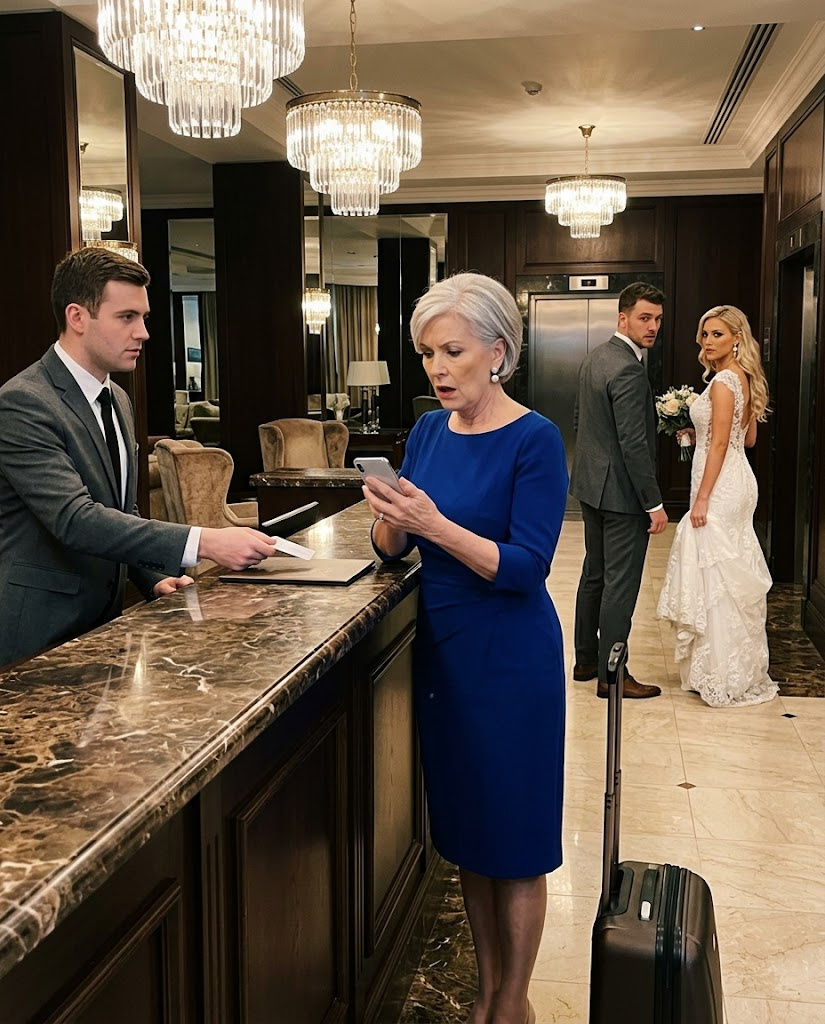
Her Son Sent Her to the Lobby—Then She Found the Envelope
My phone lit up just as the front desk clerk smiled and asked for my last name.
I glanced down, expecting a message from my niece Emily asking whether I had made it to the hotel yet.
Instead I saw my son’s name and seven words that seemed to knock the air right out of my chest.
Your room is canceled.
Sleep in the lobby if you have to.
For a second, the Grand Crescent Hotel looked unreal around me, like a movie set made of polished marble, fresh lilies, crystal light, and money.
Guests drifted through the lobby with satin welcome boxes tucked under their arms.
A pianist was coaxing something soft and elegant out of the baby grand near the bar.
A young couple laughed at the revolving door while a valet reached for their luggage.
Everything about the place said celebration.
And there I stood, sixty-eight years old, holding my suitcase in one hand and my dress bag in the other, reading cruelty from the child I had raised.
My name is Linda Harper.
I live outside Columbus in a brick house at the end of a quiet cul-de-sac where the lawns are clipped so evenly they look measured and the same three people always wave when you bring groceries in from the trunk.
It is an ordinary life, and for most of my years I was proud of that.
Ordinary can mean honest.
Ordinary can mean bills paid, dishes done, promises kept.
After my husband died in a work accident, ordinary became survival.
Brian was nine.
I was suddenly a widow with a boy who still needed lunches packed, homework checked, cleats bought, fevers soothed, and reassurance delivered in a voice steady enough to hide my own fear.
I worked overtime, skipped new coats, drove a sedan long after the air conditioning gave out, and learned how to stretch one paycheck until it thinned to paper.

I never had glamour, but I had grit, and I had a son to protect.
I was there for every part of his growing up.
Every science fair with glue drying on the poster board in the back seat.
Every soccer signup deadline.
Every school concert.
Every bad dream.
Every bill.
Every quiet panic that had to be solved before morning.
I thought that counted for something permanent.
Brian did not turn cold overnight.
Looking back, the change happened in layers.
First he became conscious of labels.
Then of restaurants.
Then of which neighborhoods impressed people and which ones needed an explanation.
By the time Khloe came into his life, he was already halfway convinced that polish and worth were the same thing.
Khloe was beautiful in the way expensive women often are—smooth hair, perfect teeth, effortless clothes, a soft voice that made people lean closer.
The first time she came to my house for dinner, she looked around my dining room and called it cozy.
Brian laughed and said I liked simple things.
It was a small moment, easy to dismiss if you wanted to.
But I remember standing there with a casserole dish in my hands and feeling something sharp slide under my ribs.
From then on, the exclusions began.
There was no real role for me in the rehearsal dinner.
No speech, because they wanted to keep