I’m a surgeon and I arrived late to my father-in-law’s party with hands that had just saved a child;
Dr. Lucía Navarro arrived at the private dining room of an upscale restaurant in Lomas de Chapultepec with her hands still marked by a child’s life.
It wasn’t dirt.
It wasn’t neglect.
It was the invisible trace of six hours in the operating room, of a tiny heart that had refused to keep beating, and of a mother praying on her knees in the waiting room.
Lucía was a pediatric cardiac surgeon.
At 38, she had learned not to flinch at the sight of blood, but something inside her still cracked every time a child woke up asking if they could go back to playing soccer.
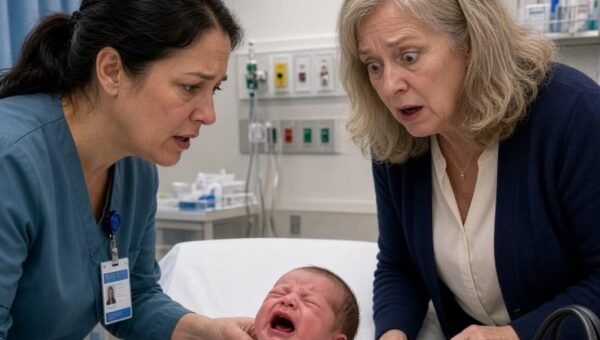
That afternoon, she had operated on Mateo, a seven-year-old boy from Ecatepec.
The little boy had arrived in critical condition, his skin pale and his lips blue.
When his heart finally started beating strongly again, Lucía could barely breathe.
“He’s going to make it, Doctor,” Omar, her trusted nurse, told her.
She closed her eyes for a moment.
Then she remembered the dinner.
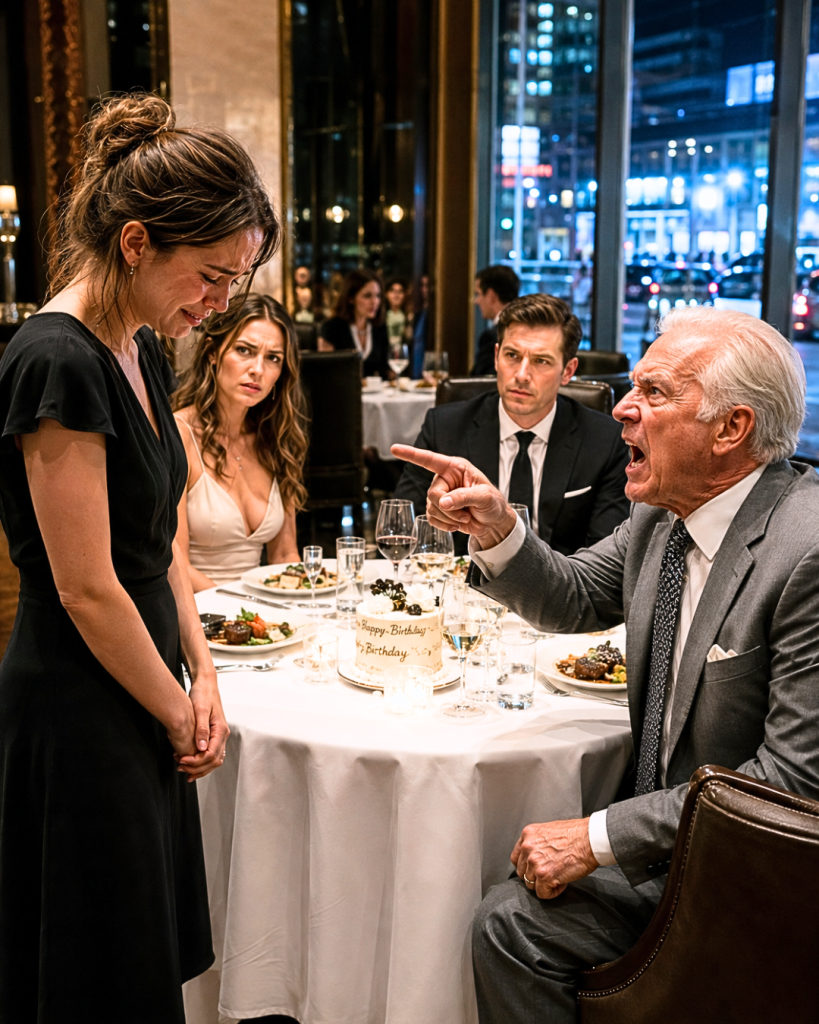
It was the 70th birthday of Arturo Del Valle, her father-in-law, a real estate businessman who loved talking about lineage, respectable families, and women who “shouldn’t neglect the home by pretending to be important.”
Lucía had promised she would arrive at seven.
It was almost eight.
She took a quick shower at the hospital, put on a dark blue dress she kept in her office, and left with her hair still damp.
She didn’t have time to change her shoes.
She was still wearing her white operating-room sneakers.
When she walked into the restaurant, everyone turned to look.
The table was covered with expensive glasses, white flowers, and uncomfortable smiles.
Her husband, Diego Del Valle, was sitting beside his father.
He didn’t smile when he saw her.
He didn’t stand up to hug her.
He simply clenched his jaw as though she had arrived specifically to ruin his evening.
“Well, look at that—a miracle,” said Renata, Diego’s sister. “The famous doctor finally decided to show up.”
A few people chuckled.
Lucía swallowed hard.
“Sorry I’m late. I had an emergency surgery. It was a child—”
“Don’t start with your hospital stories,” Diego cut her off quietly. “Today is my father’s birthday.”
Lucía looked at him, hoping for the slightest bit of understanding.
Nothing.
She approached Arturo with a tired smile.
“Happy birthday, Mr. Arturo. I’m truly sorry for being late.”
The old man looked up.
His hair was perfectly styled, he wore an outrageously expensive watch, and carried a cane he used more to intimidate than to walk.
He sniffed the air dramatically.
“What’s that smell?”
The table fell silent.
Lucía froze.
“I’m coming from the hospital,” she replied. “I just operated on a child.”
Arturo made a face of disgust.
“You smell like blood. Like bleach. Like death. It’s unpleasant to show up to a family dinner like that.”
Lucía felt her chest go cold.
“That smell you dislike comes from saving a life.”
“Don’t be dramatic, young lady,” he said. “A refined woman knows how to present herself. She doesn’t show up disheveled, wearing nurse shoes, smelling like she just came from a morgue.”
Renata lowered her head to hide a smile.
Diego stepped closer and grabbed Lucía’s arm.
“Go to the restroom, clean yourself up, put on some perfume, then come back and apologize to my father.”
The noise of the restaurant seemed to fade away.
“Are you asking me to apologize for saving a child?”
Diego tightened his grip.
“I’m asking you not to make a scene.”
Arturo struck the floor with his cane.
“That’s what happens when a woman earns too much money. It goes to her head. She forgets she has a husband. You should be thinking about giving this family children instead of spending your time with strangers cut open on an operating table.”
Lucía looked at Diego.
She waited for a single word.
The smallest defense.
But he lowered his eyes.
Then she smiled with a calmness that was more frightening than any scream.
“You’re right, Mr. Arturo.”
Diego exhaled in relief.
“My place isn’t here.”
She picked up her purse.
“Lucía, stop acting childish,” he muttered.
“The childish behavior came from all of you. I’m simply leaving.”
She walked toward the exit in her white sneakers, the same sneakers that had carried her through Mateo’s fight for survival.
No one stopped her.
Outside, the Mexico City night smelled like traffic, street tacos, and freedom.
Lucía turned off her phone after seeing twelve missed calls from Diego.
But at 10:43 p.m., she turned it back on.
She had thirty missed calls.
She answered the next one.
Diego’s voice exploded through the line.
“Where are you? The bill came out to 118,000 pesos and my card was declined! Get back here right now! Everyone’s waiting for you to pay!”
Lucía closed her eyes.
And at last she understood that to that family, she had never really been a wife.
She had been a wallet.
PART 2
Lucía didn’t answer right away.
She was sitting in a small diner in Roma, eating a plate of green enchiladas and drinking mineral water.
The waitress had recognized her from the hospital badge still hanging from her purse.
“Eat them while they’re hot, Doctor. You look exhausted.”
Lucía smiled, her eyes damp.
On the other end of the call, Diego was still shouting.
“Lucía! Don’t do this to me! My father is furious. Renata says we looked like a bunch of freeloaders.”
“Then pay for it yourselves,” she said.
“You know I don’t carry that kind of money.”
“But you do carry the family name.”
Silence.
“Don’t be like this.”
“No, Diego. You all crossed the line a long time ago.”
She hung up.
Then she opened her banking app and canceled every additional card linked to her account.
One by one.
Diego’s card.
The truck card.
The gym card.
The restaurant card.
The cards used for “family expenses” that always ended up paying for suits, liquor, watches, or one of her father-in-law’s whims.
That night, she didn’t return to the apartment in Polanco that she was almost entirely paying for.
Instead, she went to a small apartment in Narvarte that she had bought before getting married.
Diego had always told her to sell it.
He said it was ridiculous to keep “a little single-girl nest.”
Now that nest was the only place that truly felt like hers.
When she stepped inside, she found old medical books, a simple coffee maker, and a photo of her parents in Morelia on the day she graduated.
Her mother was crying.