
My Ex Husband Mocked Me At The Hospital After Our Divorce

One year after the divorce that had taken almost everything from me, I ran into my ex husband beneath the harsh white lights of St. Catherine’s Hospital, and he smiled at me the way a man smiles when he believes he has already won.
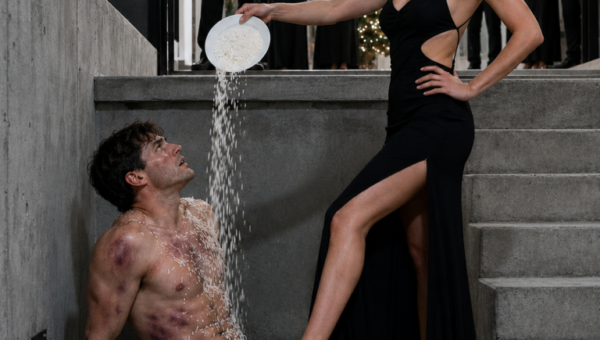
“Leaving you was the best decision I ever made,” Ethan said, loud enough that two nurses at the station glanced up. “A useless woman can’t have children. I’m lucky Madison gave me a son.”
I looked at him for a long moment, at the expensive watch catching the light, at the mouth that had once told me it loved me and now curved with such easy cruelty. And then I smiled back, and I said one word.
“Really?”
Two minutes later, the elevator at the end of the corridor opened, and a man in a dark suit stepped out carrying a sealed hospital envelope. My former best friend saw him first. The baby bottle slipped from her hand and shattered against the polished tiles, and milk spread in a slow white pool across the floor while she stared at him as though she had seen the dead walk.
Ethan had no idea that the man crossing the corridor toward us was carrying the evidence that would dismantle the entire life he had built on a lie. But I did. I had spent a year making sure of it.
Let me go back, though, because the smile I gave Ethan in that hallway was a year in the making, and to understand it you have to understand what they took from me, and how completely I had let myself believe it was my fault.
His name was Ethan Rowan, and for twelve years I had loved him the way you love someone when you are young enough to think love is the same thing as safety. We met when I was twenty four, both of us ambitious and broke, both of us convinced we were going to build something that mattered. And we did, for a while. I started a charitable foundation from nothing, running fundraisers out of a rented office with folding chairs and a secondhand laptop, and it grew, slowly and then all at once, into something real. By the time I was thirty, the Rowan Foundation was funding women’s health programs across three counties, and I had built it with my own hands, my own name on the door, my own sleepless nights poured into every grant and every donor call.
Madison Cole came into my life the way the most dangerous people always do, as a gift. She was warm and funny and endlessly attentive, and she told me I was the sister she had never had. I hired her as the finance director of the foundation because she was good with numbers and because I trusted her, and I trusted her because she had made herself impossible not to trust. She knew the code to my office. She knew where I kept the good wine. She had admired the pearl earrings in my jewelry box more than once, turning them over in the light and sighing about how they suited me, and I had laughed and told her that someday I would leave them to her in my will. I did not know then how literally she intended to take what was mine.
The trouble, or what I believed was the trouble, began when Ethan and I decided to have a child.
It should have been simple. We were healthy, we were financially secure, we were ready. But month after month, nothing happened, and eventually we went to a clinic, and eventually the clinic became the center of our entire lives. Four years. That is how long we spent trying, four years of hormone injections that left my body swollen and aching, four years of blood draws and ultrasounds and waiting rooms, four years of Ethan sitting beside me while a doctor explained, in that gentle careful voice they use, that another cycle had failed.
And every time it failed, the reports said the same thing. The problem was mine. My body was the one that could not do this. Ethan would hold my hand in the car afterward and say nothing, and his silence felt like a verdict.
I cannot describe to you what it does to a woman to be told, over and over, that her body is broken in the one way the world has always insisted matters most. I began to shrink. I stopped trusting my own instincts about anything. When Ethan told me I had become difficult, I believed him. When he said I had grown bitter and obsessed, I searched myself for the bitterness and the obsession and, finding grief instead, decided the grief must simply be those things wearing a kinder name. I made myself smaller and smaller, apologizing for a failure I did not understand, until there was almost nothing of me left for anyone to love.
They handed me the divorce papers three days after our final failed treatment.
Three days. I was still bruised from the injections. I was still crying at commercials with babies in them. And Ethan sat across from me at the kitchen table we had bought together at an estate sale in our first year of marriage, and he slid a folder toward me and said that he thought it was time we both admitted this was not working.
The story he told, to our friends, to the foundation’s board, to anyone who would listen, was that I had become unstable. That my desperation for a child had curdled into something frightening. That he had tried, God knows he had tried, but a man could only endure so much. And Madison, my dearest friend, my sister who was not my sister, stood at his side through all of it and nodded. She told people I had pushed him away. She told them she had watched it happen and had been powerless to stop it. She cried the appropriate tears and let herself be comforted for the terrible burden of having witnessed my decline.
I did not fight, because I did not think I had the right to. When you have spent four years being told your body is the problem, it is a very short step to believing you are the problem, entirely, all the way through.
By the time the settlement was signed, they had the house. They had most of our friends, who had heard only Ethan’s version and had no reason to doubt the grieving husband. And, though I did not understand the full shape of it yet, they had the foundation, the thing I had built from folding chairs and stubbornness, the thing with my name on the door.
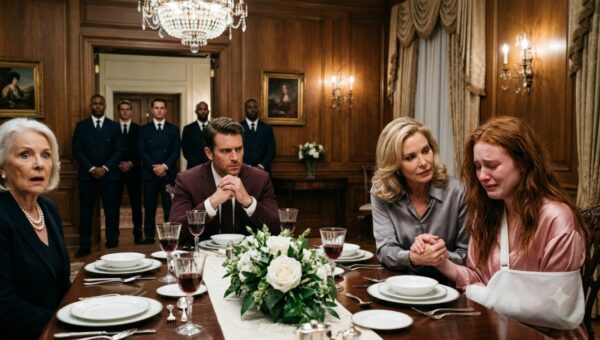
The night I signed the final papers, Ethan leaned close and murmured, “At least leave with dignity.” Madison waited in the hallway outside the lawyer’s office holding a thermos of soup she had made for me, her face soft with a concern I now know was the concern of a woman making sure the body is dead before she leaves the scene. By sunrise, they controlled nearly everything twelve years of my life had produced.
Then, a few weeks later, the two of them announced that they were together. That they had fallen in love, gently and guiltily, in the wreckage of my marriage. And not long after that, Madison was pregnant.
I disappeared, and they assumed it was because they had finished breaking me.
I moved into a small rented apartment above a bakery on the other side of the city, where the smell of bread came up through the floorboards every morning before dawn. I stopped answering my phone. I spent my nights sitting on the floor surrounded by medical reports I could barely understand, reading the same pages over and over, hunting for the sentence that would finally make sense of what had happened to me. I was not looking for revenge. I want to be honest about that. In those first months I was not strong enough for revenge. I was looking for the mistake in myself, the flaw, the reason. I wanted to find the broken thing inside me and name it, because I thought if I could name it I might finally be able to grieve it and let it go.
Instead, I found something else.
It happened because of a clerical accident, the kind of small human error that occasionally undoes a very large lie. When I had requested a copy of my complete medical file for the divorce proceedings, Ethan’s lawyer had provided a version, and I had never had reason to question it. But months later, sorting through the papers on my floor at two in the morning, I noticed that the page numbers did not run continuously. There were gaps. Pages four and five were there, and then the file jumped to page eight. Somewhere between them, three pages had simply ceased to exist.
I told myself it was nothing, an oversight, a copying error. But I could not stop thinking about it. And so, because I had nothing left to lose and nothing but time, I went back to the clinic myself and requested the complete archive, the full original file, every page. It took weeks and several forms and a small fee. When the envelope finally arrived, I sat with it unopened on my kitchen table for an entire evening, afraid, though I could not have told you of what.
When I finally read it, the floor of my life tilted and rearranged itself.
My ovarian reserve had been normal. My uterus was healthy. Every test the clinic had run on me, every measure of my ability to conceive and carry a child, had come back within an ordinary, unremarkable range. There was nothing wrong with me. There had never been anything wrong with me.
The abnormality was in Ethan’s samples. Severe, the reports said. Our original specialist, a doctor I remembered only vaguely as a kind woman with reading glasses on a chain, had recommended more than two years earlier that we consider donor sperm, because natural conception with Ethan’s samples was, in the clinical language of the report, statistically improbable to the point of near impossibility.
I had never seen that recommendation. It had been on one of the missing pages.
I sat in my kitchen above the bakery and I did not cry, which surprised me. What I felt instead was something cold and clarifying moving through me, like the first breath of air after surfacing from deep water. For four years I had carried a shame that was not mine. Ethan had known. He had sat beside me in those waiting rooms, holding my hand, letting me believe my body was the grave where our future had died, and the entire time he had known the truth and chosen to let me drown in a lie.
Because he had needed me drowning. A confident woman does not sign away her ownership of the company she built. A confident woman asks questions, hires her own lawyers, fights for what is hers. But a woman who believes she is broken, who believes she is the reason for everything that has gone wrong, that woman can be persuaded to leave quietly, with dignity, holding a thermos of soup.
I understood then that the divorce had never been about a marriage falling apart. It had been a theft, carefully staged, and my shame had been the tool they used to carry it out.
I stopped sleeping on the floor after that night. I got up, and I began to work.
The first thing I did was find a physician I could trust absolutely, someone with no connection to the clinic that had betrayed me, someone whose reputation was beyond the reach of a bribe. That is how I met Dr. Adrian Vale, the director of reproductive medicine at St. Catherine’s Hospital, a man known throughout the city for two things, his brilliance and his refusal to bend. I brought him the original file and the doctored version side by side, and I watched his face change as he read them.
“Someone altered these,” he said quietly, when he had finished. It was not a question.
“I know,” I said. “I need to prove it.”
Adrian became, over the following months, my physician, my advisor, and eventually something like a friend, though never more than that, whatever Ethan would later insinuate in that hospital corridor. He reviewed my records with the thoroughness of a man who had made a career out of not being fooled. He confirmed, in writing, on hospital letterhead, that the medical basis for our entire fertility narrative had been falsified. And he told me something that reframed the whole picture. Altering clinical summary pages was not something a patient could do. It required access to the clinic’s internal archive. It required an insider.
So I started looking for the insider, and the trail led exactly where a colder, wiser version of me had already suspected it would.
The clinic administrator was a man named Doyle, and he had made the mistake that men like Doyle always make, which is to assume the money would keep everyone quiet forever. But the foundation, my foundation, had begun to show irregularities that even Ethan and Madison could not fully hide. Because once I knew to look, I looked at everything.
Madison had been the finance director. Madison had known every account, every signatory, every internal control, because I had trusted her with all of it. And in the months surrounding the divorce, nearly two million dollars had moved out of the foundation and into a private consulting firm, a firm that on paper belonged to a shell company, and behind the shell company, when you followed it far enough, stood Ethan and Madison together.
She had copied my signature onto the transfer authorizations. My own signature, the one she had seen a thousand times on a thousand documents, forged onto papers that moved the charity’s money into their pockets. They had not merely stolen my marriage and my reputation. They had financed their new life, their new house, the nursery for the baby that would soon arrive, with money taken from the women my foundation existed to help.
I did not go to the police first. I want you to understand the discipline this required, because everything in me wanted to. But I knew Ethan. I knew how well he lied and how good his lawyers were and how easily a story of a bitter ex wife making wild accusations would slot into the version of me he had already sold to the world. If I moved too soon, with too little, they would bury me a second time.
So instead I went to the district attorney’s office, and I brought them everything, organized, documented, cross referenced. The two versions of the medical file. Adrian’s written analysis. The financial trail through the shell company. And I asked them for time, and for patience, and for the one thing that would turn my private certainty into a public case. I asked them to find Doyle and offer him the choice that men like Doyle cannot resist.
It took months. The investigators worked quietly. Doyle, faced with charges that would have ended his life as he knew it, made the arithmetic that guilty men make, and six weeks before that morning in the hospital, he confessed. In exchange for a reduced sentence, he handed the investigators everything. The altered files. The record of the bribe. And, most damning of all, the messages Ethan had sent him, in Ethan’s own careless words, instructing him exactly which pages to change and what the new versions should say.
The case built itself after that. There were warrants being drawn up. There was a paternity question the court had authorized, because Adrian had pointed out something that had not occurred to me, that if Ethan’s samples truly were as abnormal as the real records showed, then the son he had been parading around the city, the son he used to humiliate me, raised a question worth answering.
Ethan’s own attorney, I later learned, had advised him to surrender quietly that very morning, to get ahead of the charges, to preserve what little dignity a plea might leave him.
Instead, Ethan went to the hospital. Because it was the baby’s first birthday, and Madison had wanted a photograph in the maternity wing where the child had been born, a sentimental gesture, and because Ethan could not resist the chance, if he happened to see me, to twist the knife one final time.
He mistook cruelty for power. He always had. That was the flaw at the center of him, the belief that making another person small was the same thing as being large.
Which brings me back to the corridor, and the smile, and the single word.
“Really?” I said, and Ethan laughed.
“Still pretending you know something?” he said.
That was when the elevator opened and Adrian stepped out in his dark suit with the sealed envelope in his hand, and Madison dropped the bottle, and the milk spread across the tiles, and the whole carefully painted portrait of their perfect life began, very quietly, to crack.
Adrian crossed the corridor and stopped beside me, and he rested a steadying hand against my back, not because I needed steadying but because he understood the choreography of the moment as well as I did.
“Because Claire asked me to come,” he said, answering the question Madison had not managed to finish asking.
Ethan’s smile faltered. He knew who Adrian was. Everyone in the city knew who Adrian was.
“I have the final laboratory report,” Adrian said.
“What report?” Ethan’s jaw had gone tight.
Madison pulled the baby closer to her chest.
“The report,” Adrian said, in the calm, unhurried voice of a man reading a weather forecast, “proving that Claire was never infertile.”
The corridor went silent. A nurse who had been walking toward us slowed and then stopped. I held Ethan’s gaze, and for the first time in years, looking at his face caused me no pain at all. There was only the quiet, almost surgical satisfaction of a thing arriving exactly on schedule.
Ethan recovered fast. I will give him that much. He had spent his whole life talking his way out of rooms.
“That’s impossible,” he snapped. “We spent four years trying.”
“We spent four years following reports you controlled,” I said.
His eyes flicked toward Madison, just for an instant, a reflex he could not stop, and I watched her register it, watched her understand that in the moment of crisis his first instinct had been to look at his accomplice and calculate.
“You can’t prove any of that,” Ethan said, but the certainty had drained out of the words.
Adrian lifted the envelope a few inches. “The hospital’s audit can.”
And Madison, who had been silent, spoke in a voice that shook. “Ethan, you said the records were gone.”
His head turned toward her so sharply it was almost violent. “Shut up.”
That one command told the entire story. Every staged family photograph, every tearful lunch, every performance of the grieving man and the loyal friend, all of it collapsed into those two words spoken to the woman he supposedly loved. I saw the nearest nurse’s expression change. I saw her begin, at last, to understand which person in this corridor was the dangerous one.
I took out my phone, not to show anything on it, simply to hold it, to make visible the fact that I was no longer a woman who could be talked over.
“The clinic administrator confessed six weeks ago,” I said. “In exchange for a reduced sentence, he gave the investigators the altered files, the bank transfers, and the messages you sent him. Your messages, Ethan. In your words.”
His composure cracked into anger, which is what his composure always cracked into, because anger was the only feeling he truly trusted.
“You’ve been spying on us.”
“No,” I said. “I’ve been cooperating with the district attorney.”
At the far end of the hallway, two hospital security officers appeared. They did not approach. They stood and waited, exactly as I had arranged, because there was one more thing that needed to be said in the open before anyone was taken anywhere.
Madison started to cry, and unlike the tears she had performed a year ago in a lawyer’s hallway, these were real, the ugly panicked tears of someone watching the ground disappear beneath her.
“Claire, I was scared,” she said. “Ethan said you would take everything. He said if I didn’t help him, I’d be left with nothing.”
“You took my marriage,” I said. “You took my reputation. You stood in a courtroom and swore under oath that I was delusional. You forged my signature on documents that stole money from women who had nowhere else to turn.”
“I’m sorry.”
“You’re sorry because the evidence survived.”
Ethan, cornered, did what cornered men do. He reached for the oldest weapon in his kit, the one that had always worked, the suggestion that a woman’s competence must secretly be about a man. He jabbed a finger toward Adrian.
“And what does he get out of this? Are you sleeping with him?”
Adrian did not so much as blink. “I’m her physician, her business partner, and her witness,” he said. “Nothing more.”
And it was true. I had rebuilt myself without needing another man to certify that I was worth something. That was, in the end, the part Ethan could never have understood, because in his world a woman’s value was always on loan from a man, and he had spent a marriage collecting the interest.
Then Adrian opened the envelope, and the last card turned over.
“There is another result,” he said.
Madison went very still. Her tears stopped as though a tap had been closed.
Adrian looked at the child in her arms, and then he looked at Ethan, and his voice remained perfectly, mercilessly gentle.
“Your documented condition makes natural conception statistically impossible,” he said. “The court authorized a paternity test. It confirms that you are not this child’s biological father.”
For a moment no one moved. Then Ethan turned to Madison, and the transformation in his face was something I will not forget, the smugness curdling into disbelief and the disbelief hardening into something close to horror. The man who had called me useless in front of a hallway of strangers now looked at the woman he had chosen over me as though she were a stranger too.
“Whose son is he?” he said.
Madison pressed her back against the wall. The baby, sensing the fury in the air, began to cry.
“Yours,” she said. “Yours in every way that matters.”
“Whose?”
“A donor’s!” The word tore out of her in a scream that turned every head on the ward. “The clinic told me your sample would never work. I knew you’d leave me the way you left her if I couldn’t give you a child. So I used a donor and I let you believe it was yours. I did it to keep you.”
And there it was, the final, perfect symmetry. For years Ethan had used fatherhood as a blade against me, had stood in this very hospital and thanked God for the son that proved his manhood and my failure. And the whole time, the miracle he had wielded to humiliate me had been built on the same kind of lie he had built to destroy me. He had been deceived exactly as he had deceived. The child he had used as a trophy was not his at all.
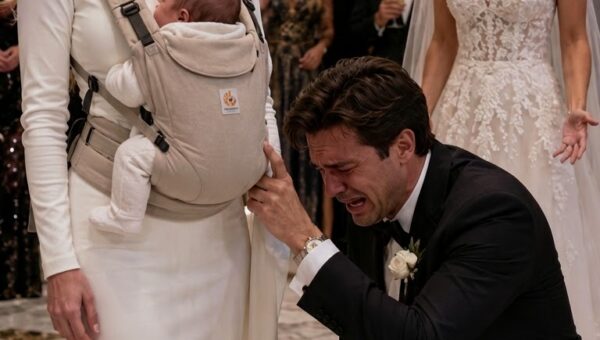
He lunged for Madison then, his hand closing toward her arm, and the security officers were on him before he had taken a full step, two of them, firm and practiced, pulling him back and putting their bodies between him and her. The baby was wailing now, and Madison’s grip had gone loose with shock, and I moved without thinking and lifted the frightened child out of her trembling hands before she could drop him a second time.
He was warm and small and terrified, and none of what the adults around him had done was his fault. I held him against my shoulder and turned him away from the noise. “Don’t punish him for what you did,” I said, to both of them, to either of them. “He’s innocent. Whatever else is true, he’s innocent.”
Two detectives came through the doors at the end of the corridor, badges out, and Ethan stared at them with an expression I had waited a year to see, the expression of a man who has finally run out of story.
“Claire,” he said. “What have you done?”
“Recovered what you stole,” I said.
The lead detective read them the shape of it, the charges stacking one on top of another, conspiracy, wire fraud, forgery, theft, obstruction of justice. Madison, the detective added, would also face a charge of perjury, for the testimony she had given under oath during our divorce. Their names, spoken in that flat official cadence, sounded nothing like the confident people who had handed me a folder across a kitchen table and told me to leave with dignity.
They put the handcuffs on Ethan first. The sound they made was small, a soft metallic click, quieter than any insult he had ever shouted at me across our marriage, and yet somehow it was the loudest thing I had ever heard. As the officers turned him toward the doors, he wrenched around to look at me one last time, and the old venom flared up in him even now.
“You planned this,” he spat. “You planned this whole meeting.”
“No,” I said. “Running into you was chance. Being ready wasn’t.”
They led him away. Madison sobbed against the wall until a social worker arrived and, gently, took the child from my arms. That was the hardest moment of the day, harder than facing Ethan, because the boy had done nothing to deserve any of the wreckage the adults had made around him. But Madison’s donor agreement had made her his legal mother, and I had already made a quiet request through the proper channels that the child be placed with Madison’s sister, a decent woman with no part in any of this, for the duration of the case. Justice did not require destroying an innocent life. I had learned, painfully, the difference between justice and cruelty, and I had promised myself I would never confuse the two the way Ethan had.
The rest unfolded with the slow inevitability of a thing that has finally been set right.
Ethan’s stolen shares in the foundation were frozen that same afternoon. Three months later, a judge agreed to reopen the divorce judgment on the grounds that it had been obtained through fraud, and my ownership of everything I had built was restored to me, line by line, account by account. The house they had taken was sold. Every dollar that had flowed through Madison’s consulting firm was traced, recovered, and returned to the foundation it had been stolen from.
Ethan accepted a plea agreement and was sentenced to four years in federal prison. Madison received eighteen months, followed by probation, and a permanent prohibition from ever again managing charitable funds. Their carefully advertised romance did not survive the sentencing. In the hearings they turned on each other completely, each insisting the other had been the architect of it all, until a judge grew tired of the noise and ordered them both to be silent. They had built their love on a lie about me, and in the end it dissolved into the truth about themselves.
I could tell you that watching them fall gave me some enormous, roaring satisfaction, but that would not be quite honest. What I felt, mostly, was quiet. A door that had been standing open in me for years, letting in a cold wind of shame, finally swung shut. I stopped waking with my hands pressed against my stomach. I stopped searching my own reflection for the broken thing, because I finally understood there had never been a broken thing to find.
I rebuilt the foundation, and then I did something more. With the money that was recovered, the very money Ethan and Madison had stolen to finance their lie, I opened a new center, a place for women navigating exactly the kind of maze I had been lost in, women facing fertility misinformation and financial abuse, women being told by someone they trusted that the failure was theirs when it was not. I put my own name on the door again, not out of pride, but because I wanted every woman who walked in to know that the person who built this place had stood where she was standing, and had found her way out.
One year after that morning in the hospital, I stood on the rooftop terrace of the Claire Rowan Women’s Health Center as the sun went down and lit the city windows on fire, one by one, all across the skyline. Adrian came up to stand beside me, my friend, my witness, the man who had helped me carry the truth without ever once trying to make it his. We did not say much. We had never needed to.
From inside, through the open door, came a soft, indignant cry, the particular cry of a very small person who has decided she is done napping.
My daughter is three months old. She was conceived through donor treatment, after doctors confirmed in writing what Ethan had hidden from me for four years, that my body had never once failed me, that it had been ready all along, waiting only for the truth to catch up to it. I went inside and lifted her out of the bassinet we kept in the office on the days I could not bear to be apart from her, and she quieted against my chest the way she always does, and I carried her back out into the last of the light.
Ethan once stood in a crowded hallway and called me useless because I could not give him a child. He was wrong about the child, as he was wrong about almost everything, but he was most wrong about the word useless, because he had it exactly backward. I had never been the useless one. He was the man who could only build by taking, who could only rise by pushing someone down, who mistook a lie for a legacy and a stolen life for a life.
In the end, I gave myself the three things he could never have given me and could never take away. The truth, which set down a burden I had carried for years. My name, restored to the door of the work I loved. And this small warm weight in my arms, this future that no one else would ever own, watching the city go gold as the sun slipped below the buildings and the day I had waited so long for finally, gently, came to a close.