My Girlfriend Said I Couldn’t Touch Her Until I Paid For Her Girls’……..

PART 2
Brianna didn’t understand what I meant.
That was the only reason she slept so peacefully that night.
On the ride home from my mother’s house, she stared out the passenger window with her arms crossed, waiting for me to apologize. I knew the routine. First came silence. Then came sniffles. Then came a carefully timed tear. Then a sentence like, “I just wanted to feel chosen.”
For most of our relationship, that line had worked.
It made me feel guilty enough to forget the original issue.
But that night I drove through Nashville’s wet streets with both hands on the wheel and nothing left to give her.
The city lights smeared across the windshield. Rain ticked softly against the glass. Brianna’s reflection floated beside mine, pretty and cold and annoyed that her performance had failed.
Finally, she said, “Your family hates me.”
“No,” I said. “They finally saw you.”
She turned toward me. “What is that supposed to mean?”
“It means they heard what you said.”
“I said something honest. Sorry if honesty scares you.”
“Honesty doesn’t scare me.”
“Oh, please.” She laughed without humor. “You looked terrified when I said I needed you to prove you were serious.”
“You didn’t ask me to prove I was serious. You told me I couldn’t touch you unless I paid almost nine thousand dollars.”
“You keep making it sound ugly.”
“It was ugly.”
She stared at me like I had slapped her.
“You know what, Ethan? Maybe I’ve been too patient. Maybe I’ve accepted too little. I moved in with you. I gave you my time. I gave you my energy. And what do I get? Some little weekend trips? A purse for my birthday? Dinner at places you can afford?”
I almost laughed.
The purse had cost $820.
The “little weekend trip” had been $2,600.
The dinners were never under $200 because Brianna called chain restaurants “sad divorced-dad food.”
But I didn’t argue.
Arguing would mean I still wanted to convince her.
I didn’t.
At the apartment, she kicked off her heels by the door and walked straight to the bedroom. I stayed in the living room, looking around at the place I used to love.
My apartment sat on the eighth floor of a building near the Cumberland River. I had moved in two years earlier after a promotion at the logistics company where I worked as an operations manager. It wasn’t huge, but it was mine. Exposed brick. Big windows. A balcony just wide enough for two chairs and a small table. I had saved for the couch, assembled the bookshelves, picked the framed black-and-white photos of Tennessee backroads.
After Brianna moved in, the apartment changed.
My gray couch disappeared under white throw blankets nobody was allowed to use. My framed photos were replaced by abstract gold prints. My coffee table became a display for fashion books she never opened. The balcony chairs were thrown out because they “ruined the aesthetic.”
Funny how quickly a home can become a showroom for someone else’s ego.
I sat at the kitchen island until almost three in the morning.
I made a list.
Not an emotional list.
A practical one.
Lease: in my name only.
Furniture: mine, except mattress, vanity, bar cart, and decorative pieces.
Utilities: in my name.
Internet: in my name.
Car: mine.
Savings: separate.
Her legal status in the apartment: guest.
I stared at that last word.
Guest.
For six months, I had let a guest treat me like a tenant in my own life.
At 3:17 a.m., I texted Luke.
Can I store some stuff at your garage tomorrow?
He replied six minutes later.
I’ve been waiting for this text for months.
Then another.
Truck is available after 11. Don’t warn her.
I looked toward the bedroom. Brianna was asleep, one arm across my side of the bed, her phone glowing on the nightstand with Dubai swimsuit ads still open.
I didn’t sleep.
At sunrise, I showered, shaved, dressed for work, and left before she woke up.
I spent the morning answering emails, updating schedules, and pretending my life hadn’t split open in my mother’s kitchen. At lunch, I called the landlord.
“Mr. Walker,” Diane said warmly. “Everything okay?”
“I need to give formal notice,” I said. “And I need to remove an unauthorized occupant.”
There was a pause.
“Is this about Brianna?”
I closed my eyes.
“You knew?”
Diane sighed. “I know more than tenants think. She’s been very comfortable here.”
That sentence told me enough.
Diane explained the process. Because Brianna was not on the lease, I could end my own tenancy with thirty days’ notice. Diane would serve written notice that Brianna had to vacate. I would still be responsible for the month, which I expected. I told her I’d pay.
Then I called a storage unit.
Then I called a new apartment complex in East Nashville.
Then I texted Luke again.
Tomorrow. She’s shopping for Dubai.
His answer came fast.
Good. I’ll bring Marcus.
Brianna texted at 2:04 p.m.
Still mad?
I replied:
Still not paying.
A minute later:
Wow. Good to know where I stand.
I typed nothing.
She sent another:
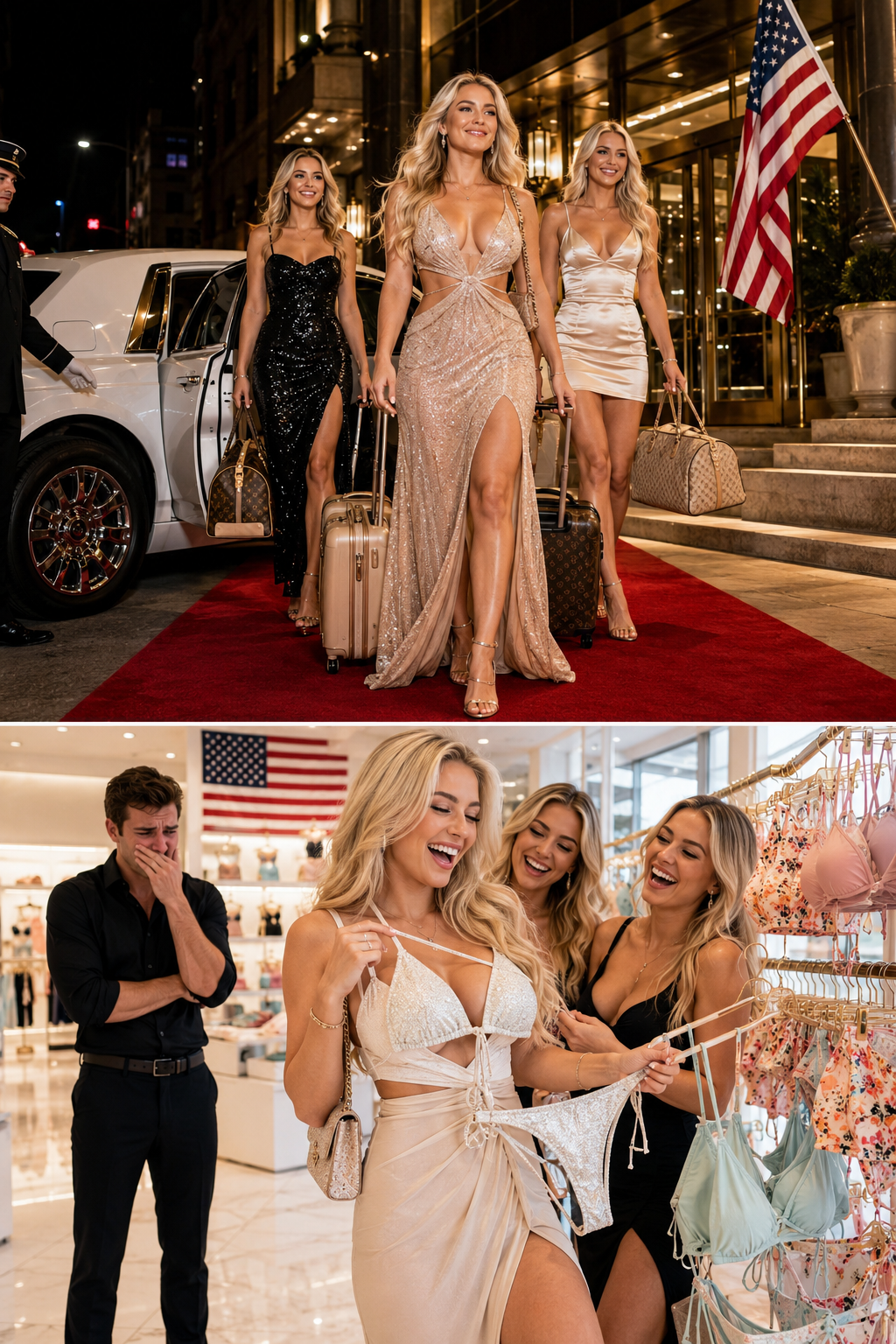
I’m going shopping with Morgan and Ashley tomorrow. Need bikinis since apparently I have to make myself happy.
I stared at the message.
Then I smiled for the first time all day.
Perfect.
That night, she came home with takeout for herself only. She ate pad thai on the couch while watching reality TV and scrolling through photos of Dubai resorts.
I made a sandwich.
She looked over once and said, “You’re really going to let me go on a once-in-a-lifetime trip feeling unsupported?”
I took a bite.
“Looks that way.”
Her eyes flashed. “You’re being cruel.”
“No,” I said. “I’m being done.”
She paused.
Something in my tone must have scared her because, for the first time all night, her voice softened.
“Ethan, don’t be dramatic.”
I almost laughed again.
Drama was dragging an $8,734 trip invoice into my mother’s kitchen.
Drama was breaking a dead man’s mug and shrugging.
Drama was turning affection into a billing department.
What I was doing was logistics.
The next morning, Brianna dressed like a woman going to war on Instagram. Oversized sunglasses. Tan trench coat. White sneakers. Perfect hair. She stood by the door with her designer tote over one arm.
“I’ll be gone most of the day,” she said.
“Okay.”
She waited.
I kept drinking coffee.
“You’re not going to say anything?”
“Have fun.”
Her mouth tightened.
“I hope you think about what you’re losing.”
I looked around the apartment one last time.
“I already have.”
She slammed the door behind her.
Three minutes later, I watched from the balcony as she climbed into Morgan’s white BMW and pulled away.
At 10:12 a.m., Luke arrived with Marcus and a moving truck.
Luke stepped into the apartment, saw the white throw blankets, gold prints, and decorative candles lined up like museum pieces.
He whistled.
“Man, she really colonized this place.”
Marcus laughed.
I didn’t.
“Let’s move.”
PART 3
We worked like thieves, except everything we carried belonged to me.
The couch went first. Then the TV stand. Then my desk, office chair, bookshelves, tools, kitchen appliances, records, winter coats, framed photos, and the oak bed frame my father had built with me when I was twenty-seven.
That one took the longest.
Not because it was difficult to disassemble, but because I had to stand in the bedroom and stare at it before I touched it.
My father had been dying then, though none of us knew how little time he had left. He had shown up at my old apartment with lumber, screws, a thermos of coffee, and that stubborn Walker-family belief that anything worth buying was worth trying to build first.
“Bed frames are overpriced,” he had said. “Besides, someday you’ll have a wife, and she’ll say, ‘Where’d this come from?’ And you’ll say, ‘My dad and I made it.’ That’ll mean something.”
For years, it had.
Then Brianna had complained that the wood was too dark for her aesthetic.
She wanted a cream upholstered frame with gold legs.
I told her no.
It was one of the few times I had.
Now Luke stood beside me in the bedroom doorway.
“You okay?”
I nodded.
“Yeah.”
“You sure?”
I ran my hand over the headboard, where my father had accidentally dented the wood with a dropped wrench and then signed his initials inside the mark as a joke.
“Yeah,” I said again. “This comes with me.”
We took the frame apart carefully and loaded every piece into the truck.
By two o’clock, the apartment looked like a stage after the actors had left.
Brianna’s things remained.
Her vanity.
Her makeup lights.
Her racks of clothes.
Her shoes lined along the wall.
Her rose-gold bar cart.
Her mattress on the floor, stripped of the frame beneath it.
Her fake plants.
Her candles.
Her framed print that said: MANIFEST THE LIFE YOU DESERVE.
I stood in the doorway, sweaty and exhausted, and read that print for a long moment.
Then I laughed.
Luke came up beside me. “What?”
“Nothing.”
“No, what?”
I pointed at the print.
Luke read it and snorted. “Well, she manifested an air mattress at her parents’ house.”
Marcus called from the hall, “Last load!”
We finished by three-thirty.
At four, I returned alone.
The apartment echoed.
I walked from room to room with my phone in my hand, recording everything. Not for memory. For proof. Her belongings intact. No damage. No missing property. No chance for Brianna to claim I had stolen from her.
Then I took out a sheet of paper.
I had typed the note first, but handwriting felt right.
Brianna,
I’m moving out. My name is the only name on the lease, and I’ve given formal notice. You will receive notice to vacate from the landlord. This month’s rent is paid.
You asked me to spend $8,734 to prove I was serious about us. You told me affection and intimacy depended on payment.
I believe you.
So I’m choosing not to be in a transactional relationship.
Enjoy Dubai.
I’m enjoying being single.
Do not contact me.
Ethan
I placed the note on the kitchen island beside the pink invoice.
Then I added one more thing.
The broken handle from my father’s mug.
I had brought it home in my jacket pocket after Sunday dinner. I set it on top of the note like a paperweight.
Not to be cruel.
To remind myself why I was leaving.
At 4:17 p.m., I locked the door and slid my key under the landlord’s office door downstairs.
Then I drove to Luke’s house.
He lived twenty minutes away in a brick ranch with a sagging porch, two rescue dogs, and a garage full of things he swore he was going to fix someday. Emma opened the front door before I knocked.
“Uncle Ethan?”
“Hey, kiddo.”
She hugged me around the waist.
“I’m sorry she broke Grandpa’s mug.”
That nearly undid me.
I hugged her back and looked over her head at Luke, who stood in the hallway with his arms crossed.
“She didn’t break Grandpa,” I said.
Emma pulled back. “Dad said you’re staying with us.”
“For a little while.”
She nodded seriously. “You can have the guest room. But the left lamp buzzes.”
“Good to know.”
That night, my mother came over with lasagna.
She didn’t make a speech. She didn’t say “I told you so,” even though she had probably earned the right.
She just put a plate in front of me and touched my shoulder.
“Your father would be proud,” she said.
I swallowed hard.
“For leaving?”
“For finally knowing the difference between love and being used.”
I slept nine hours that night.
The first full night of sleep I’d had in months.
The next morning, my phone looked like a crime scene.
Blocked calls: 31.
Texts from unknown numbers: 14.
Emails: 6.
Instagram messages from fake accounts: 3.
Morgan: You are insane. She was joking.
Ashley: A real man doesn’t abandon a woman over one fight.
Taylor: Do you know what you’ve done to her mental health?
Brianna from a new number: Call me right now.
Brianna again: This is emotional abuse.
Brianna again: You can’t just move out while I’m shopping.
Brianna again: My mattress is on the floor, Ethan.
That one made Luke laugh so hard he spilled coffee.
At work, the receptionist called my desk at 11:30.
“Ethan? There’s a Brianna Hale here to see you.”
My hand tightened around the phone.
“Tell her I’m unavailable.”
“She says it’s an emergency.”
“It isn’t.”
“She’s crying.”
I closed my eyes.
“If she refuses to leave, call building security.”
There was a pause.
“Understood.”
Ten minutes later, my phone lit up with an email.
Subject: How could you?
I deleted it unread.
For the next week, Brianna tried everything.
Anger.
Tears.
Apologies.
Threats.
A voice memo where she sobbed that Dubai meant nothing without me.
A Venmo request for $4,367 labeled “half because you ruined everything.”
A screenshot of a quote about narcissistic men.
A message to my mother that said: I hope you’re happy. You destroyed us.
My mother responded with one sentence:
No, sweetheart. You did that at my table.
Then she blocked her.
Brianna still went to Dubai.
Of course she did.
Her friends covered part of the cost, and she put the rest on a credit card with an interest rate that would have given my father chest pain.
For six days, mutual friends sent me screenshots.
Brianna under an archway of flowers.
Brianna beside a pool.
Brianna in sunglasses on a yacht.
Brianna captioning a desert photo: Healing where the sun can find me.
But in every picture, her smile looked like something held up with wire.
Meanwhile, I found an apartment in East Nashville.
One bedroom. Hardwood floors. Big windows. No gold prints. No performance. The kind of place a man could come home to and hear himself think.
I signed the lease the day Brianna posted a photo from Dubai holding champagne.
The caption read: Never beg for love.
I almost replied.
Never invoice it.
But I didn’t.
Silence was cheaper.
And more satisfying.
PART 4
Freedom did not arrive like fireworks.
It arrived like quiet.
It was waking up without checking whether Brianna was mad.
It was buying groceries without someone adding imported sparkling water, truffle chips, and $18 organic strawberries to the cart, then forgetting her wallet.
It was watching a game on my own couch without hearing, “Sports make the room feel low-class.”
It was running at six in the morning along the Cumberland River because nobody was in bed sighing loudly that I cared more about fitness than cuddling.
For the first time in half a year, my bank account stopped bleeding.
For the first time in longer than that, my mind stopped bracing for impact.
At work, people noticed before I did.
My boss, Janet, called me into her office two weeks after I moved out.
I assumed something was wrong. Instead, she leaned back in her chair and studied me.
“You look alive again.”
“That bad before?”
She smiled. “You looked like a man trying to solve a problem that kept changing its name.”
That was exactly what loving Brianna had felt like.
Every week, the problem changed names.
Commitment.
Support.
Romance.
Ambition.
Masculinity.
Generosity.
But underneath, the problem was always money.
Mine.
Janet slid a file across the desk.
“The Memphis expansion proposal you revised? Corporate loved it.”
“That’s good.”
“That’s very good. They’re considering you for regional operations lead.”
I stared at her.
“Seriously?”
“Seriously. Keep your head clear.”
I almost told her the truth. That my head was only clear because I had removed a woman from my life who treated my debit card like a love language.
Instead, I said, “I will.”
Luke helped me move into the new apartment that Saturday.
My mother brought cleaning supplies and a framed photo of my father standing beside his old Ford pickup. Emma made a drawing of me, Luke, my mother, and two dogs under a banner that said NEW START.
She had drawn Brianna as a tiny tornado in the corner.
“Emma,” Luke said, trying not to laugh.
“What?” she said. “That’s what she felt like.”
I hung the drawing on the fridge.
Two nights later, I met Claire Bennett.
It wasn’t supposed to be a date.
My college friend Dave invited me to coffee with his girlfriend, Melissa, and said Melissa had a friend who “wasn’t crazy, had a real job, and knew how to apologize.”
“That’s a weird sales pitch,” I said.
“It’s Nashville dating,” Dave replied. “That’s premium inventory.”
Claire was a fourth-grade teacher with chestnut hair, green eyes, and a laugh that made people at nearby tables glance over and smile without knowing why.
She arrived in jeans, a navy sweater, and no visible interest in being worshipped.
We talked about work. Books. Bad traffic. Childhood injuries. She told me about a student who had written an essay claiming Abraham Lincoln invented pizza. I told her about Luke getting his head stuck in a banister when we were kids and insisting the house had trapped him.
When the check came, I reached for it automatically.
Claire reached faster.
“Absolutely not,” she said.
I blinked.
She looked amused. “What?”
“I was going to get it.”
“I know. I saw the hero hand.”
“The hero hand?”
“The move men do when they think paying for two coffees makes them a gentleman.”
I laughed. “Doesn’t it?”
“Maybe. But I have a job, Ethan. We can split coffee.”
“It’s coffee.”
“Exactly. Low stakes. Great place to practice equality.”
Dave coughed into his cup.
Melissa smiled like she had planned this.
Claire paid for her latte. I paid for mine.
It should not have felt revolutionary.
It did.
Over the next month, Claire and I saw each other every week. Dinner once. Then a walk through Shelby Park. Then a minor league baseball game where she heckled the umpire with surprising precision. Then tacos at a place where she insisted the best item on the menu was not the expensive one but the messy one wrapped in foil.
She was kind without performing softness.
Direct without being cruel.
Funny without needing an audience.
And when she liked something, she said thank you.
The first time I paid for dinner because I had invited her, she texted later:
Thank you for tonight. Next one is mine.
I stared at that message for almost a minute.
Thank you.
Two words Brianna had treated like a tax.
Claire didn’t ask me to prove anything with money. She didn’t punish me when I said no. She didn’t turn every boundary into a trial.
Once, while we were cooking pasta in my apartment, she opened my cabinet and found only one plate.
“One plate?” she asked.
“I moved fast.”
She looked around at the half-unpacked boxes. “You need help.”
“I’m getting there.”
“No, you need plates.”
The next day, she showed up with four plain white plates from Target.
I reached for my wallet.
She smacked my hand lightly.
“They were twelve dollars. Accept kindness like an adult.”
I did.
Then I cooked her dinner on one of those plates.
No one photographed it.
No one captioned it.
No one called it bare minimum.
We just ate.
Brianna returned from Dubai during my third week in the new place.
I knew because Diane, my old landlord, called.
“She’s out,” Diane said.
“Everything okay?”
“She cried in the lobby for forty minutes, but yes.”
I rubbed my forehead. “Did she damage anything?”
“Only the mood.”
Brianna had apparently failed to find an apartment she could afford on short notice. Her parents lived in Franklin, in a large suburban house with white columns and strict opinions. She moved back into her childhood bedroom, which I heard from mutual friends was “humiliating” because her mother made her take out the trash and her father refused to cover her credit card bill.
I didn’t celebrate.
But I didn’t feel guilty either.
Six weeks after the breakup, Dave invited me to his birthday party at a downtown bar.
“Brianna might be there,” he warned.
“Then why invite her?”
“Melissa invited Ashley, Ashley invited Morgan, Morgan invited Brianna. It became a whole supply chain issue.”
I considered skipping.
Claire noticed.
“You want to go?” she asked.
“Kind of.”
“Then go.”
“She’ll make a scene.”
“Probably.”
“You say that calmly.”
“I teach fourth grade. I’ve seen public meltdowns over glue sticks.”
I laughed.
Claire touched my arm. “You don’t have to hide from your own life because someone else might behave badly.”
So we went.
The bar was packed and loud, all brick walls, neon beer signs, and country music fighting with conversation. Dave hugged me at the door. Melissa hugged Claire. For the first hour, everything was normal.
Then I felt someone staring.
I turned from the bar with two beers in my hands.
Brianna stood ten feet away.
For a second, I barely recognized her.
The Dubai tan had faded unevenly. Her hair was still perfect, but her eyes looked tired under heavy makeup. She wore a black dress I remembered paying for, and the diamond necklace I had bought her still rested at her throat like evidence.
Her gaze dropped to the beers.
Then to Claire, who stood beside Melissa across the room, laughing.
Then back to me.
She walked over slowly.
“Can we talk?”
“No.”
Her face tightened. “Five minutes, Ethan.”
“I don’t think that’s a good idea.”
“Please.”
That word sounded unfamiliar in her mouth.
Against my better judgment, I nodded toward the patio.
“Five minutes.”
PART 5
The patio was quieter, but not private.
A few people smoked near the railing. A couple argued near the heat lamp. Music thumped through the brick wall behind us.
Brianna wrapped her arms around herself as if the October air had personally betrayed her.
“You look good,” she said.
“Thanks.”
“That’s all?”
“What do you want me to say?”
She looked down. “I messed up.”
The sentence landed between us.
For eighteen months, I had wanted to hear those words. Now they felt like a package delivered after I had moved.
“I know,” I said.
Her eyes filled immediately. “The Dubai thing was stupid. I let my friends get in my head. Everyone was talking about what their boyfriends were paying for, and I felt embarrassed.”
“So you embarrassed me at my mother’s house.”
“I didn’t mean to.”
“You brought a printed invoice.”
Her jaw tightened. “I was trying to communicate my needs.”
“No. You were trying to control the room.”
She wiped under one eye carefully, preserving makeup. “Your family already didn’t like me.”
“My family fed you every Sunday.”
“They judged me.”
“They saw you.”
She looked away.
Inside the bar, someone laughed loudly.
Brianna’s voice dropped. “I’m living with my parents now.”
“I heard.”
“My dad took my credit card.”
“That sounds like a family issue.”
She looked back at me, shocked by my calmness.
“You don’t care?”
“I hope you figure things out.”
“That’s not caring.”
“It’s not rescuing. There’s a difference.”
Her tears sharpened into anger.
“You moved out while I was shopping.”
“Yes.”
“Do you know how humiliating that was? I came home carrying bags for a trip I didn’t even want anymore, and half the apartment was gone. My mattress was on the floor.”
“You wanted independence. I gave you a clean path to it.”
“You abandoned me.”
“I left my own apartment.”
“You knew I couldn’t afford that place alone!”
“You couldn’t afford it together either, Brianna. I was affording it.”
She flinched.
For a moment, I saw the possibility of honesty. Real honesty. The kind that doesn’t arrive dressed as blame.
Then her eyes drifted over my shoulder through the glass door.
Claire had come back from the restroom and was standing near the bar, talking to Melissa. She looked relaxed, unaware she was being measured.
Brianna’s face changed.
There it was again.
Possession.
Not love.
Possession.
“You brought someone.”
“Yes.”
“That was fast.”
“It’s been six weeks.”
“You replaced me.”
“I didn’t replace you.”
She laughed bitterly. “Please. She looks like someone your mother would choose.”
“She looks like someone who pays for her own coffee.”
The words slipped out before I could stop them.
Brianna’s eyes narrowed.
“That’s what this is about? Money?”
“That’s what it was always about with you.”
“No, Ethan. It was about effort. It was about feeling valued.”
“You measured value in receipts.”
“You loved spoiling me in the beginning.”
“I loved making you happy. Then I realized happiness was never the destination. It was just the checkpoint before the next demand.”
She stepped closer.
“I was good to you.”
“Sometimes.”
“I supported you.”
“When?”
Her mouth opened.
Nothing came out.
I didn’t say it cruelly. I truly wanted to know.
When had she supported me?
When I worked late, she complained I was boring.
When my mother had surgery, she asked if we still had to cancel the weekend trip.
When Luke needed help fixing his porch, she said my family was too dependent.
When I got promoted, she picked the restaurant and ordered champagne, then posted congratulations to us as if she had climbed the corporate ladder with me.
Brianna’s silence answered.
Her tears spilled now.
“I was scared,” she whispered.
That was new.
“Of what?”
“Of being ordinary.”
I didn’t speak.
She looked toward the skyline beyond the patio. “My whole job is image. Everyone is watching everyone. Who has the ring. Who went where. Who got upgraded. Who looks loved. I saw Morgan in Cabo, Ashley in Paris, Taylor with that new Cartier bracelet, and I thought…” She swallowed. “I thought if you really loved me, I’d have something to show.”
Something to show.
There it was.
Not a home.
Not trust.
Not peace.
Evidence.
Proof for strangers.
“I’m sorry you felt that way,” I said.
She looked at me quickly, hopeful.
“But I’m not sorry I left.”
The hope died.
“You’re cold.”
“No. I’m clear.”
She stared at me.
“Do you feel anything seeing me like this?”
I thought about lying.
I didn’t.
“Relief.”
Her face crumpled. “Relief?”
“Yes.”
“That’s cruel.”
“Maybe. But it’s honest.”
“I loved you.”
“You loved what I provided.”
Her hand came up so fast I barely registered it before the slap landed.
Sharp.
Hot.
A crack across my left cheek.
The patio went silent.
Even the couple near the heat lamp stopped arguing.
I did not move.
I did not raise my voice.
I did not touch my face.
I simply looked at Brianna.
“That,” I said quietly, “is the last thing you ever get from me.”
The patio door opened.
Claire stepped out.
She looked at me. Then at Brianna. Then at my cheek.
Her expression changed, but her voice stayed calm.
“Everything okay?”
Brianna laughed, wild and ugly. “Of course you’re calm. You’re the upgrade, right?”
Claire tilted her head. “I’m Claire.”
“I don’t care.”
“Clearly.”
Brianna looked back at me. “You think she’s different? Wait until she wants something. Every woman wants something.”
Claire stepped beside me, not in front of me.
“That’s not true,” she said. “But even if it were, decent people ask. They don’t invoice affection.”
Brianna’s mouth twisted. “You don’t know anything about us.”
“I know he has a handprint on his face and you’re the one crying.”
Brianna looked around and realized people were watching.
For once, the audience did not belong to her.
She stepped back.
“You’ll regret this, Ethan.”
“No,” I said. “I already regretted staying too long.”
Her lips trembled.
Then she turned, stormed through the patio door, crossed the bar without looking at anyone, and disappeared out the front.
Claire handed me one of the beers I had abandoned.
“You okay?”
I touched my cheek.
“I’m fine.”
“She hit pretty hard.”
“She always did like dramatic exits.”
Claire’s mouth twitched.
Then she grew serious.
“Do you want to leave?”
I looked through the glass at my friends. Dave pretending not to stare. Melissa failing to pretend. Luke wasn’t there, but if he had been, he would already be outside looking for Brianna like an angry sheriff.
“No,” I said. “I want to stay.”
Claire smiled.
“Good.”
We went back inside.
Nobody made a scene.
Nobody asked for details until I offered them.
Dave clapped a hand on my shoulder and said, “For the record, I never liked her.”
Melissa said, “For the record, everyone knew.”
Claire fit into the group like she had always had a chair there.
Around midnight, Dave pulled me aside near the jukebox.
“Claire’s great, man.”
“She is.”
“Massive upgrade.”
I shook my head.
“She’s not an upgrade.”
Dave frowned. “What?”
“She’s a partner.”
He looked across the room at Claire, who was laughing with Melissa and holding a basket of fries like she had discovered treasure.
Then he nodded.
“Yeah,” he said. “That’s better.”
PART 6
The next three months rebuilt me in ways I didn’t know were broken.
I got the regional operations lead position in December.
The offer came on a Thursday morning, and for ten full seconds after Janet told me, I just stared at her.
Then I laughed.
Not because it was funny.
Because a year earlier, I would have immediately calculated how the raise could make Brianna happier.
Better dinners.
Better trips.
Better gifts.
Better proof.
This time, my first thought was my student loans would be gone by spring.
My second thought was that I could take my mother to Charleston, the trip she and my father had always talked about but never taken.
My third thought was that I wanted to tell Claire.
When I called, she screamed so loudly that one of her students apparently asked if she had won a horse.
That night, she brought over cupcakes from a grocery store bakery.
Not custom.
Not Instagram-famous.
Not topped with edible gold.
Just six cupcakes in a plastic container with Congratulations written crookedly in blue icing.
“They misspelled operations,” she said.
The icing read: CONGRATS ON OPERASHUNS.
I laughed until I had to sit down.
We ate two cupcakes for dinner.
A week later, I took my mother to Charleston.
Claire helped me plan it but didn’t make it about herself. She found a small inn near the historic district, printed restaurant options, and wrote “Linda deserves the window seat” on the itinerary.
My mother cried when I told her.
Not loud.
Just quietly, with one hand pressed against her mouth.
“Your father wanted to take me there,” she said.
“I know.”
We went in January.
We walked along the Battery, ate shrimp and grits, visited old churches, and one afternoon my mother sat on a bench under a live oak and told me stories about my father I had never heard. How he had proposed with a ring he bought from a pawn shop. How he used to dance with her in the kitchen when money was tight and the radio was free. How, after I was born, he cried in the hospital hallway because he was terrified he wouldn’t be enough.
“He was always enough,” I said.
My mother looked at me.
“So were you, Ethan.”
I knew what she meant.
I looked away.
Healing often arrives disguised as embarrassment.
Back in Nashville, Brianna became less of a person in my life and more of a cautionary weather report from mutual friends.
She was dating a man named Connor, who owned a car detailing business and apparently believed expensive gifts were easier than emotional conversations. Within six weeks, she had posted a bracelet, a weekend in Miami, and a caption about finally being loved correctly.
Then Connor disappeared from her feed.
Then came quotes about betrayal again.
Then brunch photos.
Then silence.
I didn’t ask.
The less I knew, the better my life became.
Claire and I became official on a cold night in February while assembling a bookshelf in my apartment. We were both sitting on the floor surrounded by screws, wooden panels, and one instruction page that seemed to have been translated badly from another planet.
“Are we dating?” she asked suddenly.
I looked up from a bag of hardware.
“I hope so.”
“I mean officially.”
“I’d like that.”
She nodded. “Good. Because my aunt keeps calling you ‘the logistics man,’ and I’d like to know whether to correct her.”
“What would you correct her to?”
“My boyfriend, Ethan, who cannot assemble furniture without supervision.”
“That’s fair.”
She leaned over and kissed me.
No transaction.
No performance.
No price.
Just warmth, sawdust, and a half-built bookshelf leaning dangerously to the left.
By spring, my apartment looked like a life instead of a recovery center.
Four plates in the cabinet became eight.
My father’s bed frame stood in the bedroom, polished and solid.
Emma’s tornado drawing stayed on the fridge.
On the balcony, Claire found two secondhand chairs and a little metal table. They were scratched, mismatched, and perfect. We drank coffee there on Saturday mornings while the city woke up beneath us.
One morning, Claire said, “Do you ever think about what would’ve happened if you had paid?”
I watched steam rise from my mug.
“Yes.”
“And?”
“I think Dubai would’ve become the starting line.”
She nodded.
“Next would’ve been a ring she picked out.”
“Then a wedding I couldn’t afford.”
“Then a house she could photograph.”
“Then kids raised around invoices.”
Claire was quiet for a moment.
Then she said, “I’m glad you didn’t pay.”
“Me too.”
But the truth was darker than that.
I had almost paid.
That was the part I rarely admitted.
The night after Brianna demanded Dubai, before she broke my father’s mug, before my mother’s face collapsed, before Luke’s jaw tightened, some weak trained part of me had tried to calculate it.
Savings.
Credit card.
Maybe a personal loan.
Maybe if I paid, she would soften.
Maybe if I gave enough, she would become the woman she pretended to be when she wanted something.
That thought scared me.
Not because she had manipulated me.
Because it had almost worked.
In May, Brianna contacted me one last time.
Not by phone. Not by email.
A letter.
It arrived at my new apartment in a pale pink envelope with my name written in her perfect looping handwriting.
I almost threw it away.
Instead, I opened it while standing over the trash can.
Ethan,
I know I’m probably the last person you want to hear from. I’m not writing to ask for anything. I’m in therapy now. Real therapy, not the kind where I just complain and make myself the victim.
I’ve been thinking a lot about your mom’s kitchen. About the mug. About Dubai. About what I said.
I hate that I became that person.
I don’t expect forgiveness. I don’t deserve a reply. But I wanted to say you were right. I made love into proof other people could see. I made you responsible for an emptiness that had nothing to do with you.
I’m sorry for breaking the mug.
I’m sorry for slapping you.
I’m sorry for making you feel like you had to buy peace.
Brianna
There was no perfume sprayed on the paper.
No dramatic threat.
No request.
No “but.”
Just an apology.
I stood there a long time.
Then I folded the letter and put it in a drawer.
Not because I wanted to keep Brianna.
Because proof of growth, even late, deserved not to be thrown out with coffee grounds.
Claire found me quiet that evening.
I told her about the letter.
She listened.
Then she said, “Are you going to answer?”
“No.”
“Good.”
“You don’t think I should?”
“I think some apologies are doors. Some are just windows. You can look through and still not go back.”
That was Claire.
Simple.
Clear.
Kind without surrendering sense.
In June, on the anniversary of my father’s death, my mother invited everyone to dinner.
This time, Claire came with me.
She brought flowers, helped my mother in the kitchen, and asked Emma about school with genuine interest. During dinner, my mother served spaghetti with the same sauce she had been cooking the day Brianna broke the mug.
For a second, I saw that day again.
The envelope.
The silence.
The ceramic pieces on the tile.
Then my mother placed something beside my plate.
A mug.
White ceramic.
WORLD’S OKAYEST DAD.
I stared at it.
My mother smiled gently.
“I found the same one online.”
My throat tightened.
“It’s not the same.”
“No,” she said. “But it can still hold coffee.”
Luke raised his glass.
“To things that break and still get replaced by something useful.”
Emma groaned. “Dad, that toast was terrible.”
Claire laughed.
My mother laughed.
I laughed too.
And for the first time, the memory didn’t hurt as much.
PART 7
Two years later, I proposed to Claire on the balcony of our first shared apartment.
Not my apartment.
Ours.
That distinction mattered.
We had moved in together after long conversations about money, chores, family, space, and what love looked like when nobody was performing for strangers. Claire insisted on paying her share of rent. I insisted on buying the couch because she had bought the dining table. We argued once for twenty minutes about whether a robot vacuum counted as a household necessity or a toy for adults.
We bought it.
It was both.
Our home had plants Claire somehow kept alive, books stacked in places books did not belong, my father’s bed frame in the bedroom, Emma’s old tornado drawing framed in the hallway, and a balcony with two mismatched chairs from my old place.
On a warm September evening, I made dinner.
Nothing fancy.
Chicken, roasted potatoes, green beans, and a chocolate cake from the grocery store because baking remained a science neither of us respected enough to master.
Claire came home late from parent-teacher conferences, tired and carrying a tote bag full of papers.
“You cooked,” she said, dropping her keys in the bowl by the door.
“I did.”
“Should I be afraid?”
“Only of the green beans.”
She laughed and kissed me.
We ate on the balcony because the weather was perfect and Nashville had decided, briefly, not to feel like soup.
After dinner, I stood up.
Claire looked suspicious immediately.
“Why do you look like you’re about to give a PowerPoint?”
“Because I’m nervous.”
Her face changed.
I reached into my pocket.
Not for proof.
Not for performance.
Not for a ring chosen to impress people who would never sit with us through ordinary Tuesdays.
The ring was simple. A round diamond on a thin gold band. Claire had once pointed at something like it in a store window and said, “That’s pretty,” then kept walking because we were late for tacos.
I got down on one knee.
Claire covered her mouth.
“Claire Bennett,” I said, voice shaking more than expected, “you taught me that love doesn’t need an invoice. You taught me that peace can feel exciting when you’ve lived too long in chaos. You showed up whole and let me do the same. Will you marry me?”
She cried.
Then she laughed.
Then she said, “Yes, obviously, get up before the downstairs neighbors think you dropped something.”
I stood and slid the ring on her finger.
She looked at it, then at me.
“It’s perfect.”
“Not too small?”
Her eyes narrowed. “Ethan.”
“Sorry.”
“Don’t import old fears into new joy.”
I exhaled.
“You’re right.”
“I know.”
We got married the following spring at a small vineyard outside Franklin.
My mother walked me down the aisle because I asked her to. Luke was my best man. Emma, now taller and more sarcastic, handed out programs and told guests where to sit with the authority of a judge. Dave gave a toast that included the phrase “logistics man finds love,” which Claire’s aunt loved too much.
There was no gold-plated madness.
No influencer wall.
No pressure to create a wedding strangers would envy.
Just flowers, food, music, family, and the kind of laughter that doesn’t need a caption.
At the reception, my mother danced alone for half a song to my father’s favorite tune.
Then Claire joined her.
Then Emma.
Then Luke.
Then me.
For a moment, under string lights, I felt my father so clearly that I almost turned to look for him.
Maybe love does that.
Maybe real love doesn’t erase what you lost.
Maybe it makes room for it at the table.
A month after the wedding, Brianna’s name came up for the last time.
Luke sent me a screenshot from a local business article. Brianna had left luxury marketing and started working for a nonprofit that helped young women with financial literacy and career development.
At the bottom of the article, she was quoted saying, “I spent years thinking value was something other people had to prove to me. I learned, painfully, that self-worth can’t be outsourced.”
Luke’s text said:
Well, that’s unexpected.
I stared at the quote for a while.
Then I typed back:
Good for her.
And I meant it.
Not warmly.
Not sadly.
Just honestly.
Some people remain villains because the story ends before they change. Some change after the damage is done. Growth does not erase harm, but it is still better than decay.
Claire read the article over my shoulder.
“How do you feel?”
I thought about it.
“Nothing sharp.”
She smiled.
“That’s healing.”
Years passed.
Not dramatically.
Beautifully.
Claire and I bought a house with a front porch, a leaky basement, and a maple tree that turned bright orange every fall. We had a daughter, Lucy, who inherited Claire’s green eyes and my inability to assemble furniture correctly. Two years later, we had a son, Jack, who believed every dog was his best friend and every vegetable was an enemy.
Money was not always easy.
Life never is.
There were hospital bills after Jack’s emergency appendectomy. Roof repairs. Daycare costs that felt like a second mortgage. Months when we sat at the kitchen table with laptops, calculators, and tired eyes.
But never once did love become a weapon.
Never once did affection become payment.
Never once did either of us say, “Prove you care by buying what I want.”
We made budgets.
We made mistakes.
We apologized.
We took cheap vacations to lakeside cabins where the kids tracked mud across the floor and Claire burned pancakes while laughing so hard she cried.
And every Sunday we went to my mother’s house.
The replacement mug sat in her cabinet for years. Sometimes I used it. Sometimes Luke did. Sometimes Emma, home from college, drank tea from it just to annoy everyone who said mugs were for coffee.
One Sunday, Lucy dropped it.
Ceramic shattered across the tile.
The whole kitchen went silent.
Lucy’s face crumpled. She was five, small and horrified, standing in socks beside the broken pieces.
“I’m sorry,” she whispered. “I’m so sorry.”
For a second, I was back there.
Brianna shrugging.
My mother gasping.
The pink invoice.
The cold clarity.
Then Claire touched my back.
I crouched in front of Lucy.
“Hey,” I said softly. “It’s just a mug.”
My mother looked at me.
Her eyes filled.
I smiled at my daughter.
“People matter more.”
Lucy threw her arms around my neck and sobbed into my shoulder.
Later, after we swept up the pieces, my mother made coffee in a different mug. Nobody mentioned Brianna. Nobody needed to.
That night, after the kids were asleep, Claire and I sat on the porch while rain tapped the roof.
“You handled that beautifully,” she said.
“I learned from a bad example.”
“And a good mother.”
“And you.”
She leaned against me.
Across the street, porch lights glowed. Somewhere down the block, a dog barked. The house smelled like dish soap, crayons, and the chicken soup Claire had made too much of again.
It was not glamorous.
It was not Dubai.
It was better.
Sometimes people think the biggest decisions in life arrive with thunder. A wedding. A birth. A promotion. A death. Sometimes they do.
But sometimes the decision that saves you comes quietly after someone says the unforgivable thing.
Sometimes freedom begins with two words.
Fair enough.
Brianna thought she was setting the price of my love.
She was actually showing me the cost of staying.
I didn’t pay for Dubai.
I packed my life while she shopped for bikinis.
I left a note beside a broken mug.
And I walked into a future where love did not have to be purchased, proven, or performed.
I walked into peace.
THE END