They Called Her Useless—Then She Canceled Their Hawaii Money
My parents had a talent for making cruelty sound civilized.
They never screamed in grocery stores or smashed plates against walls.
They preferred brunch tables, lowered voices, and tidy little phrases that left no bruises anyone else could see.
That was why it took me so long to admit what they were.
For years, I told myself they were just difficult.
Traditional.
A little unfair.
Better with Jeffrey than with me.
Every family had a favorite, didn’t they?
But favorites were one thing.
Building an entire family economy around one child while teaching the other that her purpose was to quietly fund it—that was something else.
My name is Barbara Lin.
I was twenty-eight years old, a pediatric nurse in Portland, and I spent most of my days caring for children who could not breathe well, swallow well, sleep well, or understand why they were hurting.
It was hard work, intimate work.
The kind that required steady hands, a calm voice, and a willingness to absorb panic without spreading it.
I loved it.
What I did not love was Sunday brunch with my parents.
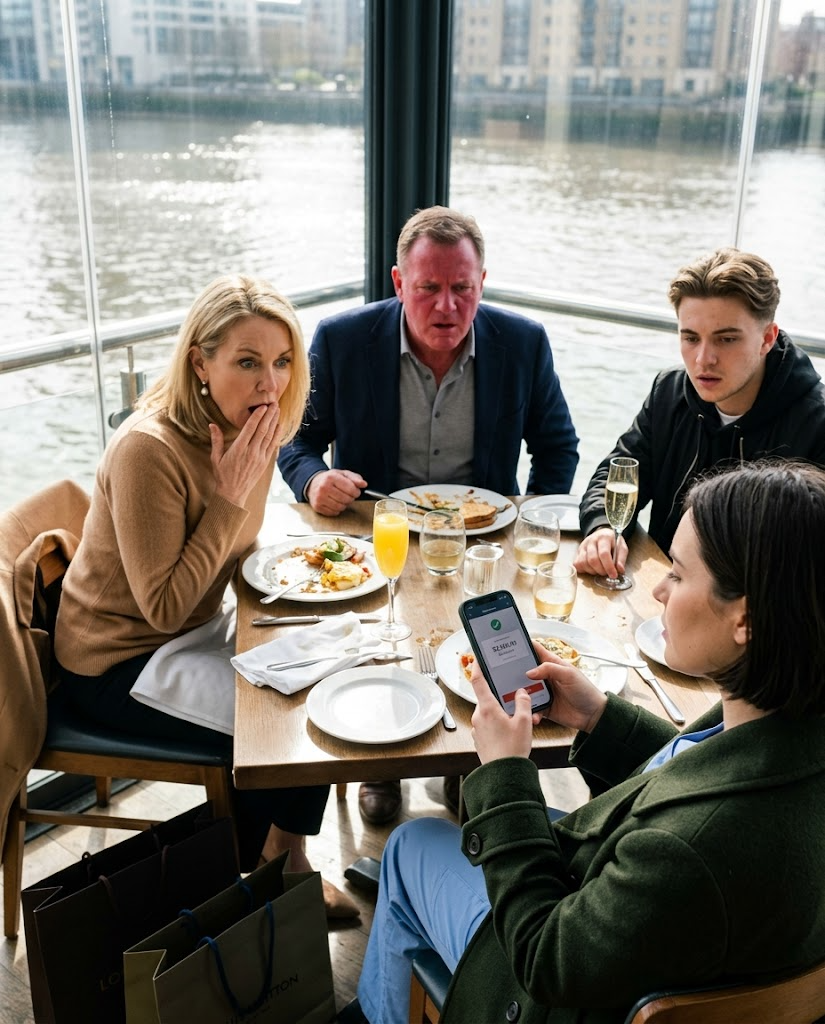
They liked Riverside Beastro because it faced the river and made them feel wealthier than they were.
Sunlight bounced off the water and poured through the windows onto polished silverware.
The servers wore crisp black aprons.
The cocktails arrived with edible flowers.
My mother liked to say the place had standards.
The first Sunday that month, Jeffrey was already there when I arrived.
He sat with one ankle over his knee, checking his phone every few seconds, the face of his expensive watch turned outward like a billboard.
Jeffrey was thirty-one and worked in commercial real estate.
Or at least that was what he told everyone, loudly and often.
He had thick dark hair, a perfect smile, and a polished way of speaking that made strangers think he was more accomplished than he really was.
People like that survive a long time on confidence alone.
My parents adored him.
“Barbara,” my mother said as soon as I sat down, “you just missed it.
Jeffrey closed a three-point-two-million-dollar account.”
“That’s my boy,” my father said, chest full of pride.
“Congratulations,” I told my brother.
He smiled at me without warmth.
“Thanks.
How much do nurses make these days?”
I knew where the question was going before he finished it.
“Jeffrey,” my father murmured, pretending to object.
“What?” my brother said.
“I’m asking.
It just seems like a lot of work for not much return.”
There it was.
He said things like that often.
Not directly enough to be challenged cleanly, but clearly enough that you felt them all day.
My family had always treated my job as if it were worthy but unimpressive, the professional equivalent of being a nice girl who knew her place.
By then I should have recognized the pattern.
Public praise for Jeffrey.
Mild humiliation for me.
My parents calling it teasing when it hurt.
Calling me sensitive when I reacted.
I smiled, changed the subject, and went back to work the next morning.
A week later, we were at Riverside Beastro again.
This time my mother had shopping bags beside her chair, all glossy handles and tissue paper.
My father had brought a new golf club brochure, which he displayed the way