
Advertisement

They Called Me a Fraud—Until the Judge Read Fitzgerald

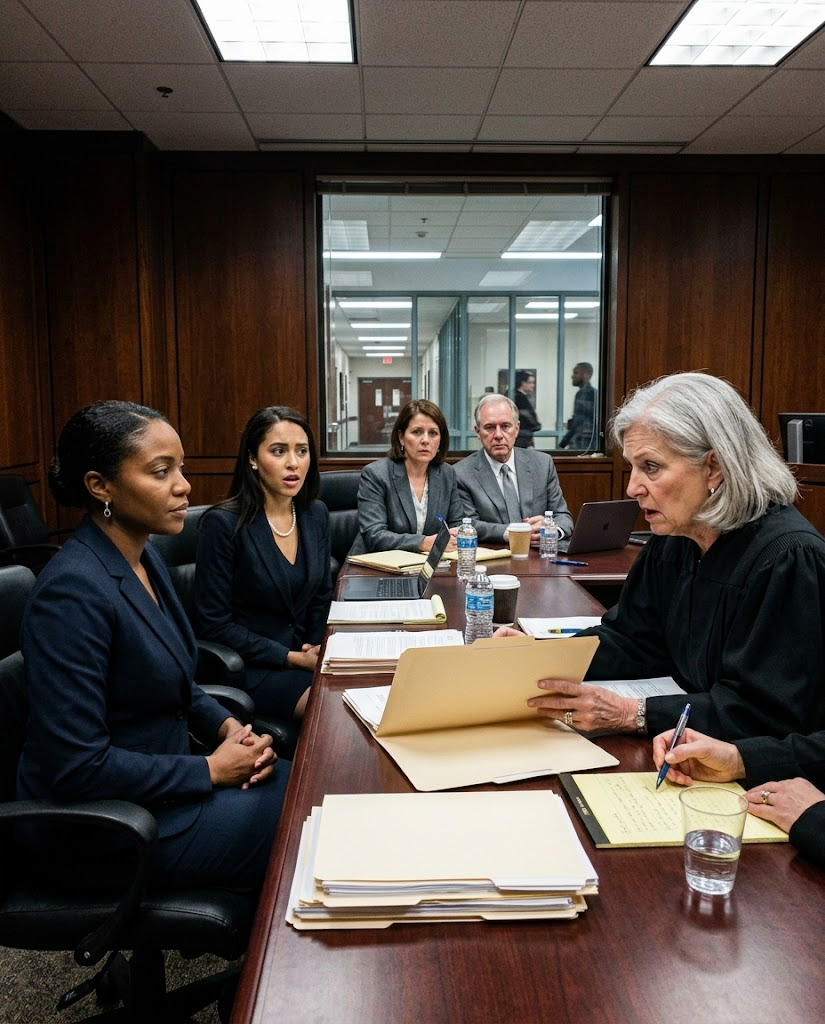
The conference room smelled like old wood, burnt coffee, and the kind of cologne men wear when they want to smell authoritative.

Advertisement

I sat at the long mahogany table with my hands folded in my lap and watched my sister adjust the pearls at her throat like she was the nervous one.


Advertisement

Brenda had chosen the pearls carefully.

I knew that because she only wore them when she wanted to look respectable while saying something ugly.

Across from her, my mother had placed a yellow legal pad on the table, open to a clean page.

She never meant to write a single thing on it.

It was a prop.

My father sat beside her in a dark suit, wearing the same solemn expression he used at church funerals and hospital visits—the face of a man who wanted to appear burdened by decency while doing something cruel.

“We have evidence,” my mother said.

That sentence had been her favorite for as long as I could remember.

She loved sounding as if she had arrived at truth while everyone else was still catching up.

The senior partner on the panel nodded once.

Beside him sat an investigations officer from bar counsel with a thin silver pen and an unreadable face.

In the middle was Judge Patricia Morland, retired from the appellate bench but still carrying the calm gravity of someone who had spent years deciding which stories deserved to be believed.

My mother began first.

She told them I had been lying for years.

Brenda followed, her voice clipped and confident, saying there was no chance I had ever passed the Massachusetts bar exam.

My father said they had agonized over filing the complaint but had concluded they had a civic obligation to protect the public.

He said civic obligation like he was describing shoveling a neighbor’s driveway after a storm.

I sat still and said nothing.

My attorney, Daniel Reeve, had told me not to.

He met me that morning in the parking garage beneath the building, where the concrete still smelled damp from overnight rain.

He had taken one look at my face and said, “Do not interrupt people who came here rehearsed.

They usually bring their own rope.”

So I let my family talk.

They talked about my high school grades, as if a mediocre algebra semester at sixteen disproved a law license at thirty-four.

They talked about the community college I attended in Ohio before I transferred east.

They talked about my work in criminal defense with the same faint distaste my mother used when describing a dirty public restroom.

To her friends, she still called it “that legal thing with criminals,” as if my job were an embarrassing side hustle rather than a career.

And beneath every sentence was the message my family had always attached to me: I was the unstable one.

The reaching one.

The daughter who tried for things beyond her station.

Brenda, on the other hand, had always been presented as inevitable success.

She got the front seat without asking.

She got Yale.

She got the bridal shower with rented linen and pale roses in our parents’ backyard while my mother cried over centerpiece height like the nation depended on it.

Brenda got to be impressive even when she was rude, polished even

Page 1 of 6
Pages: 1 2 3 4 5 6
Advertisement
info@teaytech

info@teaytech

1076 articles published